
Warung Guide Bali: 10 Essentials for Authentic Eats
Discover the best warungs in Bali with our expert guide. Learn how to order, spot authentic local eats, and find hidden gems in Kuta and Seminyak.
On this page
Warung Guide Bali: 10 Essentials for Authentic Eats
Warungs are the small, family-run eateries that feed most of Bali every day. They serve home-style Indonesian and Balinese dishes for a fraction of restaurant prices, and they are where you taste the food locals actually eat. This guide covers how to spot a real warung, what to order, what it costs in 2026, and the timing rules that decide whether you eat the signature dish or settle for leftovers. Pair it with our broader Bali travel hacks playbook.
The Meaning and Origin of the Balinese Warung
The word warung comes from Bahasa Indonesia with roots in Javanese, where it originally meant a small kiosk selling everyday goods. In modern Bali (Wikipedia) the term covers food, coffee, snacks, SIM credit, and even motorbike fuel from glass bottles. When travelers say "warung" they almost always mean warung makan, the food version: a small, family-owned business run on a personal scale.
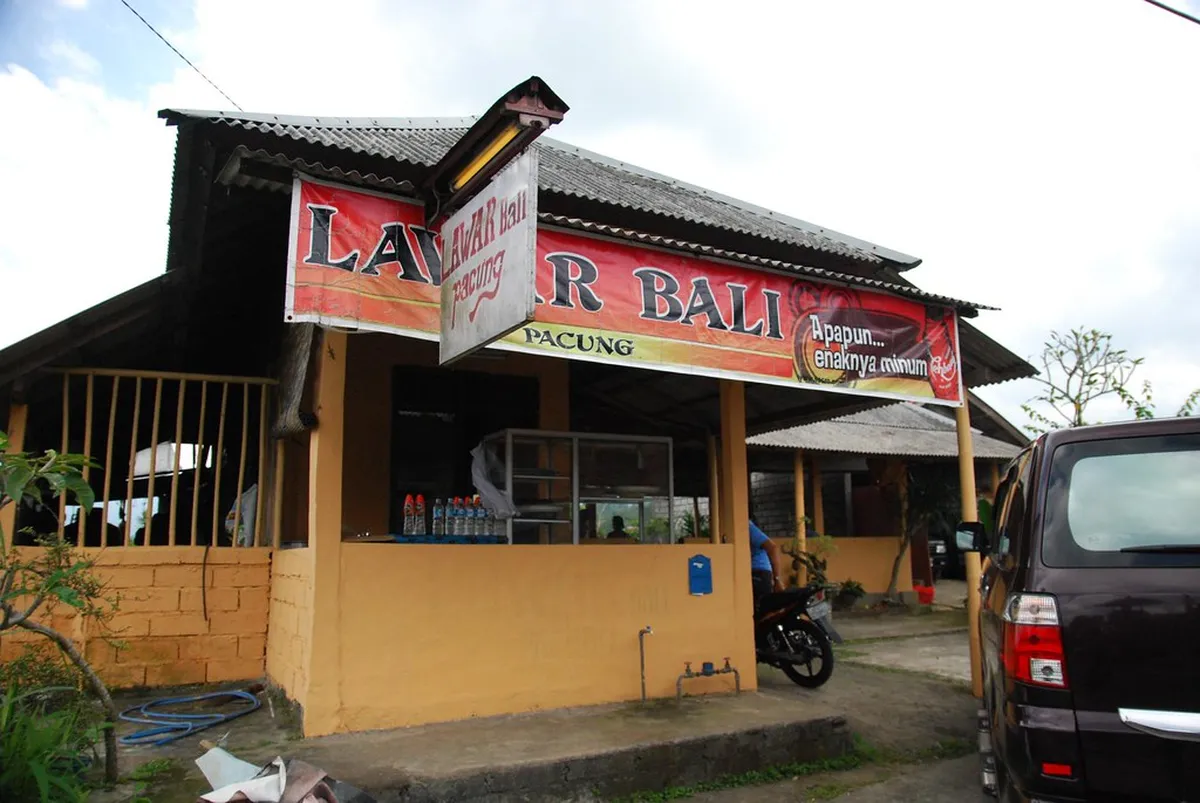
What unites every warung is the model. One family, recipes passed down a generation or two, and prices set for the local community rather than tourists. Most warung makan cook a fixed menu once early in the morning, display it in a glass case, and sell it down through the day. That single batch is why timing matters.
One important caveat: not every place with "warung" in the name is actually a warung. Plenty of Seminyak and Canggu restaurants keep the word for marketing while running full-service kitchens with printed menus and cocktail lists. A real warung is cash-only, family-staffed, and focused on a tight set of dishes.
How Warungs Differ from Restaurants and Cafes
The clearest signal is the service model. A warung displays everything in a glass case, you point at what you want, the staff plate it on rice, and you eat within two or three minutes. Restaurants work the opposite way: printed menu, table service, food cooked to order, fifteen to thirty minute wait. Warungs almost never give receipts and rarely accept cards.
Price is the second signal, and the gap is large. Eating at a traditional stall is one of the easiest ways to stay on track for Bali on a budget in 2026: a full plate of nasi campur runs IDR 20,000 to 40,000 versus IDR 90,000 to 150,000 at a tourist-zone restaurant. A single fancy latte at a Canggu cafe often costs more than a full warung lunch with iced tea.
Atmosphere is the third. Plastic stools, melamine plates, oscillating fans, a TV playing local news. No playlist, no styling, no expectation that you linger. People eat in twelve to fifteen minutes and move on, which is part of why food turns over so fast.
Warung vs Rumah Makan vs Kaki Lima: The Distinctions Locals Make
Most travel guides lump everything together as "warung," but locals draw clear lines between three formats. A warung is the smallest scale: family-run, one room, glass case at the front, often no printed menu. A rumah makan, literally "eating house," is a step up: table service, ten to twenty seats, often Padang-style food from West Sumatra where small dishes are placed on your table and you only pay for what you touch. A kaki lima is a mobile food cart pushed through neighborhoods, the name meaning "five feet" (the cart's three wheels plus the vendor's two).
The practical difference is what to expect on arrival. A warung means point and pick from the case, eat fast, pay cash at the counter. A rumah makan means sit down, dishes arrive on your table, and bills run higher. A kaki lima means perching on a tiny stool, ordering one item like bakso or sate ayam, paying IDR 15,000 to 25,000.
Timing differs too. Warungs close when the morning batch sells out, often by 14:00. Rumah makan keep cooking through the day and stay open into the evening. Kaki lima carts are the only reliable late-night option, working past 22:00 in most neighborhoods.
Exploring the Different Types of Warungs in Bali
Most warung makan specialize in one or two dishes. The most common is the nasi campur warung: a buffet-style display where you choose from fifteen to twenty pre-cooked dishes spooned over rice. This is the easiest format for a first visit because no Indonesian is required and you see exactly what you are getting.
Specialist warungs are the next tier. A warung babi guling sells only roasted suckling pig with rice, crispy skin, and spicy vegetables. A warung sate sells grilled meat skewers with peanut sauce. A warung soto specializes in turmeric-based soups. Specialists open for lunch only and sell out faster than nasi campur warungs.
Beyond food, you will see warung kopi (coffee, where locals gather to smoke and chat), warung kelontong (corner shops with snacks and mobile credit), and Madura-run 24-hour convenience warungs replacing 7-Eleven across residential Bali.
Typical Authentic Dishes You'll Find
Nasi campur is the workhorse and the easiest first meal. A standard plate gives you rice with small portions of vegetables, fried tempeh, sambal, and your choice of chicken, beef, fish, or egg. Familiarity with the basics of Balinese cuisine helps you identify urap (steamed vegetables with grated coconut), lawar (green beans with meat), and sate lilit (minced fish or chicken on lemongrass, grilled).
Babi guling is the dish to seek out at a specialist. The whole pig is rubbed with basa gede (turmeric, coriander, lemongrass, garlic, chili) and slow-roasted on a spit until the skin is glassine and the meat falls apart. The classic plate combines tender meat, crackling skin, lawar, blood sausage, and rice. Go to a dedicated babi guling warung rather than ordering it as a side at a generic spot.
Ayam betutu is the spicier alternative for travelers who do not eat pork. Chicken is stuffed with a similar paste, wrapped in banana leaves, and slow-cooked until the meat slips off the bone. The heat is genuinely intense. Other reliable picks: nasi goreng (fried rice with kecap manis and a fried egg), mie goreng (fried noodles), bakso (meatball soup), and gado-gado (steamed vegetables, tofu, egg, peanut sauce).
How to Spot an Authentic Warung (The 3 Golden Rules)
TripAdvisor and Google ratings skew toward English-speaking visitors and miss the spots locals trust. Three indicators work better. First, count the green Gojek and yellow Grab driver jackets. Delivery drivers are paid by the trip and pick up where the food is fast and reliably good, so five or six waiting for orders is a stronger signal than any review.
Second, look at the seating. Plastic stools in primary colors and folding tables means the owner is investing in food rather than decor. A polished wooden bench, hanging plants, and an Instagram-tagged sign means the spot has been remodeled for tourists and prices have moved with it.
Third, watch the clock. The best warungs cook their entire stock once in the early morning. By the time the case looks half-empty, you are eating dishes vetted by twenty other diners ahead of you. By the time it is nearly empty, the signatures are gone. The sweet spot is between 11:30 and 13:00.
- Gojek and Grab drivers stacked outside means high local trust and fresh turnover.
- Plastic stools and a tin roof signal the budget is going to ingredients, not styling.
- Half-full glass case at noon is ideal; nearly empty by 14:00 means signatures are sold out.
The 2 PM Wipeout and the Galungan Closure Trap
The single most useful planning rule is the 2 PM wipeout. Most warungs cook one batch in the morning and stop cooking once it is sold. Babi guling specialists are strictest: Pak Malen in Seminyak and Ibu Oka in Ubud routinely sell out between 13:00 and 14:00, and arriving at 16:00 means a closed shutter. Nasi campur warungs hold longer, often into 15:00 or 16:00, but signatures (crispy pork skin, fried chicken, spicy lawar) go first. If a warung's signature is on your list, arrive between 11:00 and 12:30.
The trap that catches short-trip visitors is the Balinese ceremonial calendar. Galungan, Kuningan, Nyepi, and major temple anniversaries shut family-run warungs for one to three days. Galungan and Kuningan rotate through the 210-day Pawukon calendar; in 2026 Galungan falls in late February and again in late September. Nyepi (Day of Silence) shuts the entire island for 24 hours including airport, roads, and every warung. Google Maps still shows warungs as "open" while their gates are closed during ceremonies, so check a current Bali calendar before locking in a food crawl.
Two practical fixes. Most expat Facebook groups post monthly upacara lists; cross-check before relying on a specific spot. And keep a backup of larger rumah makan or hotel restaurants nearby, because those usually stay open through ceremonies even when family warungs do not.
Warung Etiquette: Ordering and Eating Like a Local
Ordering is built around pointing. Walk up to the glass case, point at the rice (white nasi putih or yellow nasi kuning), then point at four or five small dishes to be spooned on top. Three words are useful: "satu" (one), "pedas" (spicy), "tidak pedas" (not spicy). "Bungkus" means takeaway, useful when seats are full.
Most warungs provide a fork and spoon: push food onto the spoon with the fork in your left hand, eat with the spoon in your right. If you eat with your hands, only use your right; the left is considered impure across Indonesia. Some warungs put a small bowl of water with lime (kobokan) on the table for rinsing fingers.
Payment happens at the counter as you leave. Staff calculate the bill by looking at your plate. Cash only, in small bills: IDR 10,000, 20,000, and 50,000 notes are most useful. A typical lunch lands at IDR 25,000 to 45,000 with a drink. Tipping is not expected, but rounding up is appreciated; our Bali tipping culture guide covers thresholds in detail.
Vegetarian, Vegan, and Allergy Tactics
Saying "tanpa daging" (without meat) gets you a plate without visible meat, but most vegetable dishes still contain shrimp paste (terasi), fish sauce, or dried anchovies (ikan teri). Strict vegetarians and vegans get caught here regularly. The phrase that works is "saya vegetarian, tidak ada terasi, tidak ada ikan, tidak ada ayam." For peanut allergies, ask "tanpa kacang" and avoid gado-gado, sate sauce, and pecel.
Reliably plant-based picks: tempeh goreng (fried tempeh), tahu goreng (fried tofu), urap without terasi, gado-gado with peanut sauce on the side, and plain nasi putih or nasi kuning. Nasi campur stalls advertising "vegetarian" or "vegan" on signage do exist and are growing in Canggu and Ubud.
Sambal warrants its own warning. Sambal matah (raw shallot and lemongrass) is mild to medium. Sambal terasi has shrimp paste, so vegans skip it. Sambal hijau (green chili) is medium. Sambal mentah and sambal balado are eyes-watering hot. Ask for sambal on the side and add a quarter teaspoon at a time until you find your tolerance.
Health and Safety: Is Warung Food Safe for Tourists?
Bali Belly gets blamed on warungs more than it should. The biggest risks are unfiltered tap water, ice from unknown sources, and food that has been sitting out for hours. The fix: pick busy warungs with high turnover, eat hot food rather than raw, and check that the ice in your drink is the cylindrical block ice with a hole in the middle (industrially produced and generally safe).
Water safety extends beyond ice. Most reputable warungs use bottled water for cooking, but salads, raw vegetables, and pre-cut fruit can be rinsed in tap water. Confirm whether you can drink tap water in Bali before assuming; the answer in 2026 remains no for almost the entire island. Stick to bottled water, hot tea, or sealed canned drinks. Our Bali street food safety guide goes deeper.
Spice tolerance trips up more travelers than hygiene. Balinese sambal can hit a Scoville level that triggers genuine stomach upset misread as food poisoning. Ask for sambal on the side, start small, and keep a sweet drink (es jeruk, fresh orange juice) ready to neutralize the heat rather than water, which spreads capsaicin around your mouth.
Famous Warungs in Bali Worth Trying
For nasi campur, Warung Murah on Jalan Double Six in Seminyak is the long-running classic with a wide case and moderate spice. Warung Sika in Canggu is the newer cult favorite with longer queues; arrive by 12:00 or accept that the best dishes are gone. Warung Sari Manis in Renon serves the version most expats living in Denpasar order weekly.
For babi guling, Warung Babi Guling Pak Malen on Sunset Road in Seminyak is the most famous spot in southern Bali and sells out by 14:00. Ibu Oka, on the Ubud palace road, is equally strict on timing. Both work best as early lunch around 11:30. Warung Babi Guling Bu Andika in Denpasar is a quieter alternative that stays open slightly later.
For regional cooking, Waroeng Bandung Dewi Sri serves Sundanese nasi tutug oncom (rice with fermented soybeans), a flavor profile you will not find at Balinese-focused warungs. Ayam Kari & Rempah Mak Jang specializes in chicken curry fried crispy then drenched in spice. Warung Mak Beng in Sanur has served exactly one menu, fried fish and fish-head soup, since the 1940s and remains the most reliable seafood warung on the island.
Practical Logistics: Prices, Cash, and Timing
Pricing in 2026 is predictable. Nasi campur at a local warung in Denpasar or Sanur runs IDR 20,000 to 35,000. The same plate in tourist-heavy Canggu, Seminyak, or Ubud's main street runs IDR 35,000 to 60,000. A "warung" branded restaurant aimed at tourists charges IDR 75,000 to 120,000. A Western cafe lunch in Canggu or Berawa lands at IDR 120,000 to 200,000 with drink. Babi guling plates run IDR 35,000 to 60,000. A glass of es teh manis (sweet iced tea) is IDR 5,000 to 10,000 at a warung versus IDR 25,000 at a cafe.
Cash is essential. Almost no real warung accepts cards, and even those advertising QRIS often quietly prefer cash. Carry a mix of IDR 10,000, 20,000, and 50,000 notes plus small coins for rounding. Our Bali cash vs card acceptance guide covers ATM fees and skimming risks.
Timing matters more than location. Most warungs open between 06:00 and 09:00, peak between 11:30 and 13:00, and start running thin after 14:00. Specialty warungs run shorter days and often close by 15:00. Late-night options come from kaki lima carts and Madura-run 24-hour warungs, which sell instant noodles, eggs, and basic rice plates past midnight.
Frequently Asked Questions
Is it safe for tourists to eat at local warungs in Bali?
Yes, it is generally safe if you follow basic hygiene rules. Choose busy spots with high turnover and check our Bali travel safety tips for more advice. Avoid any food that looks like it has been sitting out for many hours.
How much does a typical meal cost at a warung?
A standard meal usually costs between $1.50 and $3.00 USD. This includes a generous portion of rice, several side dishes, and a basic drink. Prices may be slightly higher in very popular tourist zones like Seminyak or Canggu.
What is the best time of day to visit a warung?
The best time is between 11:30 AM and 1:00 PM for maximum freshness. Most authentic spots prepare their food once in the morning and sell out by mid-afternoon. Arriving early ensures you get the best selection of signature dishes.
Do I need to tip at a local warung?
Tipping is not expected or required at small family-run stalls in Bali. However, rounding up the bill to the nearest 5,000 rupiah is a kind gesture that locals appreciate. Most diners simply pay the exact amount listed by the vendor.
Warungs are the most direct route to the food locals actually eat in Bali. They cost a fraction of restaurant prices, sell out by mid-afternoon, and reward travelers who arrive early with the freshest version of every signature dish. Take a seat on a plastic stool, point at what looks good, and enjoy the most authentic tastes the island has to offer.