
10 Essential Bali Temple Etiquette and Dress Code Rules
Master Bali temple etiquette with our 2026 guide. Learn the mandatory dress code, sarong rules, and cultural taboos to ensure a respectful visit to sacred Pura.
On this page
10 Essential Bali Temple Etiquette and Dress Code Rules
A Balinese temple, or pura, is not a museum or a photo backdrop. It is a working place of worship where village priests (pemangku) lead daily offerings, ceremonies follow a 210-day calendar, and the rules visitors are asked to follow come from the village council (desa adat) rather than the tourism office. Tightened cultural-preservation regulations enforced through 2025 and 2026 mean misbehaviour is no longer met with a polite reminder; ticket gates now refuse entry, and selfies inside the inner sanctum can get you escorted out.
This guide walks you through the ten rules that matter most across Bali's most-visited temples — Uluwatu, Tanah Lot, Besakih, Lempuyang, Tirta Empul, and Ulun Danu Beratan. It covers exactly what to wear, where to sit, what not to point at the altar, and which behaviours have crossed from "frowned upon" into "fined or refused entry" since the 2025 update. Pair it with a bali packing list 2026 so your bag is temple-ready before you land.
Understanding the Sanctity of Balinese Pura
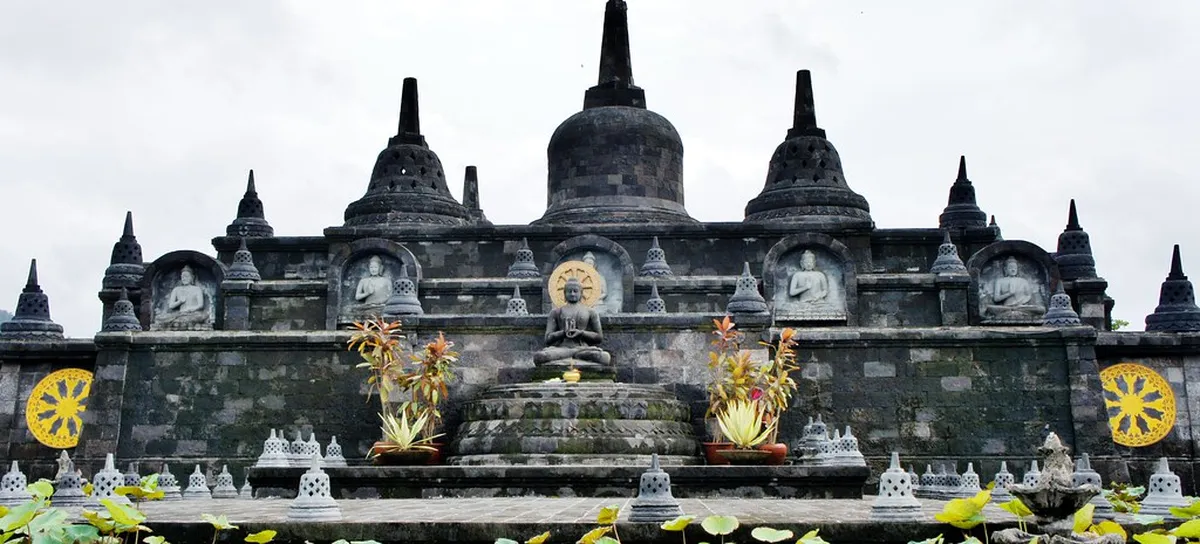
Bali's roughly 10,000 temples are dedicated to Ida Sang Hyang Widhi Wasa, the supreme Balinese Hindu deity, and to the ancestors and natural spirits tied to each village. Every pura is divided into three courtyards: the outer (jaba) where visitors usually wander, the middle (jaba tengah) used for preparation, and the innermost (jeroan) where the shrines stand and only worshippers in ceremonial dress may enter.
The behavioural code rests on a Balinese Hindu philosophy called Tri Kaya Parisudha — thinking, speaking, and acting positively. It is the lens locals use to judge visitors: a tourist who climbs a wall for a photo has acted poorly; a tourist who sits quietly while a procession passes has acted purely. Holding this framework in mind makes every other rule below feel less arbitrary.
Mandatory Dress Code: Sarong and Sash
The single non-negotiable rule is the sarong (kamben) and sash (selendang) combination, required for every visitor regardless of gender or age. The sarong wraps from waist to ankle and the sash ties around the waist over it, symbolically separating the lower body (considered impure) from the upper. Tying the sash with the knot on the right is the conventional male style; women typically tie centrally or to the left.
Most major temples include sarong and sash rental in the entry ticket — Tanah Lot, Uluwatu, and Tirta Empul all do. At smaller village temples and at popular sunrise spots like Lempuyang, expect to pay IDR 10,000–25,000 per person for rental, paid in cash. Carrying your own lightweight cotton sarong saves the rental queue, doubles as a beach wrap, and avoids the slightly damp feeling of a rental that has been on twenty tourists today.
Upper Body Requirements: Covering Shoulders and Back
A sarong alone is not enough. Shoulders, upper back, and midriff must be fully covered, which rules out tank tops, singlets, halter tops, crop tops, off-shoulder blouses, and most beachwear. A simple cotton T-shirt or short-sleeved blouse meets the rule everywhere. If the day is hot, a second sarong worn as a shawl is the standard local solution and is what temple staff will hand to under-dressed visitors at the gate.
Men should remove sunglasses and hats before stepping into the inner courtyards, in line with the same modesty principle. For ceremonies, men commonly wear a folded cloth headband called an Udeng, knotted at the front to point upward — a symbol of focused thought. Visitors are not required to wear an Udeng, but if a priest hands you one before allowing you into the jeroan, accept it; refusal reads as rejection of the ceremony itself.
Footwear Etiquette: When to Remove Shoes
Outdoor temple courtyards are typically entered with shoes on, but any roofed shrine, prayer pavilion (bale), or the inner sanctum requires bare feet. Watch for stacked shoes or sandals at a threshold — that is your cue. The stones get hot by midday, so a pair of socks tucked in your day pack is a small comfort hack none of the temple guides bother to mention.
Closed-toe shoes are practical for the steep stairs at Lempuyang and Besakih, but they make the constant on-off cycle slower; slip-on sandals are what most locals wear for exactly this reason. Avoid high heels and platform shoes — the lava-stone steps are uneven, often mossy after rain, and stairs at Pura Lempuyang involve more than 1,700 climbs to reach the upper temple.
Physical Conduct: Sitting, Climbing, and Sacred Statues
Never climb on, sit on, or lean against any wall, gate, statue, or shrine. This is the rule that has seen the harshest crackdown since 2024 after a wave of viral incidents involving tourists posing on sacred objects. Several temples now post staff specifically to flag this behaviour, and at Besakih, repeat offenders have been escorted off the property and added to a village blacklist.
Note that the small statues you see throughout Bali — at temple entrances, roadside shrines, and within courtyards — are themselves dressed in sarongs and chequered poleng cloth because Balinese belief treats them as inhabited by spirits. Touching, hugging, or "high-fiving" a statue for a photo is read the same as touching a person mid-prayer. Look, do not lay a hand on.
Mindful Positioning: Where to Point Your Feet
In Balinese culture, the head is the highest, purest part of the body and the feet are the lowest. Pointing your feet at an altar, shrine, offering, or priest is a serious offence, even when seated casually. Inside a prayer pavilion or during a ceremony, men sit cross-legged (bersila) and women kneel with feet tucked behind (bersimpuh); both keep the soles of the feet hidden.
The same logic explains why your head should never be higher than a priest's head. If a pemangku is seated leading prayers, do not stand on a step or platform above them, do not lean over them for a photo, and do not pass directly in front of them while they bless worshippers. Stepping behind or pausing at the edge of the courtyard until they finish is the respectful default.
Respectful Communication: Noise Levels and Phone Use
Pura courtyards carry sound. A normal speaking voice in the parking lot becomes a shout in the inner sanctum. Silence your phone before entering — not just to vibrate, but fully silent — and avoid taking calls inside any walled section. The rhythmic ting of a priest's bell during chanting is a moment locals have been cultivating since dawn; a notification chime cuts through it instantly.
Drone use is now explicitly banned at every major Bali temple, with signage to that effect at the gates. The 2025 cultural-preservation regulations cite drone noise as actively disruptive to ceremonies, and at Tanah Lot and Uluwatu, security staff are authorised to demand you land and put away the drone. Smoking and eating inside temple compounds are also now formally prohibited.
Photography Rules: Flash, Selfies, and the Inner Sanctum
The headline 2025–2026 rule: no selfies and no video recording inside the inner sanctum (jeroan) at any temple. Photography is restricted to designated areas, usually the outer and middle courtyards, and posed shots that mimic praying or meditating are explicitly called out as disrespectful. Flash photography is banned everywhere indoors — it disturbs worshippers and damages painted woodwork.
If a ceremony is in progress, ask before pointing a camera at any participant, especially the priest. Most Balinese will say yes if approached respectfully, but photographing a worshipper mid-prayer without consent is the kind of behaviour that gets a whole tour group asked to leave. At Pura Lempuyang's famous "Gates of Heaven" shot, the queue is for tourist photos taken outside the gate; do not push past the photographer's line into the active worship area for a better angle.
Ceremony Etiquette: Being a Respectful Observer
Stumbling onto a ceremony — particularly during major dates like Galungan, Kuningan, or a temple's odalan anniversary — is one of the great accidental joys of visiting Bali. Sit or stand quietly at the edge, behind the rows of seated worshippers, and stay there. Do not block aisles, do not walk through the offering pile, and do not step in front of an active prayer line for a clearer shot.
Public displays of affection — kissing, embracing, holding hands above the waist — read as deeply inappropriate inside a temple compound during a ceremony. The same applies to street processions (melasti seafront purifications, cremation parades), which you will encounter even in busy tourist areas. Stand on the verge, let the procession pass, and do not cross in front of it. Photos from the side are acceptable; intercepting the line is not.
Menstruation and Other Entry Restrictions
Balinese custom asks women who are menstruating not to enter any temple. The rule is rooted in a belief that unsanctified blood may not be present on consecrated ground, and it applies regardless of nationality or religion. The same restriction applies to women who are more than seven months pregnant, who have given birth within the last six weeks, or who have an open wound that is bleeding. Some temples post these rules in English at the ticket booth; others rely on the honour system.
A less-discussed restriction is cuntaka — a state of ritual impurity following a death in the immediate family. Balinese themselves do not enter a temple for 12 days after a household death, and the same convention is asked of foreign visitors who are bereaved. None of these restrictions is checked at the gate, but locals genuinely believe that visiting under cuntaka or while menstruating disrupts the spiritual balance of the site, so the rule operates on personal honesty rather than enforcement.
Donations, Entry Fees, and What to Bring
Most major temples charge an entry fee separate from any rental — IDR 50,000–75,000 per adult at Tanah Lot, Uluwatu, and Tirta Empul; IDR 60,000–150,000 at Besakih depending on which gate and whether you take the shuttle. Smaller village temples often run on a donation box (dana punia) instead of a fixed ticket, with IDR 30,000–50,000 the locally-expected range. Bring small notes; the donation box has no change machine and ATMs are not at the temple gate. For broader money guidance, see bali cash vs card acceptance.
A practical temple bag for the day: a folded sarong, a long sash, a covered top or second sarong as a shawl, IDR 100,000 in 10,000 and 20,000 notes for donations and rentals, a small pack of wet wipes for after the inner-sanctum bare-feet section, sunscreen, and a refillable water bottle. Skip the bulky jewelry — the macaques at Uluwatu and the Sacred Monkey Forest will absolutely steal earrings, sunglasses, and hats. See bali monkey forest etiquette for the longer monkey playbook.
How Rules Vary by Temple: Coastal vs Highland
One detail no other Bali etiquette guide flags clearly: enforcement varies dramatically between coastal tourist temples and highland village temples. At Tanah Lot and Uluwatu, gate staff are used to under-prepared visitors and will hand you a rental sarong with minimal fuss. At Pura Besakih (the Mother Temple on Mount Agung) and Lempuyang, the local desa adat is far stricter; arrive in shorts and a tank top and you may be politely refused entry until you upgrade your clothing, even with a sarong added on top.
Tirta Empul has its own rule almost no first-time visitor knows: if you intend to enter the holy spring pools for the melukat purification ritual — not just look at them — women must wear a long sarong covering the chest as well as the legs, and men keep the standard sarong but remove their shirt. Rental "purification sarongs" are sold at the gate for around IDR 25,000. If you are only walking the courtyards, the standard waist sarong is fine. Confirm at your bali first time visitor mistakes read-through that you have not unintentionally signed up to enter the pools by joining a tour photo line.
For the full picture beyond this single topic, see our Bali travel hacks overview — it ties together transportation, money, where to stay, food, safety, and the rest of the practical decisions every Bali trip needs.
Frequently Asked Questions
What is the standard temple donation fee in Bali?
Most temples require a donation of thirty thousand to fifty thousand rupiah for entry. This money supports the village council in maintaining the sacred grounds. You should check bali cash vs card acceptance before you go.
Can I visit a temple while on my period?
Traditional Balinese customs restrict temple entry for women during their menstrual cycle. This rule is based on local spiritual beliefs regarding blood and purity. Please respect this cultural boundary during your visit to the island.
Do I need to wear a sarong if I have long pants?
Yes, almost all temples require a sarong regardless of what you are wearing. A sash is also mandatory to complete the traditional temple outfit. You can find more details in this Bali Holiday Secrets - Etiquette Guide for travelers.
Respecting the local culture is the key to a meaningful visit to Bali. The Balinese philosophy of Tri Kaya Parisudha — pure thoughts, words, and actions — is the simple test behind every rule on this page. Cover up, sit low, speak softly, leave the drone in the room, and put cash in the donation box.
Do that, and the Bali you experience will be the working, devotional island that visitors who blunder through never get to see. The priests notice, the village notices, and the temple welcomes you back.