
8 Essential Resources for Bali Best Beaches by Region (2026)
Discover the best beaches in Bali by region. Our guide covers the white sands of Uluwatu, black sands of Amed, and the dramatic cliffs of the Nusa Islands.
On this page
8 Essential Resources for Bali Best Beaches by Region
Bali's coastline changes character every 40 kilometres. The south delivers white coral sand under limestone cliffs, the southwest pairs grey volcanic shores with sunset beach clubs, and the east and north slip into glittering black sand backed by Mount Agung. Picking the wrong region for your interests is the most common mistake first-timers make, and it usually costs them an entire day in traffic.
This 2026 refresh breaks the island into the eight planning units that actually matter: a regional map, six coastal zones (Bukit, Southwest, East, North, West, Nusa Islands), and a transport guide that ties them together. Each section opens with a "Best for" line so you can match the region to your travel style in five seconds. Pricing reflects May 2026 rates in IDR with USD equivalents at roughly 16,000 IDR per US dollar.
For seasonal context before you book, see our best time to visit Bali guide — monsoon timing decides which beaches are swimmable. This article is part of our broader Bali Travel Hacks pillar.
1. Bali Beach Map: Visualizing the Coastline
Best for: First-time planners working out drive times.
Bali is shaped like a chicken with a small head — the Bukit Peninsula — dangling off the south. The international airport sits at the neck. Most visitors land, drive 20 minutes south to the Bukit, or 45 minutes north to Canggu, and never explore further. That's a planning error: the Bukit's white-sand cliffs, Amed's black-sand bays in the east, and Lovina's dolphin coast in the north are entirely different ecosystems separated by the central volcanic spine.
Use this Bali Beach Map Location to anchor your mental geography. The fastest way to think about distances is in driving hours, not kilometres: Canggu to Uluwatu is 90 minutes despite being only 25 km away, Canggu to Amed is three hours, and Canggu to Lovina is four hours over the mountain. Google Maps regularly underestimates Bali traffic by 30 to 50 percent during rainy-season afternoons.
The sand colour also follows a pattern that mirrors the geology. Limestone-backed regions (Bukit, Nusa Islands) hold fine white coral sand. Volcanic regions (Southwest, East, North, West) range from ash-grey to coal-black. If you have ever wondered why Seminyak looks "dirty" in photos compared to Melasti, that is volcanic basalt, not pollution — though pollution is a separate, real issue we cover below.
2. South Bali: The Bukit Peninsula (White Sand & Cliffs)
Best for: Couples, photographers, surfers chasing reef breaks.
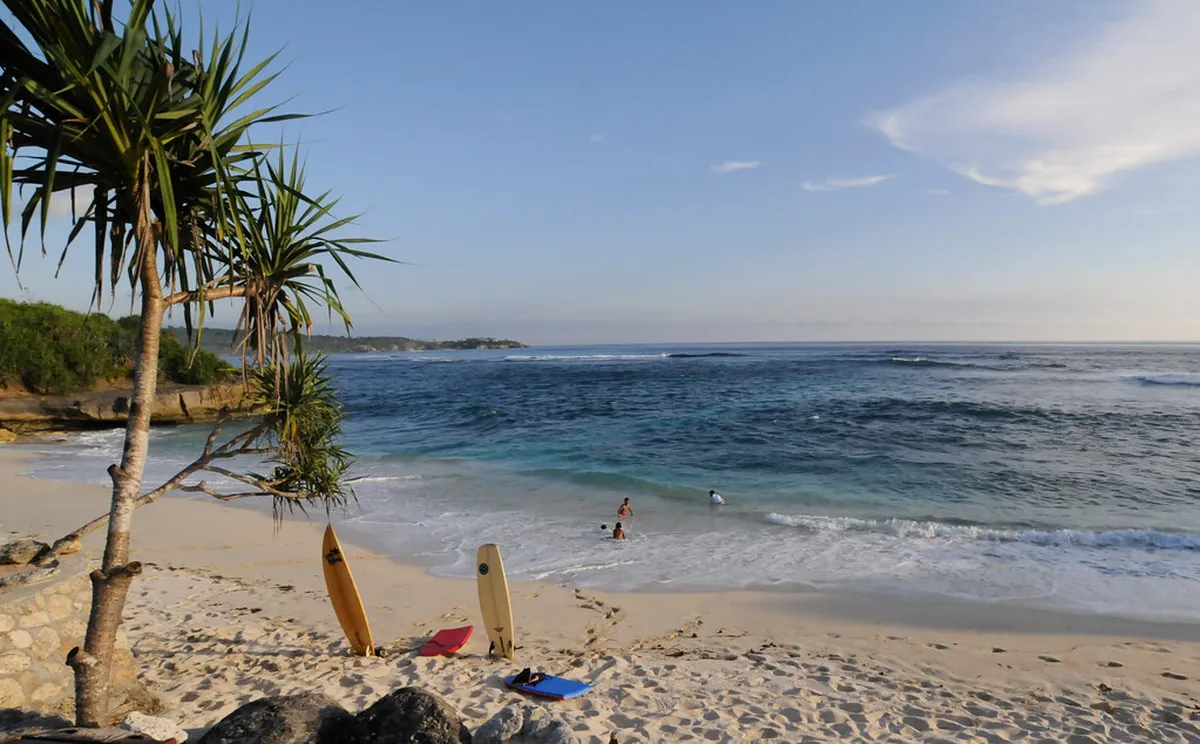
The Bukit (which means "hill") is the limestone tableland south of the airport, and it is the only part of Bali that delivers the postcard image of turquoise water on coral-white sand. The headline beaches are Melasti Beach, Padang Padang, Bingin, Balangan, and Dreamland. Entry to most is free, parking runs 5,000 to 10,000 IDR ($0.30 to $0.65), and a few like Padang Padang charge a 15,000 IDR ($1) walk-in fee.
The catch is access. Almost every Bukit beach lives at the bottom of a cliff, and "many stairs" in competitor guides usually means a real workout. Padang Padang is mild at roughly 50 steps. Bingin is around 130. Green Bowl rings in near 330 steep, uneven steps. Nyang Nyang demands a 15-minute walk down a dirt-and-concrete path equivalent to 500-plus steps in elevation loss. Plan accordingly with proper shoes, plenty of water, and a willingness to climb back up in 30°C heat. Anyone with knee, hip, or mobility issues should stick to Melasti or Pandawa, which both have road-level access and ramps.
For lodging in this region, the cliffside zone from Uluwatu to Nusa Dua holds the highest concentration of first-time-friendly Bali stays with sea views. Choose Uluwatu for surf villas, Pandawa for resorts, and Nusa Dua for full-service, family-style hotels.
3. Southwest Bali: Seminyak & Canggu (Sunsets & Beach Clubs)
Best for: Digital nomads, party travellers, learner surfers.
The southwest strip from Kuta through Legian, Seminyak, Canggu, and Pererenan is where Bali's social and digital infrastructure concentrates. The sand is volcanic grey, the surf breaks over a sandy bottom (forgiving for beginners), and the sunsets — facing due west across the Indian Ocean — are the most reliable on the island. Iconic venues like Potato Head Beach Club mix art, music, and sustainable design; Azul Beach Club in Legian is the more affordable, less curated alternative.
Connectivity here is by far the strongest in Bali. Telkomsel and Indosat both deliver real 4G+ and patchy 5G across Canggu, Seminyak, and Pererenan, with coworking spaces clocking 60 to 200 Mbps fibre. If you are a remote worker, this is the only region where you can confidently take video calls. Move two hours north and you are back to single-bar 4G.
The seasonal trade-off is brutal but predictable. From late November through March, monsoon swell pushes plastic and ocean debris onto Canggu, Seminyak, and Kuta beaches — sometimes ankle-deep along the tideline. The water is still swimmable, the sunsets still happen, but the sand is not Instagram-ready. If you visit in those months, day-trip to the Bukit (eastern lee) or East Bali (sheltered) for cleaner shores.
4. East Bali: Amed & Candidasa (Snorkeling & Seclusion)
Best for: Snorkellers, divers, slow travellers escaping crowds.
East Bali is a string of fishing villages — Amed, Jemeluk, Lipah, Bunutan, Selang — strung along a coast where Mount Agung drops almost directly into the sea. The sand is fine black volcanic gravel, and what makes this region a must-visit is the underwater life. Jemeluk Bay's coral garden starts a few metres from the shore, and the USS Liberty wreck off Tulamben (a 30-minute drive north) is one of Asia's best beginner shore dives. Snorkel-mask-and-fin rental runs 50,000 IDR ($3.25) per day at most warungs.
Candidasa, 40 minutes south of Amed, is the more polished base with boutique resorts and easy access to Virgin Beach and Blue Lagoon at Padang Bai (the same town that runs the public ferry to Lombok and Nusa Penida). The drive from Denpasar Airport runs three hours via the coastal road; budget four if you arrive in afternoon traffic. East Bali is also the best monsoon-season choice because Mount Agung shelters the coast from the prevailing west wind.
Cell service is decent in Amed and Candidasa town centres but drops to single-bar in the smaller villages. Most homestays now offer Starlink-backed Wi-Fi, but speeds rarely top 20 Mbps. If you need to work, batch your calls in town and use the rest of your time for diving.
5. North Bali: Lovina & Pemuteran (Dolphins & Quiet Escapes)
Best for: Older travellers, divers, anyone wanting empty beaches.
The north coast is what Bali looked like 30 years ago. Lovina's main beach is a six-kilometre crescent of dark grey sand with calm, shallow water — the gentlest swimming conditions on the island. The signature experience is the sunrise dolphin tour: outrigger jukung boats depart at 6:00 AM and cost 100,000 to 200,000 IDR ($6.50 to $13) per person. Mornings are calm, the sea is glassy, and pods of spinner dolphins appear most days from May to October.
Forty minutes west, Pemuteran is the diver's town. The offshore Biorock coral restoration project is the largest in the world, and a short boat ride takes you to Menjangan Island inside West Bali National Park — a marine reserve with wall dives, healthy coral, and almost zero current. The drive from Canggu or Ubud is about four hours over the central mountains via Bedugul (worth a stop for Lake Beratan); from the airport, allow at least three and a half hours.
This region is genuinely off-grid. Cell coverage is patchy outside Lovina's main road, and many guesthouses run on backup generators. Treat it as the digital detox part of your trip and download offline maps before leaving Canggu.
6. West Bali: Balian & Medewi (Surf & Remote Nature)
Best for: Intermediate surfers, road-trippers, true introverts.
West Bali is the rugged frontier — chocolate-coloured volcanic sand, river-mouth surf breaks, and almost zero tour-bus traffic. Balian is a ninety-minute drive west of Canggu and offers a punchy beach break with a rivermouth left, plus a small cluster of surf-camp accommodation under 600,000 IDR ($39) a night. Medewi, another 45 minutes west, is home to one of Indonesia's longest left-hand point breaks, a slow ride that experienced longboarders will love.
There are no entry fees, no beach clubs, and no lifeguards. Local warungs serve nasi campur for 25,000 to 40,000 IDR ($1.60 to $2.50). The main coastal road is shared with cargo trucks heading to the Gilimanuk ferry to Java, so a private driver is safer than a scooter for the journey out — though once you arrive, a scooter is the easiest way to hop between Balian, Soka, and Yeh Leh.
The volcanic stones here can hit 50°C in midday sun. Wear sandals to walk the beach, and if you surf, booties protect against urchins on the inside reef sections at low tide.
7. The Nusa Islands: Penida & Lembongan (Dramatic Scenery)
Best for: Day-trippers, viewpoint hunters, intermediate divers.
The Nusa Islands — Penida, Lembongan, and tiny Ceningan — sit 20 km off Bali's southeast coast and deliver the most dramatic scenery in the regency: Kelingking's T-Rex cliff, Angel's Billabong's natural infinity pool, Diamond Beach's white-sand cove, and Broken Beach's collapsed sea cave. Boats run from two harbours: Sanur Port (preferred — newer, with covered waiting areas) for the 30 to 45-minute crossing to Penida or Lembongan, and Padang Bai for the slightly cheaper but rougher ferry. Round-trip fast-boat tickets run 350,000 to 550,000 IDR ($22 to $35); first departure is around 7:30 AM, last return around 5:00 PM. Penida charges a 25,000 IDR ($1.60) tourist levy on arrival.
A common rookie mistake is trying to "do" Penida in one day from Bali. The island is 200 square kilometres, the roads are cratered, and traffic at Kelingking can mean a 90-minute queue at peak season. Plan two nights minimum on Penida if you want to see the west, east, and the Manta Point dive site without rushing. Lembongan is smaller, flatter, and walkable — better for a one-night stay or a day trip.
Currents on Nusa beaches are no joke. Kelingking has riptides every day; Angel's Billabong has killed swimmers as recently as 2024 when waves overtopped the natural pool. Treat posted warnings as absolute, and never swim where you cannot see locals in the water.
8. Bali Private Driver & Motorbike Rental Guide
Best for: Everyone — choosing the wrong transport is the #1 trip-killer.
For solo travellers and confident couples, scooter rental at 75,000 to 100,000 IDR ($4.80 to $6.50) a day is the cheapest, fastest way to beach-hop within a single region. See our scooter rental tips for licence rules, insurance traps, and how to spot a fair rental shop. From January 2024, police actively check for valid International Driving Permits with motorcycle endorsement; a fine for riding without one runs around 1,000,000 IDR ($65) and your bike can be impounded.
Families, groups of three or more, and anyone planning to cross between regions in a single day should hire a private driver. A 10-hour day with a Toyota Avanza or similar runs 600,000 to 800,000 IDR ($39 to $52) inclusive of fuel and parking. Browse current private driver services for vetted contacts. Always confirm the route, total hours, and whether tolls and entry fees are included before you set off — disputes at the end of the day are easier to avoid up front.
One niche etiquette point that no Bali beach guide mentions: Nyepi, the Balinese Day of Silence, falls on 19 March 2026 in 2026. For 24 hours, the entire island shuts down — beaches are off-limits, the airport closes, no lights, no cooking, no tourists outside their hotels. Pecalang (traditional security) patrol the shore and fines apply to foreigners who break the rule. If your dates straddle Nyepi, book a hotel with a pool, stock snacks the day before, and treat it as a cultural fast rather than a wasted day. The day after Nyepi is the cleanest you will ever see Bali's beaches.
Frequently Asked Questions
Which region has the clearest water in Bali?
The Bukit Peninsula and the Nusa Islands generally offer the clearest turquoise water due to their limestone geology. For the best visibility, visit during the dry season from May to September. Amed in the east also provides excellent clarity for snorkeling.
Is it safe to swim at all Bali beaches?
Not all beaches are safe for swimming because of powerful riptides and heavy shore breaks. Always look for red flags on the sand, which indicate dangerous conditions where swimming is prohibited. Beaches like Sanur and Jimbaran are typically much safer for casual swimmers.
Are there any white sand beaches in Bali?
Yes, white sand beaches are primarily found on the Bukit Peninsula in the south and on the Nusa Islands. Specific spots like Melasti, Pandawa, and Dreamland offer the classic tropical white sand look. Most other regions feature grey or black volcanic sand.
Bali's coastline rewards travellers who match the region to their priorities. White sand and cliff drama belong to the Bukit; party energy and reliable Wi-Fi to the southwest; snorkelling and quiet to the east; dolphins and emptiness to the north; surf and solitude to the west; and viewpoint photography to the Nusa Islands. The transport guide ties them together — get that decision right and the rest of your trip falls into place.
Use the regional breakdown above to design a coastline-first itinerary, anchor your stay in two regions rather than four to avoid driver fatigue, and respect Nyepi if your trip crosses 19 March 2026. The island's diversity is real, but it only opens up to travellers willing to drive past Kuta.