
13 Istanbul Travel Hacks: Europe Meets Asia on a Budget (2026)
13 Istanbul travel hacks to experience Europe and Asia on a budget in 2026. Save on transport, food, accommodation, and attractions with these proven local strategies.
On this page
Istanbul is one of those rare cities where you can eat like royalty, explore world-class historical sites, and ride ferries across continents — all without burning through your travel budget. But the gap between what tourists pay and what savvy visitors pay is enormous. A taxi from the airport can cost ten times what the bus costs. A meal in Sultanahmet runs triple the price of the same dish two neighborhoods over. The Grand Bazaar will cheerfully charge you three times what an item is worth if you do not know the script.
With the Turkish lira sitting at roughly 44 TL to the dollar in early 2026, your foreign currency stretches further than ever. These 13 Istanbul travel hacks are the specific, tested moves that turn Istanbul from a surprisingly expensive city into one of the best-value destinations in Europe and Western Asia. Each hack includes the exact tactic with real 2026 prices and a realistic savings estimate. If you are planning a trip and want to travel on a budget without missing out on anything, this is your playbook.
Daily Budget Comparison: Tourist vs. Hack-User (2026)
| Category | Typical Tourist | With These Hacks | You Save |
|---|---|---|---|
| Accommodation | $55-$130/night (Sultanahmet hotel) | $18-$40/night (Kadikoy or Beyoglu) | $37-$90 |
| Transport | $25-$40/day (taxis) | $2-$4/day (Istanbulkart) | $23-$36 |
| Food | $40-$65/day (tourist restaurants) | $8-$18/day (lokantas + street food) | $32-$47 |
| Attractions | $50-$80/day (private tours + tickets) | $0-$20/day (free mosques + smart ticketing) | $30-$60 |
| Daily Total | $170-$315 | $28-$82 | $122-$233 |
Transportation Hacks
1. Get an Istanbulkart Immediately — Non-Negotiable
This is the single most important thing you will do in Istanbul. The Istanbulkart is a rechargeable transit card that works on every bus, tram, metro, ferry, funicular, and even some dolmus routes across the entire city. Without one, you are paying full cash fare for every ride — and in many cases, you literally cannot board without a card.
In 2026, the Istanbulkart costs about 130 TL ($3) for the card itself, and each ride on the metro, tram, or bus costs roughly 20 TL ($0.45). A single-use paper ticket, by contrast, costs 50 TL ($1.14) — more than double. Over a five-day trip with four to five rides per day, that difference adds up fast.
The real savings stack up through transfer discounts. Your second ride within two hours costs about 30% less, the third ride less still. On a day when you take four or five rides — which is normal in a sprawling city like Istanbul — you save 50-60% compared to paying individual paper fares. One card can be tapped for up to five people, so a couple traveling together only needs one.
The Hack: Buy your Istanbulkart at the airport the moment you land. Load at least 300 TL ($7). You will use it for the airport bus, the metro, the tram, ferries across the Bosphorus, and buses to Kadikoy. It is your single most important purchase in Istanbul.
Expected Savings: 500-800 TL ($11-$18) over a 5-day trip compared to paper tickets and cash fares.
2. Take the Airport Bus, Not a Taxi
Istanbul Airport (IST) sits about 50 km from the city center. A taxi to Sultanahmet or Taksim will run 1,800-2,500 TL ($41-$57) depending on traffic, and Istanbul traffic is legendary. The Havaist airport bus costs about 250 TL ($5.70) and runs to major hubs including Taksim Square, Sultanahmet, and Kadikoy. The ride takes 60-90 minutes depending on traffic — roughly the same as a taxi during rush hour. You can pay with your Istanbulkart.
If you arrive at Sabiha Gokcen Airport (SAW) on the Asian side, the same logic applies. Havabus runs to Taksim and Kadikoy for about 220 TL ($5). A taxi from SAW to the European side can easily hit 2,000-3,000 TL ($45-$68) with bridge tolls.
The Hack: Land, buy Istanbulkart, load it, and take the Havaist bus. Follow the signs to the bus departure area on the ground floor. Buses run every 20-30 minutes around the clock. Save the taxi money for a Bosphorus dinner.
Expected Savings: 1,500-2,200 TL ($34-$50) each way compared to taxi.
3. Use the Ferry as Transport AND Sightseeing
Istanbul's public ferries are one of the greatest travel hacks on the planet. For a standard Istanbulkart fare of about 20 TL ($0.45), you get a 20-30 minute ride across the Bosphorus — the same waterway that private "Bosphorus cruise" tours charge $25-$90 to show you. The Eminonu-to-Kadikoy ferry crosses from Europe to Asia with open-air deck views of the Galata Tower, Topkapi Palace, the Blue Mosque skyline, and Maiden's Tower. The Eminonu-to-Uskudar route is shorter but equally scenic.
For the full Bosphorus experience without a tour, take the Eminonu-to-Anadolu Kavagi public ferry run by Sehir Hatlari. It costs about 100-150 TL ($2.25-$3.40) each way (versus $25-$90 for a private cruise) and stops at waterfront villages along both the European and Asian shores. Pack a simit and cay and you have a half-day excursion for under $8.
The Hack: Take the Eminonu-Kadikoy ferry at sunset. Sit on the right side heading toward Kadikoy for the best views of the old city skyline. You just got a $40+ cruise experience for under 50 cents.
Expected Savings: $25-$85 compared to a private Bosphorus tour.
4. Ride the T1 Tram Through the Tourist Corridor
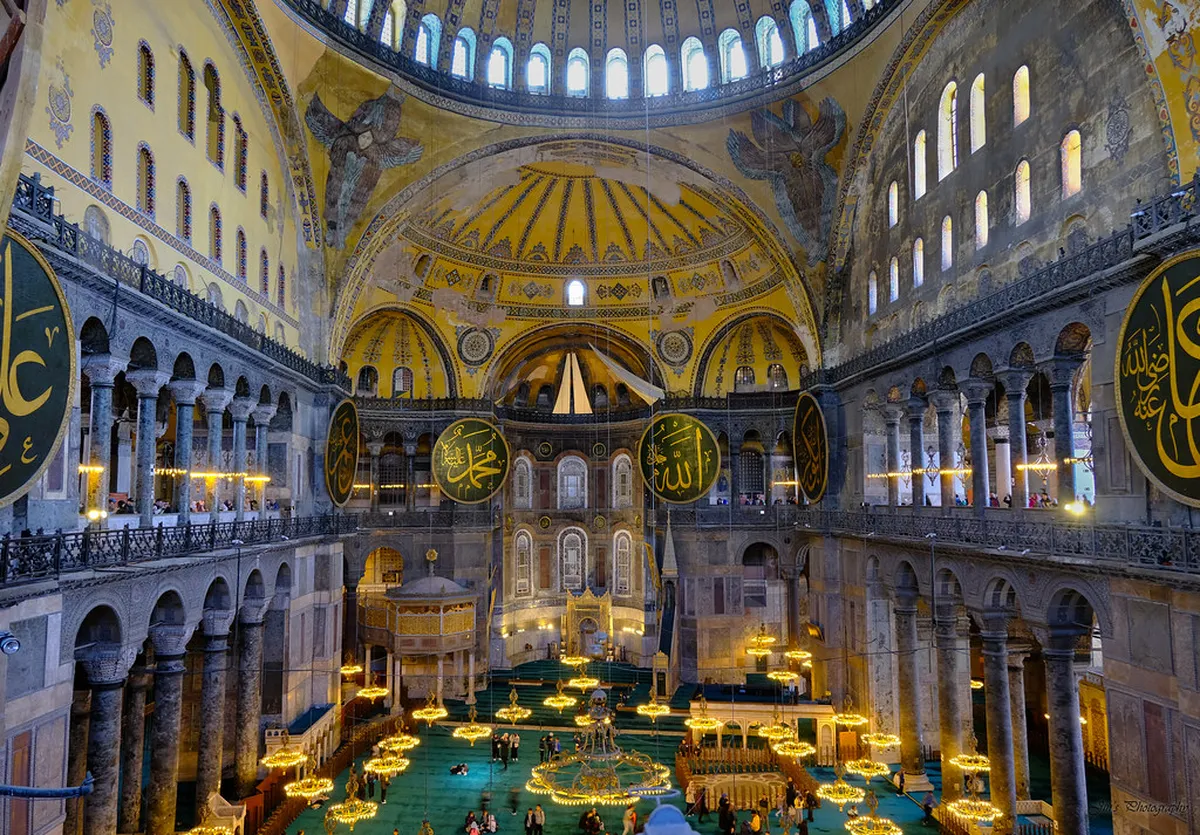
The T1 tram line is the budget traveler's best friend. It connects Kabatas (near Taksim and Dolmabahce Palace) through Eminonu, across the Galata Bridge, to Sultanahmet (Hagia Sophia, Blue Mosque, Basilica Cistern), and onward to the Grand Bazaar stop at Beyazit. This single line links nearly every major tourist site on the European side. Fare with Istanbulkart: about 20 TL ($0.45). A taxi covering the same stretch: 250-500 TL ($5.70-$11.35) depending on distance and traffic.
The tram runs every 3-5 minutes during the day and is easy to navigate — the stops are announced in Turkish and English. The only downside is crowding during rush hours (8-9 AM and 5-7 PM). Avoid those windows and you will ride comfortably.
The Hack: Base your daily sightseeing itinerary along the T1 corridor. Morning at the Grand Bazaar (Beyazit stop), afternoon at Hagia Sophia (Sultanahmet stop), evening along the waterfront (Eminonu or Kabatas stop). One tram line, three stops, zero taxis needed.
Expected Savings: 200-500 TL ($4.50-$11.35) per day compared to taxis between tourist sites.
5. The Dolmus Shared Minibus Hack
Dolmus minibuses are shared vans that run fixed routes and leave when full (the word "dolmus" literally means "stuffed" in Turkish). They fill gaps where metro and tram lines do not reach, particularly between neighborhoods on the Asian side and through hillier parts of the European side. Fares are fixed per route and posted inside the van — typically 25-40 TL ($0.55-$0.90), cheaper than a taxi and often faster than a bus because they take more direct routes and skip some stops.
You pay the driver in cash or sometimes via Istanbulkart, depending on the route. Dolmus stops are marked with a "D" sign, and you can flag them down along their route. To get off, just say "musait bir yerde" (at a convenient spot) or "inecek var" (someone wants to get off).
The Hack: Use dolmus routes for the Taksim-to-Besiktas run and for reaching neighborhoods like Ortakoy that are slightly off the metro grid. Ask your hotel or hostel for the nearest dolmus routes — locals use them daily.
Expected Savings: 100-200 TL ($2.25-$4.55) per ride compared to taxi.
Food Hacks
6. The Lokanta Lunch System
A lokanta is a traditional Turkish ready-food restaurant — the local equivalent of a cafeteria, except the food is genuinely excellent. Lokantas prepare fresh dishes each morning: stewed lamb, stuffed peppers, white bean salad, lentil soup, rice pilaf, and seasonal vegetable dishes displayed behind a glass counter. You point at what you want, they plate it, and you eat. A full meal — soup, a meat dish, a vegetable side, rice, bread, and a drink — runs 200-350 TL ($4.50-$8) at a neighborhood lokanta. The exact same dishes in a Sultanahmet tourist restaurant cost 700-1,200 TL ($16-$27).
Lokantas are everywhere outside tourist zones. Fatih, Aksaray, Kadikoy, and Besiktas all have dense clusters. Look for the ones packed with workers at lunchtime — that is your quality signal. Most lokantas close by 4-5 PM once the day's food is sold, so lunch is the prime meal.
The Hack: Eat your main meal at a lokanta between noon and 2 PM. Point to dishes that look good — language is not a barrier. Budget 200-300 TL ($4.50-$6.80) for a full, satisfying lunch. Keep dinners light with street food (see below).
Expected Savings: 400-800 TL ($9-$18) per day compared to tourist restaurant meals.
7. Street Food Circuit: Simit, Balik Ekmek, and Cay
Istanbul's street food is not a compromise — it is a food group. Three staples will keep you fed, happy, and spending almost nothing:
- Simit — The sesame-crusted bread rings sold from carts on virtually every corner. Cost: 15-25 TL ($0.35-$0.55). Pair with cream cheese (krem peynir) from a nearby market for a breakfast that costs under 50 TL ($1.15). Simit carts start rolling by 6 AM.
- Balik ekmek — Grilled fish tucked into a half-loaf of bread with onions and greens. The most famous spot is the boats bobbing at Eminonu, right by the Galata Bridge. Cost: 150-220 TL ($3.40-$5). This is a full meal.
- Cay (tea) — Turkish tea is the social glue of Istanbul, and it costs almost nothing: 15-30 TL ($0.35-$0.70) at a tea garden, and many restaurants offer free refills. Some carpet shops and bazaar vendors will offer you tea for free — accept it, enjoy the conversation, and do not feel obligated to buy anything.
- Doner kebab — A proper doner wrap (durum) from a local shop runs 100-150 TL ($2.25-$3.40). In a tourist area the same wrap costs 250-400 TL ($5.70-$9). Pair it with an ayran (salted yogurt drink, 20-30 TL) for the classic Turkish combo meal under $4.
The Hack: Build a street food day: simit for breakfast, balik ekmek at Eminonu for a late lunch, cay at a waterfront tea garden in Uskudar or Kadikoy for the afternoon. Total food cost for the day: under 350 TL ($8). Add a lokanta lunch on hungrier days.
Expected Savings: 500-900 TL ($11-$20) per day compared to sitting in restaurants for three meals.
8. Avoid Sultanahmet Restaurants — Eat Where Locals Eat
This is the food hack that saves the most money in Istanbul. Sultanahmet — the area immediately around the Blue Mosque, Hagia Sophia, and Basilica Cistern — has the worst price-to-quality ratio for food in the entire city. Aggressive touts stand outside restaurants waving laminated menus in six languages. A basic kebab plate that costs 150 TL in Fatih costs 400-650 TL in Sultanahmet, and the Sultanahmet version is often worse because the restaurants survive on tourist volume, not repeat local customers.
The fix is simple: walk 10-15 minutes in any direction. Cross the Galata Bridge to Karakoy for excellent seafood meyhanes. Take the T1 tram two stops to Beyazit for student-priced lokantas near Istanbul University. Ferry to Kadikoy for the best food market on the Asian side. Even within the old city, the side streets of Fatih (just west of the Grand Bazaar) have dozens of family-run lokantas with zero tourist markup.
For a proper meyhane (Turkish tavern) experience with meze plates, raki, and grilled fish, Kadikoy and Beyoglu both offer far better value than anything near the old city. Expect 500-800 TL ($11-$18) per person for a full meyhane spread with drinks in these neighborhoods — versus 1,200-2,000 TL ($27-$45) in Sultanahmet.
The Hack: Set a simple rule — never eat within 500 meters of a major tourist attraction. Use the T1 tram, a ferry, or a 10-minute walk to reach neighborhoods where prices reflect local economics, not tourist demand. Embrace the Turkish breakfast spread culture at local cafes: a typical serpme kahvalti (spread breakfast) with cheeses, olives, eggs, honey, and bread costs 250-400 TL ($5.70-$9) and will keep you full until mid-afternoon.
Expected Savings: 600-1,200 TL ($14-$27) per day for a couple eating three meals.
Accommodation Hacks
9. Choose Your Neighborhood Strategically
Where you stay in Istanbul determines your daily spending more than almost any other decision. Here is the honest 2026 price comparison:
- Sultanahmet: Walking distance to Hagia Sophia, Blue Mosque, and Basilica Cistern. But accommodation is overpriced — budget hotels start at 2,400-5,700 TL ($55-$130) per night for mediocre rooms, restaurants charge tourist rates, and the neighborhood is quiet — almost dead — after dark. Best for: first-time visitors staying 1-2 nights who want proximity to the big-three sites.
- Beyoglu (Taksim/Galata/Karakoy): The sweet spot. Hotels and hostels run 1,100-2,600 TL ($25-$60) per night for decent quality. Excellent food scene, vibrant nightlife on Istiklal Caddesi, walkable to the Galata Tower, and the T1 tram or a short bus ride reaches Sultanahmet in 15 minutes. Best for: most travelers, especially those staying 3+ nights.
- Kadikoy (Asian side): The local favorite. Accommodation is 30-50% cheaper than the European side — quality apartments and hotels start at 800-1,750 TL ($18-$40) per night. The food market is world-class, the bar street (Barlar Sokagi) is lively, and the ferry to Eminonu takes 20 minutes with incredible views. Best for: budget travelers, longer stays, and anyone who wants to see the real Istanbul beyond the tourist track.
One critical hotel booking hack: check rates in Turkish lira, not dollars or euros. Some Turkish hotels display lower prices when your browser is set to Turkish or when you access Turkish booking platforms. The lira's depreciation against the dollar means that even "expensive" Istanbul hotels translate to very reasonable dollar prices in 2026.
Also look for hammam-plus-hotel package deals. Several boutique hotels in Beyoglu and Sultanahmet include a complimentary traditional Turkish bath session — a hammam experience that costs 800-2,000 TL ($18-$45) when booked independently. Getting it bundled into your room rate is free money.
The Hack: Stay in Kadikoy for the best value and most authentic experience, or Beyoglu for the best balance of location and price. Book in lira when possible. Check for hammam bundles before finalizing your hotel.
Expected Savings: $20-$70 per night by choosing Kadikoy or Beyoglu over Sultanahmet, plus $18-$45 if you score a hammam bundle.
Attractions and Sightseeing Hacks
10. Museum Pass Istanbul — Do the Math First
The Museum Pass Istanbul (or Istanbul Tourist Pass) costs about 3,800-4,600 TL ($87-$105) in 2026 and grants entry to major museums and sites over five consecutive days. Sounds great — but here is where most guides get it wrong: the pass is only worth it if you plan to visit enough paid sites to beat the cost.
Here are the individual ticket prices for the major paid attractions in 2026:
- Hagia Sophia (visitor gallery): 1,275 TL ($29)
- Topkapi Palace + Harem: 1,500 TL ($34)
- Basilica Cistern: 900 TL ($20)
- Galata Tower: 1,530 TL ($35)
- Istanbul Archaeological Museums: 500 TL ($11)
- Turkish and Islamic Arts Museum: 400 TL ($9)
If you are visiting just Hagia Sophia and Topkapi, that is 2,775 TL ($63) — the pass at 3,800+ TL costs you more. But add the Basilica Cistern, Galata Tower, and the Archaeological Museums, and the total hits 5,705 TL ($130) — now the pass saves you roughly 1,100-1,900 TL ($25-$43).
Crucially, the most iconic experiences in Istanbul are free. The Blue Mosque (Sultan Ahmed Mosque) and the Suleymaniye Mosque — arguably the most beautiful mosque in the city — cost nothing to enter. Walking through the historic streets of Balat, the Spice Bazaar, and along the Bosphorus waterfront costs nothing.
The Hack: List exactly which sites you want to visit, add up the individual ticket prices, and compare to the pass cost. If you are a mosque-and-market traveler rather than a museum-heavy one, skip the pass entirely — many of Istanbul's best experiences are free. For more money-saving strategies, plan your museum days back-to-back to maximize the five-day pass window.
Expected Savings: 1,100-1,900 TL ($25-$43) if you visit 4+ sites, or save 3,800+ TL ($87+) by skipping the pass when your itinerary is mosque- and market-focused.
11. The Grand Bazaar Bargaining Script
The Grand Bazaar is one of the oldest and largest covered markets in the world, with over 4,000 shops selling ceramics, textiles, leather, jewelry, lamps, spices, and more. It is also a place where prices are invented on the spot based on how much the vendor thinks you will pay. The initial asking price is typically 2-3 times what the vendor expects to receive. Some items start at 5 times the realistic price.
Here is the bargaining script that works consistently:
- Browse without showing strong interest. Touch items casually. When asked "Can I help you?" say "Just looking, thank you."
- When you find something you want, ask the price but react neutrally. No matter what they say, nod and say "Hmm, okay" without emotion.
- Start your counteroffer at 40% of the asking price. If they say 1,000 TL, you say 400 TL. They will act shocked — this is theater. Enjoy it.
- Meet somewhere around 50-60% of the original price. They will counter, you counter back, and you typically settle in this range.
- The walk-away move. If you cannot reach your target price, politely thank them and start walking away. About half the time, they will call you back with a lower offer. If they do not, the item was probably near its floor price.
For the Basilica Cistern: it is beautiful at 900 TL ($20) but can get crowded. Consider the Theodosius Cistern (Serefiye Sarnici) near Beyazit as an alternative — smaller, less crowded, cheaper, and with an impressive light installation. The Princes Islands make an excellent day trip: take the ferry from Kabatas (about 80-120 TL with Istanbulkart), rent a bicycle on Buyukada, and spend the day exploring car-free streets and hillside monasteries.
The Hack: Never pay the first price in the Grand Bazaar. Start at 40%, settle at 50-60%. For ceramics and textiles, compare prices at three different shops before committing. And check the Kadikoy market for authentic goods at fixed, local prices — no bargaining theater required (see Hack #12).
Expected Savings: 40-60% on every Grand Bazaar purchase — potentially thousands of TL on ceramics, leather goods, or textiles.
Money Hacks
12. The Lira Advantage and Where to Exchange
Turkey's currency situation in 2026 is complicated for locals but advantageous for visitors holding dollars, euros, or pounds. With the lira at roughly 44 TL per dollar (36-38 TL per euro, 55-57 TL per pound), your foreign currency stretches further than it did even a year ago. A meal that costs 300 TL sounds expensive until you realize it is about $7. A quality boutique hotel room at 2,000 TL per night is under $46.
Where you exchange money matters enormously. The worst rates are at the Grand Bazaar money changers — they target tourists and skim 5-10% compared to the real rate. Airport exchange desks are similarly bad. The best option for cash exchange is PTT (the Turkish post office, marked by yellow and blue signage) — they offer rates very close to the interbank rate with minimal fees. PTT branches are everywhere; the ones near Sirkeci station and in Kadikoy are easy to find.
Even better: use a no-foreign-transaction-fee debit card (like Wise or Revolut) at Turkish ATMs. You get the real exchange rate, and most Turkish ATMs do not charge additional fees. When the ATM asks if you want to be charged in your home currency, always select "No" — choose Turkish lira to avoid dynamic currency conversion markups of 3-8%. Using a neobank card instead of exchanging cash can save you 15-20% on every transaction. For more on this strategy, see our money-saving travel hacks guide.
For shopping, the Kadikoy market on the Asian side offers fixed-price authentic goods — Turkish ceramics, spices, teas, textiles, and olive oil soap — at prices that reflect what locals pay, not what tourists negotiate in the Grand Bazaar. The ceramics here are often from the same Kutahya and Iznik workshops that supply the Grand Bazaar, but at 30-50% lower prices because the market vendors have lower rents and deal primarily with Turkish customers. For telling tourist-grade ceramics from authentic pieces, check the weight (real Iznik-style ceramics are heavier) and look for slight color variations that indicate hand-painting rather than transfer prints.
The Hack: Exchange cash at PTT post offices, use a Wise or Revolut card at ATMs, always decline dynamic currency conversion, and shop at Kadikoy market for authentic goods at local prices. Skip the Grand Bazaar money changers entirely.
Expected Savings: 5-10% on every transaction by avoiding tourist exchange rates, plus 30-50% on shopping by buying at Kadikoy market versus the Grand Bazaar.
Nightlife Hack
13. Meyhane Culture and the Rooftop Bar Price Check
Istanbul's nightlife splits into two very different price tiers. Understanding the difference saves you from a bill shock that ruins an otherwise perfect evening.
Meyhane (tavern) culture is the quintessential Istanbul night out. A meyhane evening means a table full of meze small plates (stuffed grape leaves, hummus, acili ezme, fava bean paste, fried calamari), a bottle of raki (anise-flavored spirit mixed with water), and grilled fish or kebabs. The experience is social, unhurried, and deeply Turkish. In Kadikoy or Beyoglu, a full meyhane evening costs 600-1,000 TL ($14-$23) per person including raki. In Sultanahmet, the same experience runs 1,500-2,200 TL ($34-$50).
Rooftop bars with Bosphorus views are the other end of the spectrum. They are stunning — watching the sun set over the Bosphorus from a rooftop terrace is genuinely one of the great travel experiences. But cocktails at places like Mikla, 16 Roof, or NuTeras run 400-600 TL ($9-$14) each. A couple having three rounds of cocktails will spend 2,400-3,600 TL ($55-$82) on drinks alone. The view is free from the street; you are paying for the seat.
The budget move: have one drink at a rooftop bar for the view (budget 500-700 TL for one cocktail plus a small plate), then move to a meyhane in Kadikoy or Beyoglu for the actual evening. You get both the Instagram moment and the authentic Istanbul night for a combined 1,100-1,700 TL ($25-$39) instead of 3,000-4,500 TL for an all-rooftop evening.
For bar hopping without the rooftop markup, Kadikoy Barlar Sokagi (Bar Street) is the local favorite: craft beers run 150-250 TL ($3.40-$5.70), cocktails 250-400 TL ($5.70-$9), and the atmosphere is young, energetic, and almost entirely Turkish. It is a 20-minute ferry ride back to the European side when you are done.
The Hack: One rooftop drink for the view, then relocate to a meyhane or Kadikoy Barlar Sokagi for the real evening. Budget 1,200 TL ($27) for a full night out including a drink with a view, a meyhane spread, and ferry rides — versus 3,000+ TL ($68+) for an evening spent entirely at tourist-facing venues.
Expected Savings: 1,500-2,500 TL ($34-$57) per evening compared to tourist rooftop bar hopping.
Your Istanbul Budget Cheat Sheet (2026)
Here is what a smart budget day in Istanbul looks like in 2026, with prices in both TL and USD at the current rate of ~44 TL/$1:
- Accommodation (Kadikoy or Beyoglu): 800-1,750 TL ($18-$40)/night
- Transportation (Istanbulkart all day, 4-5 rides): 80-120 TL ($1.80-$2.75)/day
- Food (lokanta lunch + street food breakfast and dinner): 350-700 TL ($8-$16)/day
- Attractions (mix of free mosques + 1 paid museum): 0-1,275 TL ($0-$29)/day
- Total: 1,230-3,845 TL ($28-$88) per day for a full Istanbul experience
Compare that to the typical tourist spend of $140-$250 per day when taking taxis, eating in Sultanahmet, and paying for private tours. These 13 hacks cut your daily cost by 50-70% while giving you a more authentic, more enjoyable Istanbul experience. The city where continents meet is also where budget travel meets luxury experiences — you just need to know where to look.
For more strategies to reduce your travel costs across every destination, check out our flight hacks for getting to Istanbul cheaply and our complete budget travel guide for the full toolkit.
Explore More City Travel Guides
Planning a multi-city trip or comparing destinations? These guides use the same budget-hacking approach:
- Barcelona Travel Hacks — another walkable city with incredible food culture
- Dubai Travel Hacks — luxury experiences at budget prices
- Prague Travel Hacks — another affordable European capital
- Our packing hacks — fitting your Grand Bazaar finds in a carry-on
Frequently Asked Questions
How much money do I need per day in Istanbul in 2026?
A budget traveler using the hacks in this guide can comfortably spend 1,200-3,600 TL ($28-$82) per day including accommodation, food, transport, and sightseeing. Mid-range travelers who want occasional restaurant dinners and rooftop bar visits should budget 4,000-6,600 TL ($90-$150) per day. The key variable is accommodation neighborhood (Kadikoy is cheapest at $18-$40/night) and whether you eat at lokantas ($4.50-$8 per meal) versus tourist restaurants ($16-$27 per meal).
Is the Istanbulkart worth it for a short trip?
Absolutely. Even for a two-day visit, the Istanbulkart pays for itself within three or four rides. The card costs about 130 TL ($3) and immediately cuts your per-ride cost to 20 TL ($0.45) versus 50 TL ($1.14) for paper tickets — a 60% saving per ride. It also works on ferries, which are both practical transport and the best free sightseeing in the city. There is no scenario where an Istanbulkart is not worth buying.
Is Istanbul safe for budget travelers?
Istanbul is generally very safe for tourists, including budget travelers using public transport, street food vendors, and budget accommodation. Petty crime like pickpocketing can occur in crowded areas (Grand Bazaar, Istiklal Caddesi, trams during rush hour) — keep valuables in a front pocket or crossbody bag. The most common "scam" is overcharging at Sultanahmet restaurants and Grand Bazaar shops, which these hacks help you avoid entirely. Neighborhoods like Kadikoy, Beyoglu, and Sultanahmet are all safe at night.
Should I buy the Museum Pass Istanbul?
Only if you plan to visit four or more paid sites within five days. The pass costs about 3,800-4,600 TL ($87-$105) and covers Topkapi Palace, Hagia Sophia, the Basilica Cistern, Galata Tower, and several other sites. If your itinerary focuses on mosques (free), markets (free), and neighborhood exploration (free), skip the pass. Many visitors find that the Blue Mosque, the Suleymaniye Mosque, the Spice Bazaar, and ferry rides provide a rich experience without needing a single paid ticket.
What is the best way to exchange money in Istanbul in 2026?
Use a no-fee debit card like Wise or Revolut at Turkish ATMs — you get the real interbank exchange rate of roughly 44 TL per dollar. Always decline the ATM's offer to charge in your home currency (dynamic currency conversion) to avoid 3-8% markups. For cash, exchange at PTT post offices (yellow and blue signs) which offer rates close to the interbank rate. Avoid airport exchange desks and Grand Bazaar money changers, which skim 5-10% off the real rate.
When is the best time to visit Istanbul on a budget?
The best budget months are November through March (excluding Christmas and New Year weeks), when hotel prices drop 30-50% and crowds thin dramatically. The shoulder seasons — April to mid-May and mid-September to October — offer warm weather with moderate prices. Peak season (June through August) brings the highest prices and heaviest crowds but also the longest daylight hours and best weather for Bosphorus ferry rides and Princes Islands trips. For the best balance of weather and price, aim for late April or early October.