
15 Bali Tourist Scams to Avoid: 2026 Safety Guide
Don't get ripped off in paradise. Learn about the 15 most common Bali tourist scams, from money changer tricks to fake taxis, with expert tips to stay safe.
On this page
15 Bali Tourist Scams to Avoid
After spending six months living in Canggu and navigating the bustling streets of Kuta, I have seen every trick in the book. Bali is a stunning destination, but its popularity makes it a prime target for opportunistic fraudsters looking to exploit newcomers. I have personally watched travelers lose hundreds of dollars to simple sleight-of-hand tricks that could have been easily avoided with a little foresight. This guide serves as your protective shield, ensuring your holiday remains focused on sunsets and surf rather than police reports.
Last refreshed May 2026 after my most recent trip to Ubud, this list reflects the latest tactics used by local touts. While the island is generally very safe, being aware of these specific Bali travel safety tips will save you significant stress. Most residents are incredibly kind, but a small minority relies on the confusion of first-time visitors to make a quick profit. For the broader playbook on saving money and skipping the rookie mistakes, see our pillar guide on Bali travel hacks.
Quick Reference: Top 5 Bali Scams in 2026
These five account for roughly 80% of the financial losses I see reported in expat forums each month. Memorise them before landing; the typical-loss figures are in Indonesian Rupiah at the May 2026 rate (USD 1 ≈ IDR 16,200).
- Money changer sleight of hand — typical loss IDR 300,000 to 1,500,000. Use only BMC, Central Kuta, or PT Dirgahayu.
- Fake Bluebird taxi — typical overcharge IDR 200,000 to 500,000. Check the "BLUE BIRD GROUP" wordmark and dashboard ID, or use MyBluebird.
- Airport porter overcharge — typical demand IDR 150,000 to 500,000 per bag. Trolleys are free; push your own.
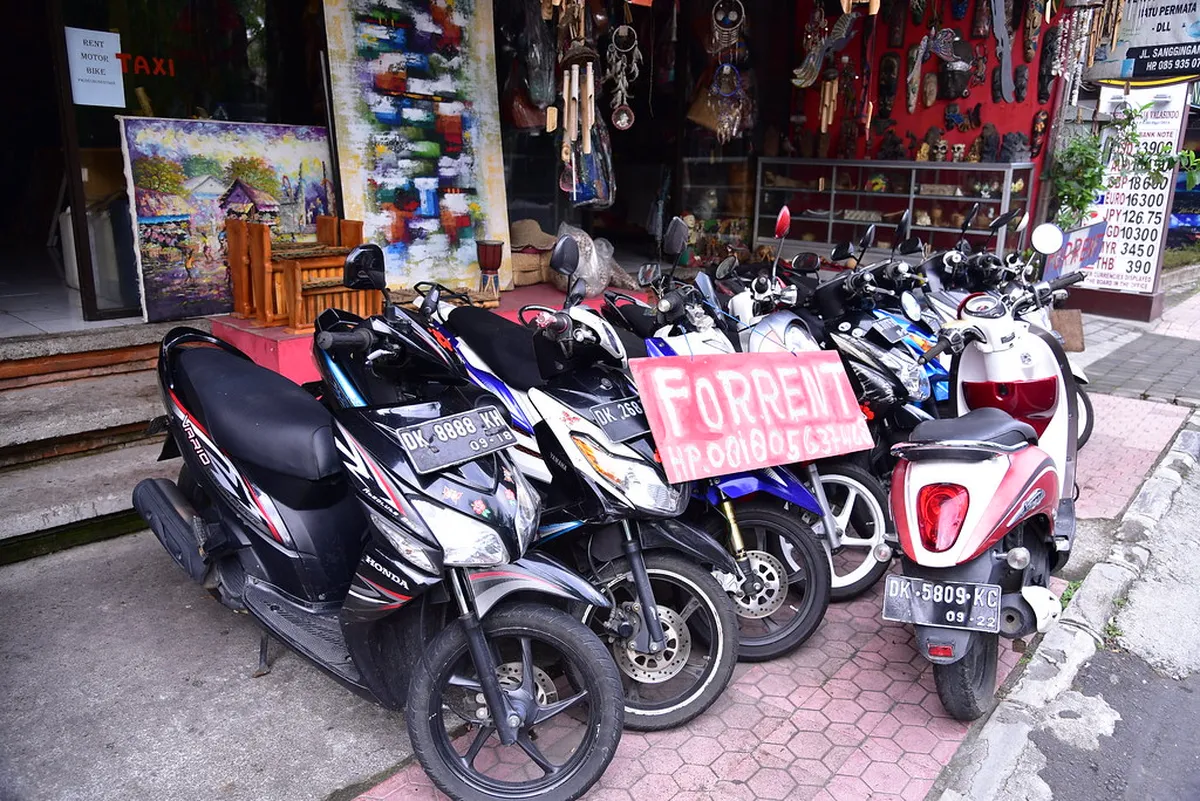
- Motorbike pre-existing damage — typical fake bill IDR 1,500,000 to 3,000,000. Film a slow walk-around before you ride off.
- ATM card skimming — risk: full daily withdrawal limit. Use only ATMs inside BCA, Mandiri, or BNI branches.
Is Bali Safe for Travelers in 2026?
Statistically, Bali remains one of the safest tourist hubs in Southeast Asia for solo travelers and families alike. Violent crime is remarkably rare, and the local philosophy of Tri Hita Karana encourages a peaceful social environment across the island. Most issues reported by visitors involve petty theft or non-violent financial scams rather than physical danger. The biggest risks often come from traffic accidents or environmental factors like strong ocean currents.
The rise of digital nomadism has brought new challenges, including more sophisticated online phishing and ATM tampering. Tourists often lower their guard because the atmosphere feels so relaxed and welcoming in areas like Sanur or Uluwatu. Maintaining the same level of awareness you would in any major global city is the best way to stay protected. You should always trust your intuition if a situation or a deal feels too good to be true.
Preparation is the key to a worry-free experience in the Land of the Gods. Understanding the local Bali transportation guide helps you avoid the most frequent daily annoyances. Most scams rely on a lack of local knowledge regarding pricing and official procedures. Once you know the standard rates and official logos, these fraudulent attempts become very easy to spot and ignore.
15 Common Bali Tourist Scams to Avoid
The list below clusters into airport and transport, money and digital, street and cultural, then health and safety. Most happen on the Bali airport transfer route or in the four hot zones (Kuta, Legian, Seminyak, Canggu). Per Guardian reporting on Booking.com phishing, digital scams now arrive before you do — verify every booking link before you tap.
- Money Changer Sleight of Hand. Dishonest cashiers in Kuta and Legian kiosks drop notes behind the counter while counting; typical loss IDR 300,000 to 1,500,000. How to avoid: use BMC, Central Kuta, or PT Dirgahayu, recount yourself, and never let them touch the cash again.
- Fake Bluebird Taxi. Cars painted blue with lookalike logos ("Blue Biru", "Bali Bird", "Pak Bird") refuse the meter and charge triple. How to avoid: check the exact "BLUE BIRD GROUP" wordmark, the driver ID on the dashboard, and the meter switched on — or use MyBluebird, Grab, or Gojek.
- Airport Porter Overcharge. Uniformed touts at Ngurah Rai grab your bags and demand IDR 150,000 to 500,000 per bag for a two-minute walk. How to avoid: trolleys are free; say "tidak, terima kasih" and keep a hand on each bag until you reach your driver.
- Motorbike Pre-existing Damage. Canggu and Ubud rentals invoice IDR 1,500,000 to 3,000,000 for scratches that were already there. How to avoid: film a slow walk-around (including under the seat), email it to yourself for a timestamp, and refuse passport-as-deposit — photocopy plus cash is the norm.
- ATM Card Skimming. Hidden overlays on standalone street ATMs copy your card and PIN. How to avoid: use only ATMs inside BCA, BNI, or Mandiri branches, give the card slot a firm wiggle to detect overlays, cover the keypad, and enable transaction alerts on your banking app.
- The Free Holiday / Timeshare Pitch. "Scratch cards" in Seminyak, Kuta, and Nusa Dua promise a luxury stay (often Karma Group-branded) and lock you into a four-hour sales presentation. How to avoid: the decline script that works every time is "I already own a timeshare back home, so I don't qualify" — they want fresh prospects, not existing owners. Never hand over your passport for "verification".
- Unofficial Visa and Document Sites. Third-party sites charge USD 80 to 100 for the e-VOA and customs form (real cost USD 35), often as the top Google ad. How to avoid: use only molina.imigrasi.go.id and ecd.beacukai.go.id. Our Bali visa on arrival 2026 walkthrough has screenshots of the legit portals.
- Temple "Mandatory" Guides and Donations. Touts at Pura Besakih and Lempuyang claim the printed ticket is not enough and demand IDR 75,000 to 400,000 extra. How to avoid: photograph the official price board, ignore anyone outside the booth, and treat the printed ticket as your only payment.
- Beach Hustlers and Paid Photos. Vendors drape a python, hornbill, or sarong on you and demand IDR 75,000 to 250,000 per shot; the famous Lempuyang "Gates of Heaven" reflection is a paid mirror trick. How to avoid: assume any prop is paid until proven otherwise — confirm price before you pose.
- Accommodation Photo Fraud and Phishing. Cloned listings and fake Booking.com emails ask for direct bank transfer or crypto for villas that do not exist. How to avoid: book through the official Booking.com site or Agoda, never pay outside the platform, and reverse-image-search any listing that looks magazine-perfect for the price.
- Arak Poisoning and Counterfeit Alcohol. Methanol-tainted home-distilled arak in unbranded bottles or "free welcome cocktails" can blind or kill within 12 to 36 hours. How to avoid: stick to Bintang or Bali Hai beer, branded arak (Iwak Arumery, Dewi Sri), or imports with intact tax stamps. If one cocktail makes you unusually drunk, treat it as a medical emergency.
- Fake Police and Traffic "Fines". Men in incomplete uniforms stop scooter riders on the Canggu-Seminyak shortcut and demand IDR 500,000 to 2,000,000 cash for invented violations. How to avoid: carry an International Driving Permit, your home licence, and a helmet. Ask for a badge number, a "tilang" ticket booklet, and to pay at Denpasar police station — scammers walk away within thirty seconds.
- The Iranian Currency Curiosity Trick. A friendly stranger in Legian or Seminyak asks to "see what your money looks like", fans your notes while you are flattered, palms two or three of the largest denominations, and disappears. How to avoid: never produce your wallet for a stranger; if they accept seeing the cash on a phone screen, the curiosity is genuine — scammers always insist on physical notes.
- Gas Station Pump Reset. Attendants distract you while the pump meter still reads the previous customer's total, so you pay for both fills. How to avoid: point at the display, say "nol ya" (zero, please), and watch it click back to zero before any cash changes hands.
- "Sanctuary" Animal Tours. Ubud touts sell IDR 750,000 to 1,500,000 tickets to facilities that mistreat captive elephants, civets, and sea turtles. How to avoid: cross-reference against World Animal Protection's database; refuse any venue that allows riding, hugging, or close-contact selfies with apex animals.
Real vs Fake Bluebird Taxis: Four Visual Checks
Bluebird is the most-faked brand on the island and the visual differences are subtle. The four checks below let you spot a copycat from across the street.
- Wordmark: genuine cars read "BLUE BIRD GROUP" in capitals with a stylised bird above. Fakes use "Blue Biru", "Bali Bird", or "Pak Bird" with a different silhouette.
- Driver ID: real drivers display a laminated photo ID with full name, Bluebird watermark, and employee number on the upper-right of the dashboard.
- Meter: genuine drivers start the argo (meter) the moment you sit down — flagfall IDR 7,500, IDR 6,000 per km in 2026. Flat-fare offers are always fakes.
- App match: the MyBluebird app shows the licence plate before pickup. If the plate does not match, walk away.
The safer default in 2026 is to skip kerbside hunting and book through Grab, Gojek, or MyBluebird. All three have official pickup zones at Ngurah Rai (Domestic Arrivals, between pillars 8 and 9) with the price locked before you confirm.
Safe Money Changer Checklist
Licensed exchanges (BMC, Central Kuta, PT Dirgahayu, Kresna) sit on every major tourist street with rates inside 0.5% of interbank. The problem is unlicensed kiosks pretending to be them. Run this five-point check before handing over a dollar.
- Glass-walled, air-conditioned, inside a building. Legitimate exchanges do not operate from open-air kiosks or the back of a shop selling other goods.
- QR-coded Bank Indonesia licence visible on the window. Scan it; it should resolve to bi.go.id. No QR, no entry.
- No "No Commission" sign. Licensed exchanges quote a clean rate; scammers shout "0% commission" to mask poor rates and counting tricks.
- Rate within 1% of Google. If the displayed rate beats interbank by more than 1%, it is mathematically impossible to make money honestly.
- Cashier counts once, hands you the stack, steps back. If they want to "recount" after you have touched the cash, walk out.
Arak Safety Protocol
Good arak is Balinese heritage; bad arak kills. Casualties skew toward backpackers who accept free welcome shots at hostels or beach parties. Bali's tourism authority issued a renewed advisory in early 2026 after a methanol cluster on Gili Trawangan, so this is not hypothetical.
- Branded bottle, tax-band seal, glass not plastic. Iwak Arumery, Dewi Sri, and Pulau Dewata are the brands I trust. If it pours from a recycled water bottle, do not drink it.
- Skip free welcome cocktails at unbranded bars. Methanol has no taste; a sweet fruit cocktail can hide a fatal dose. Watch your first drink poured from a sealed bottle.
- Symptom watch (12 to 36 hours): blurred vision, severe headache, nausea, abdominal pain, solvent-smelling breath. These are emergency signs even after one glass.
- 24/7 hospitals: BIMC Kuta, BIMC Nusa Dua, Siloam Denpasar. Antidote must start within hours.
- Travel insurance with medical evacuation is non-negotiable. Local treatment runs IDR 80,000,000 to 200,000,000 and air-evac to Singapore is double that.
Departure-Side Extortion and Tourism Tax QR Phishing
Most scam guides stop at arrivals; two newer tricks now hit travelers on the way out. Both exploit confusion around 2024 to 2026 policy changes that even seasoned expats find baffling.
The first is the visa overstay shake-down at Ngurah Rai departures. Since the e-VOA migrated to the molina portal in late 2024, some immigration staff claim a "stamping discrepancy" or one-day overstay and demand IDR 1,000,000 to 5,000,000 cash on the spot. The real overstay fine is IDR 1,000,000 per day, paid by card at the immigration cashier — never in cash to an officer at the desk. Ask politely for the supervisor ("kepala") and a written notice; the demand usually evaporates the moment a supervisor approaches. Allow an extra hour at the airport if you are near your visa expiry.
The second is the tourist-tax QR-code phishing scam. Bali introduced a mandatory IDR 150,000 levy in February 2024, payable through the Love Bali portal (lovebali.baliprov.go.id). Fake QR stickers now appear on arrival pillars and flyers; scanning the wrong code routes you to a clone page that harvests your card and charges five to ten times the real fee. Pay only via the official Love Bali app from the App Store or Google Play before you fly, screenshot the receipt, and ignore stray QR codes. If you arrive unpaid, queue at the Love Bali counter on the right just after immigration — they accept card and print the receipt on the spot.
When Is a Bali Scam Not a Scam?
Visitors often confuse local bargaining with being cheated. In traditional markets the first price quoted is three to five times the expected price, and negotiating is a standard social interaction. Learning how to bargain in Bali markets reaches a fair price without offending the vendor.
Temple sarong and entry fees similarly cause confusion. Most temples charge IDR 50,000 to 75,000 per adult, which covers sarong rental and site maintenance; this is legitimate. The scam version is the secondary "donation box" pushed outside the official booth — that one you ignore.
Driver commissions are baked into the tourism economy. A driver might recommend a specific restaurant or silver workshop because of a kickback; the food is not bad and the silver is not fake, but the price runs 10 to 20% higher than walking in alone. You are free to decline. "On-the-spot fines" for genuine offences (no helmet, no IDP, running a light) are a grey area rather than a pure scam — the cash payment is functionally a bribe to skip station paperwork, and the formal ticket route still exists if you prefer it.
What to Skip: Overrated Safety Gadgets
Bulky money belts are unnecessary in Bali. The heat makes them uncomfortable and they mark you out as a worried tourist carrying cash. A cross-body bag with a YKK zipper covers it; keep your passport and bulk cash in the hotel safe.
Portable water purifiers are also overkill. While you cannot drink tap water in Bali, branded bottled water and 19-litre refills are cheap and everywhere. Most cafes and villas provide free filtered water, making UV straws redundant.
Hard-shell anti-theft backpacks are heavy in the humidity and awkward in scooter under-seat storage. A lightweight water-resistant daypack with a carabiner-friendly zip covers 99% of real risks. The one bit of kit actually worth packing is a Faraday card sleeve for your contactless bank card.
Emergency Resources and Reporting Scams
The Bali Tourist Police (Polisi Pariwisata) handle international visitors and most officers speak workable English. The main office sits on Jalan Pantai Kuta opposite the Hard Rock Hotel and is open 24/7. Always ask for a written police report ("laporan polisi") — verbal statements will not satisfy most insurers.
For digital fraud or skimming, contacting your bank within minutes is the highest-leverage step. A travel-friendly card like Wise's multi-currency card lets you freeze the card instantly, switch on contactless-only mode, and reissue a virtual number in seconds. Keep a screenshot of your bank's international emergency number in your phone's notes app.
Reporting scams publicly helps the next traveler. Community maps such as Bali Untold's custom Google Map flag dodgy ATMs, fake taxi ranks, and unlicensed money changers — flagging a location takes thirty seconds.
Frequently Asked Questions
What should I do if a money changer rips me off?
Immediately demand your original currency back and do not leave the kiosk until you have it. If they refuse, state clearly that you are calling the Tourist Police. Most scammers will return the money to avoid official trouble.
Are Grab and Gojek safe to use in Bali?
Yes, these ride-hailing apps are generally much safer than street-hailed taxis because the price is fixed. You can track your driver and share your ride status with friends. Just be aware that some local 'taxi mafias' ban these apps in specific zones.
Is it safe to use my credit card in Bali shops?
Major malls and reputable boutiques are safe for credit card use, but always watch the staff. Ensure they do not take your card out of sight or swipe it through multiple machines. For smaller markets, cash is always the safer and preferred option.
Bali remains a paradise for millions of visitors each year despite these common scams. By staying informed and maintaining a healthy level of skepticism, you can enjoy everything the island offers without financial loss. Remember that most locals are honest people who rely on tourism and want you to have a positive experience.
Keep this guide bookmarked on your phone for quick reference while you are exploring the island. A little bit of preparation goes a long way in ensuring your Balinese adventure is memorable for all the right reasons. Safe travels and enjoy the incredible beauty of Indonesia!