
Bali Sanur Retiree Guide: 10 Essential Insights for Living in Sanur
Discover the ultimate Bali Sanur retiree guide. Learn about KITAS visas, 2026 living costs, healthcare at BIMC, and the best neighborhoods for a relaxed expat life.
On this page
Bali Sanur Retiree Guide: 10 Essential Insights for Living in Sanur
Sanur offers a flat, walkable seafront village that has quietly become Bali's default retirement zone. The five-kilometre paved boardwalk, calm reef-protected swimming, and a settled expat community separate it from the noisier southern resorts. Unlike Canggu's scooter chaos or Ubud's stepped terrain, Sanur is the rare Balinese district where you can live well past 70 without owning a car.
This guide covers what you actually need to plan a 2026 move: the Retirement KITAS thresholds, how the new Second Home Visa changes the calculus, realistic monthly budgets at three lifestyle tiers, healthcare options after Sanur's hospital expansion, neighbourhood trade-offs, and the property routes most retirees consider. It also flags the foreign-pension and salt-air costs that almost no competing guide tells you about.
Where To Retire In Bali: Why Sanur Leads the List
Choosing the right base is the first decision in your international retirement journey, and Sanur consistently lands at the top of the shortlist for retirees over 60. The reason is geometry: Sanur sits on flat coastal land with continuous footpaths, while Ubud climbs jungle ridges and Uluwatu hangs off limestone cliffs. Many residents go months without driving, relying on the boardwalk, bicycles, and Grab.
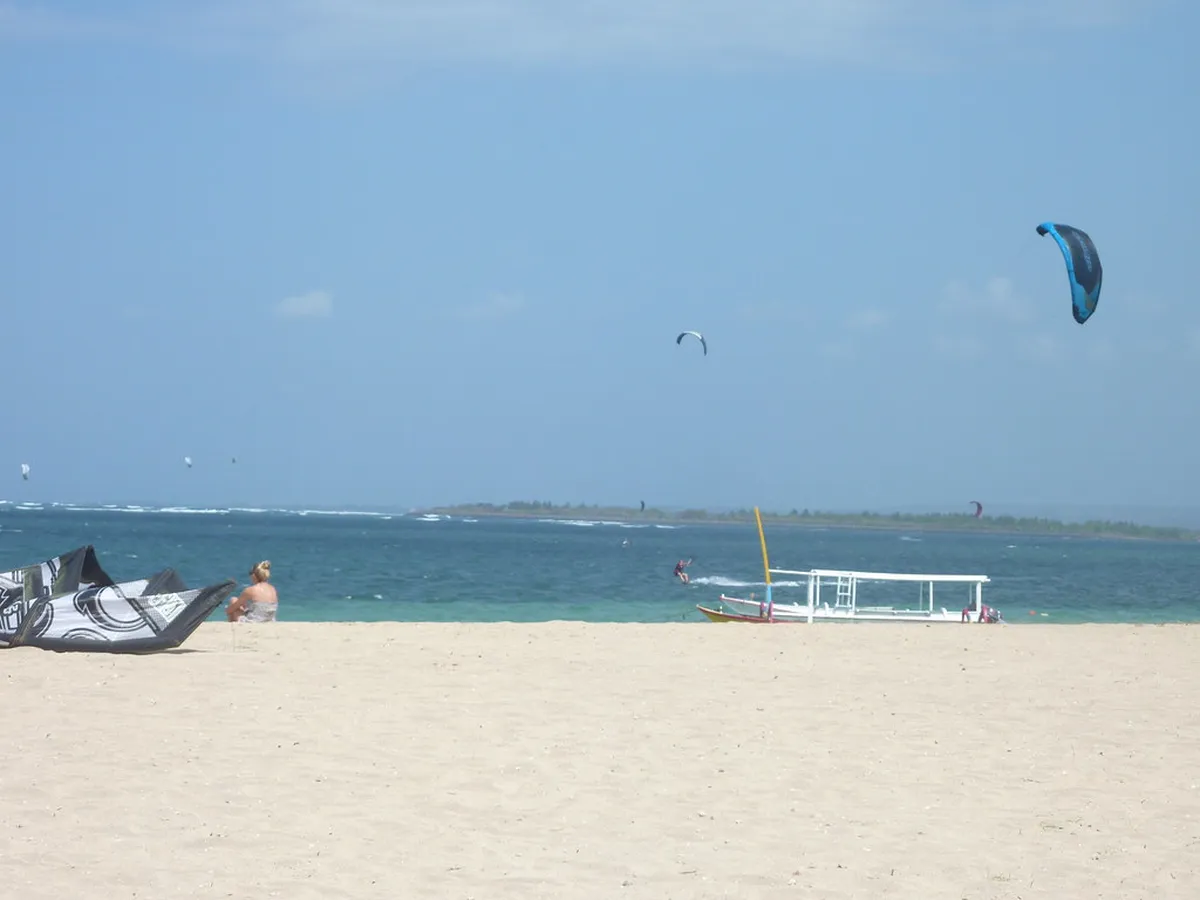
The beach is protected by a long offshore reef, which keeps the water shallow and calm enough for daily swims even in your seventies. Sunrise faces east across the Bali Sea, so morning walks happen in soft light rather than glare. You can easily find a neighborhood in Sanur that fits your noise tolerance and budget, from quiet Mertasari in the south to lively Sindhu in the north.
Versus the alternatives, Sanur trades cultural intensity for liveability. Ubud rewards yoga and art retirees but demands fitness for the hills and a 45-minute drive to a major hospital. Canggu skews young, loud, and traffic-bound. Nusa Dua is gated-resort calm but expensive and isolated. Sanur is the middle path: a working Balinese town with daily ceremonies and traditional warungs, layered with international clinics, supermarkets, and a settled retiree social scene.
Sanur Neighbourhoods: Quiet Zones vs Active Zones
Sanur is small (roughly five kilometres end to end) but the character changes block by block. Picking the wrong pocket is the most common first-year regret because rents are non-trivial to break and the boardwalk hum varies hugely. Walk every section at 07:00, 14:00, and 21:00 before you sign a 12-month lease.
- Mertasari (south). Wide, quiet beach, kite-flying fields, retiree-heavy. Best for sleep, gardens, and slow mornings. Furthest from medical and shopping; budget for more Grab rides.
- Semawang & Karang (south-central). Mid-range villas behind the boardwalk. Calm at night, good cafe density, walkable to Sindhu market in 25 minutes. The sweet spot for most retirees.
- Sindhu (central-north). Sindhu Night Market, beachfront warungs, more energy. Great for social retirees who want activity outside their door; light sleepers should stay two streets back.
- Renon edge (west of bypass). Not technically Sanur but five minutes by car. Quieter residential streets, larger plots, closer to Bali Royal Hospital. Suits drivers who want suburban space.
- Padanggalak (far north). Rice fields meet ocean, very local, cheaper rents. Roosters at dawn, fewer Western amenities. For cultural-immersion retirees.
If you cannot decide, central Sanur around Jalan Danau Tamblingan gives you both directions of the boardwalk and the densest concentration of pharmacies, ATMs, and restaurants. It is also where international newcomers tend to cluster, which makes the first six months of social integration faster.
The Retirement Visa: KITAS, KITAP, and Second Home Visa
Securing legal residency is the load-bearing decision in any Sanur retirement plan. Most foreigners apply for the Retirement KITAS (E33F), a temporary stay permit. The 2026 thresholds are: minimum age 55, proof of either USD 3,000/month income or USD 50,000 deposited in a state-owned Indonesian bank (BNI, BRI, or Mandiri), active health insurance, a signed long-term lease, and the obligation to employ at least one Indonesian household staff member. The visa is valid for one year and renewable annually for up to five.
Working with a reputable agent like Lets Move Indonesia — Retirement KITAS simplifies the paperwork; expect agent fees of roughly USD 1,200 to 2,500 per year on top of government charges. After five consecutive years on a Retirement KITAS, you become eligible for KITAP, a five-year permanent stay permit that removes the annual renewal grind.
The newer alternative is the Second Home Visa, which is not retirement-specific but suits older arrivals with capital. It requires either a USD 130,000 (IDR 2 billion) deposit in a state-owned Indonesian bank, or ownership of a luxury property valued at IDR 5 billion (around USD 315,000) on a Hak Pakai title. In return you get a five-year stay permit upfront, no annual renewal, and no requirement to employ household staff. For retirees with deployable capital who do not want yearly bureaucracy, the Second Home route often wins despite the locked deposit.
- Retirement KITAS suits retirees with steady pension income but limited liquid capital, who do not mind annual renewals and household-staff hiring.
- Second Home Visa suits retirees with USD 130,000+ to lock up, who value reduced paperwork and faster stability.
- Neither permits employment income inside Indonesia; rental income from a personally-held villa is also restricted unless held through a PT PMA company structure.
- Health insurance is mandatory under both. Many Australian and UK retirees underestimate this; activate the policy before applying.
What Retirement in Sanur Actually Costs (2026 Tiers)
Generic "Bali is cheap" headlines obscure the real arithmetic. A retired couple in Sanur in 2026 should plan around three tiers, depending on lifestyle. These are realistic monthly totals after one full year of living, not first-month honeymoon spend.
- Comfortable (USD 2,400-2,800/month for a couple). Two-bedroom villa with small pool inland from the boardwalk (USD 800), mix of warung and mid-range restaurants (USD 600), one mid-tier international health policy (USD 300), scooter plus occasional Grab (USD 150), utilities and 50 Mbps internet (USD 120), one part-time housekeeper (USD 200), modest leisure (USD 200), and visa amortised at USD 130/month.
- Premium (USD 4,000-4,500/month). Three-bedroom villa closer to the beach with private pool (USD 1,500), regular Western dining and delivery (USD 900), comprehensive insurance (USD 500), car rental or part-time driver (USD 350), better leisure budget (USD 400), two staff including gardener (USD 350).
- Luxury (USD 6,500+/month). Beachfront or Mertasari villa with full staff, full-time driver, fine-dining habit, premium global health cover with evacuation rider, frequent regional travel.
Single retirees should budget roughly 65 percent of these figures since rent, utilities, and transport are largely shared costs. The biggest gap from Western life is at the comfortable tier: a private villa that would cost USD 3,500 in Sydney or London rents for USD 800 to 1,500 here, a weekly massage costs USD 8 to 15, and a full-time housekeeper runs USD 200 to 300 per month. The Bali budget guide breaks down a leaner backpacker baseline if you want to stress-test the numbers.
Build in two often-missed lines: USD 800 to 2,500 per year per person for international health insurance, and USD 1,500 to 2,500 per year for KITAS renewal, agent, and bank-letter fees. Couples renewing two KITAS plus annual insurance can lose USD 5,000 a year before they buy a single nasi goreng.
Hidden Costs of Coastal Living No One Mentions
Sanur is at sea level on a salt-laden coast, and that single fact rewrites a maintenance budget that competing guides simply do not address. Air-conditioner compressors that last 8 to 10 years inland often die in 3 to 4 years within 500 metres of the boardwalk. Budget IDR 2.5 to 4 million (USD 160-260) per AC unit replacement, and assume one unit per year on a multi-bedroom villa.
Other recurring coastal lines: stainless-steel kitchen fittings rust on a six-month cycle near the beach; bicycle chains and gears need monthly oiling; laptops and TVs sometimes lose ports to corrosion within five years (run a dehumidifier in a closed cabinet for electronics you care about); leather furniture grows mould in shoulder season unless you keep at least one room sealed and air-conditioned daily. Pool maintenance runs USD 80 to 150 per month, and salt-air-resistant pool pumps cost roughly twice the inland price.
Banjar fees are the other line item retirees forget. Every villa sits inside a local village (banjar), and you contribute monthly to community ceremonies, security patrols (pecalang), and waste collection. Expect IDR 100,000 to 500,000 (USD 6-32) per month depending on neighbourhood, plus occasional one-off contributions for cremation ceremonies or temple rebuilds. Pay these gladly; refusing them is the fastest way to lose neighbourhood goodwill.
Healthcare: BIMC, Bali Mandara, and What Insurance Actually Covers
Healthcare quality is the single biggest concern for retirees evaluating Bali, and Sanur's profile improved sharply over the last two years. The BIMC Siloam Hospital Bali network operates accredited hospitals in Kuta, Nusa Dua, and Ubud with English-speaking staff and international protocols. Sanur itself now has a new international-standard hospital plus the established Bali Mandara Hospital and Bali Royal Hospital in nearby Renon, both within 15 minutes by Grab.
Out-of-pocket prices remain a fraction of Western rates. A GP visit runs USD 20 to 50, a specialist consultation USD 40 to 100, dental cleaning USD 20 to 40, and an MRI USD 150 to 350. Common prescriptions cost 50 to 80 percent less than equivalents in Australia, the UK, or the EU. The catch: complex cardiac surgery, oncology, and advanced neurosurgery may still require evacuation to Singapore (2.5 hours) or Jakarta. Add a USD 50-100/year evacuation rider to your insurance.
International health policies for retirees aged 55 to 70 typically cost USD 800 to 2,500 per person per year. Pacific Prime, Cigna, Allianz Care, and April International all write Indonesia-based plans. Pre-existing conditions affect pricing heavily, so get three quotes before you commit. A common mistake: buying a domestic-only Indonesian policy because the premium looks attractive, then discovering that Singapore evacuation is uncovered when it matters.
Foreign Pensions, Frozen Payments, and Tax Residency
This is the single biggest cost most Sanur retirement guides skip. Australian, British, Canadian, and New Zealand retirees regularly arrive without realising their home pension changes when they leave, sometimes by thousands of dollars per year.
Australian Age Pension: if you are paid under portability rules and stay overseas longer than 26 weeks, your pension drops to the proportional rate based on your Australian Working Life Residence. Many full-rate Australian pensioners lose 10 to 25 percent of their payment after six months in Bali. The supplement and energy components are also reduced or removed. Run your numbers through Centrelink's portability calculator before you book the one-way flight.
UK State Pension: Indonesia is a "frozen pension" country, meaning your weekly payment locks at the rate you were receiving on the day you departed (or first claim it abroad) and never receives the annual triple-lock increase. Over a 20-year retirement this can erode purchasing power by 30 to 40 percent. There is no workaround unless you split residency back to the UK each tax year. Build the freeze into your projections, not your hopes.
Indonesian tax residency. If you spend more than 183 days inside Indonesia in a 12-month period, you become a tax resident, liable for worldwide income at progressive rates up to 35 percent. Australia, the UK, the Netherlands, Germany, and most EU states have double-taxation agreements with Indonesia that prevent paying twice on the same income, but you still file Indonesian returns and claim DTA relief. A qualified Indonesian tax advisor (USD 500 to 1,500 per year) registers your NPWP, files annually, and prevents retroactive assessments. Get this in place during your first three months, not your second year.
Sanur Hotels and Long-Term Rentals: Where to Stay
Most retirees start with a 30 to 90 day hotel or villa stay before committing to a yearly lease. Use that window to walk every neighbourhood, ride scooters at every commute time, and visit at least three doctors and two supermarkets you will actually depend on. Hotels like Segara Village, Prama Sanur Beach, Sudamala Resort, and the Hyatt Regency are reasonable bases for a long evaluation stay.
Long-term rental prices vary mainly by distance to the beach and the age of the build. A comfortable two-bedroom villa with a small private pool typically runs USD 1,200 to 2,500 per month in 2026, paid as a 12-month lump sum upfront or split into two payments if you have leverage. Older non-pool villas inland from the bypass start around USD 700. Premium three-bedroom beachfront villas in Mertasari or Semawang reach USD 3,500 to 5,000.
Always confirm in writing who pays for pool service, garden maintenance, pest control, AC servicing, and any banjar contributions before signing. Some landlords bake these into rent; others bill separately and surprise tenants with USD 200 to 400 of monthly extras. Have an Indonesian-speaking friend or paid translator review the contract clause on early-termination penalties; some leases keep the entire upfront amount if you break early.
The Bali Property Investment Guide for Retirees
Retirees consistently debate renting versus buying a long-term leasehold. Leasehold agreements typically run 25 to 30 years, lock in current pricing, and give you usable security for the rest of your likely lifespan in Bali. The model is often more affordable than freehold for retirees on a fixed income because there is no PT PMA setup, no compliance overhead, and no minimum capital requirement.
If you are weighing purchase, consult Bali Villa Realty — Retiring in Bali Guide 2026 for region-specific legal advice. The two structures retirees use are Hak Pakai (right of use, available to foreigners on a personal basis, 25 to 80 years) and PT PMA (an Indonesian foreign-investment company that holds freehold or Hak Guna Bangunan). Hak Pakai is simpler; PT PMA is required if you intend to generate rental income legally.
Whichever route you take, expect monthly Banjar contributions, an annual building tax (PBB), and one-off ceremony donations. Small amounts; large social capital. Skipping them once is recoverable; skipping them habitually marks you as a bad neighbour and slowly erodes the relationships that make Sanur work.
Where Is Home in Bali: Expat Perspectives and Social Life
Day-to-day Sanur life centres on a tight-knit international and local community that turns over slowly. Many retirees meet at Genius Cafe in Mertasari for morning coffee, at the Boardwalk benches near Karang for sunrise, and at Casablanca on Jalan Danau Tamblingan for live music two or three nights a week. The social calendar fills quickly with bridge clubs, Wednesday yoga at Power of Now Oasis, language exchanges, charity pub quizzes, and Hash House Harriers walking groups.
For people moving from Western suburbia where social life had thinned, this density of soft-edged adult company is one of Sanur's quiet superpowers. You do not need to organise much; show up on the boardwalk three mornings in a row and the same retirees will start nodding hello, then sitting down, then inviting you for Sunday lunch. Within six months most arrivals have a reliable social ring of 8 to 15 people.
Practical errands have also become easier since the Icon Bali Mall Location opened on the Jalan Danau Tamblingan strip. The 32,000-square-metre centre houses international supermarkets, pharmacies, a multiplex cinema, and air-conditioned dining options that double as a midday heat retreat. Combined with the older Hardys Sanur and Pepito chain, you can buy almost anything Western without driving to Denpasar.
Freehold Villa Options in Pecatu: Ocean Views and Trade-offs
Some retirees prefer the dramatic clifftop views of Pecatu over Sanur's flat coast. New freehold complexes are scheduled to complete by December 2026, including a nine-unit ocean-view development that targets retirees seeking long-term capital appreciation alongside lifestyle. Pecatu villas typically come with infinity pools and direct ocean horizons, the kind of view that Sanur does not offer anywhere on its boardwalk.
Be honest about the trade-offs. Pecatu's terrain is genuinely steep, requires a private driver or scooter for almost every errand, and sits 45 to 60 minutes from the BIMC and Bali Royal hospital networks in heavy traffic. Surf, golf, and high-end resort dining are within 10 minutes; supermarkets, banks, and English-speaking GPs are not.
Freehold ownership in Pecatu typically goes through a PT PMA structure, which costs USD 3,000 to 8,000 to set up and USD 3,200 to 11,600 per year to maintain. The math only makes sense if you are deploying USD 400,000+ and intend to either rent the property when not living in it or pass appreciation to heirs. For mobility-sensitive retirees, the cliff geography is a hard no; for active 60-somethings who drive, it is an interesting alternative.
Saba Beach Freehold: Quiet Black Sand and Emerging Infrastructure
Saba Beach sits 30 minutes north of Sanur in Gianyar regency, an emerging zone where freehold three-bedroom villas still sell at roughly Sanur leasehold prices. The black volcanic sand and uncrowded shoreline give long evening walks a different mood from Sanur's polished boardwalk, and the surrounding rice fields keep land prices honest while developers slowly arrive.
The trade-off is infrastructure timing. Saba has fewer restaurants, fewer English-speaking GPs, and one supermarket within five minutes. Reaching BIMC or Bali Royal Hospital takes 25 to 35 minutes depending on the bypass. New boutique resorts and cafes opened in 2024 and 2025, but you should expect to drive into Sanur once a week for major shopping and medical appointments.
This area suits retirees who want acreage, freehold security, and quiet over walkability and immediate amenity density. It works particularly well as a "second-decade" move for retirees who started in Sanur, learned the island, and now want more space and lower density at the same monthly cost.
Live-In-One, Rent-The-Other: Leasehold Strategy Near Saba
One of the smartest plays for retirees with moderate capital is the "live in one, rent the other" leasehold model. A complex near Saba Beach with mixed one and two-bedroom units lets you occupy the larger unit while putting the smaller on monthly or short-stay rental. Done well, the rental covers KITAS renewals, insurance, and a portion of food, effectively halving your operating cash burn.
The numbers usually work like this in 2026: a one-bedroom Saba leasehold (25-year term) costs roughly USD 80,000 to 130,000 entry; managed monthly rental yields USD 700 to 1,200 net depending on season and length-of-stay mix. Pair that with a two-bedroom unit in the same complex at USD 130,000 to 180,000 for personal use, and your owned-housing-and-rental-yield position can support most of a comfortable-tier monthly budget.
Caveats matter. Rental income paid to a foreigner without a PT PMA is technically illegal; either accept that you will run the rental through the developer's management company on a co-managed basis, or set up a PT PMA (which forces a switch from Retirement KITAS to Investor KITAS). Confirm your visa strategy before any purchase, not after, because rental-active retirees with Retirement KITAS visas have been audited and forced to restructure mid-stream.
Post-Pandemic Bali in 2026: Stability and What Has Changed
Bali's recovery since 2022 has been faster and more substantive than most international observers expected. Tourist numbers are back at or above 2019 levels, the rupiah has stabilised, and a wave of infrastructure projects scheduled for completion through 2026 directly target the issues retirees actually complained about: traffic, waste, and slow government services.
The long-promised Bali Urban Subway and Bali Mandara Toll Road extension aim to reduce the 90-minute Sanur-to-Canggu nightmare by 2027. Online visa extensions and KITAS renewals through the EVisa portal mean fewer in-person trips to immigration. The new Bali Provincial Tax Card unifies the foreign-resident tax registration that was previously scattered across multiple offices.
Living in Sanur means sitting inside a community that absorbs these changes calmly. The town remains a working Balinese district where temple ceremonies still close the bypass three or four times a year, where the morning canang sari offerings appear on every doorstep, and where the rate of change is slow enough for an arriving 65-year-old to learn the rhythm before it shifts again. That stability, more than the boardwalk or the climate, is what keeps Sanur at the top of every retirement shortlist heading into 2026.
Frequently Asked Questions
Can an Australian retire in Bali easily?
Yes, Australians can retire in Bali by applying for a Retirement KITAS (E33G). You must be at least 60 years old and show a steady pension or income. Many Australians choose Sanur for its established community and proximity to the airport. Check the latest visa updates for current entry rules.
Is it possible to live in Sanur for $1,000 a month?
Living on $1,000 a month in Sanur is possible but requires a very modest lifestyle. This budget would cover a basic local-style house and dining at traditional warungs. Most retirees prefer a budget of $2,000 to $3,000 to include a private pool villa, insurance, and regular western-style dining.
What is the best way to get around Sanur?
Sanur is the most walkable town in Bali, especially along the beach boardwalk. For longer trips, many retirees use ride-sharing apps or hire a private driver for the day. Bicycles are also a popular and healthy way to navigate the flat coastal streets without dealing with traffic.
Is Sanur safe for solo female retirees?
Sanur is generally considered one of the safest areas in Bali for solo travelers and residents. The community is watchful, and the atmosphere is much calmer than the party districts. Standard safety precautions apply, but most women feel comfortable walking the boardwalk even after sunset.
Retiring in Sanur offers a rare combination of cultural immersion, physical liveability, and modern healthcare at a fraction of Western costs. From sunrise on the boardwalk to bridge night at Casablanca, the lifestyle is hard to beat for the over-60 traveller who wants engagement without intensity. The bigger picture of Bali for visitors lives in the Bali travel hacks pillar, which gives the wider context that complements this retiree-specific guide.
Spend three months in Sanur as a trial resident before you commit. Walk every neighbourhood, price two health insurers, sit with a tax advisor, and run your home-country pension portability rules. The dream is real, but it rewards retirees who plan the boring lines first and let the boardwalk handle the rest.