17 New York Travel Hacks: How to Do NYC Without Going Broke (2026)
17 New York travel hacks to do NYC without going broke in 2026. OMNY tips, cheap airport transfers, dollar pizza, free attractions, TKTS Broadway deals, and more.
On this page
New York City has a reputation for draining wallets — $20 cocktails, $400/night hotel rooms, $30 museum admissions. But here is the thing most visitors never figure out: the people who actually live in New York spend a fraction of what tourists do, because they know the systems. These 17 hacks are the systems. They are how 8.3 million New Yorkers navigate one of the world's most expensive cities without going bankrupt, and they work just as well for visitors who know where to look.
This is not a list of generic "walk instead of taking taxis" advice. Every hack below includes a specific tactic and an expected savings figure based on real 2026 prices. Combined, they can cut your NYC trip costs by $500-$1,200 depending on the length of your stay.
Daily Budget Comparison: Tourist vs. Hacked
| Category | Typical Tourist | Hacked Budget | Savings |
|---|---|---|---|
| Airport Transfer (JFK) | $70-$100 taxi | $11.50 AirTrain + subway | $58-$89 |
| Hotel (per night) | $300-$400 Midtown Manhattan | $100-$200 Long Island City / Brooklyn | $100-$200 |
| Daily Transport | $40-$60 in Ubers | $5-$6 OMNY (capped at $35/week) | $34-$54 |
| Breakfast | $15-$22 cafe | $3-$5 Chinatown bakery / bodega | $10-$17 |
| Lunch | $22-$35 sit-down | $5-$10 dollar pizza / halal cart | $12-$25 |
| Dinner | $40-$70 restaurant | $10-$20 Chinatown / happy hour | $20-$50 |
| Attraction | $30-$55 full-price museum | $0-$10 pay-what-you-wish / free | $20-$55 |
| Evening Entertainment | $120-$200 Broadway ticket | $40-$65 TKTS / lottery | $55-$135 |
| Daily Total (excl. hotel) | $267-$442 | $63-$116 | $151-$326 |
| 5-Day Trip Total (with hotel) | $2,835-$4,210 | $815-$1,580 | $1,255-$2,630 |
Every number in that table is based on real 2026 pricing — verified across MTA fare schedules, hotel aggregators, and restaurant menus. Read on for the specific tactics behind each line.
Transportation Hacks
Getting around New York is where most tourists hemorrhage money — unless you understand how the transit system actually works and which airport transfer options are traps.
1. OMNY Tap-to-Pay: The MetroCard Is Dead
As of January 1, 2026, the MTA stopped selling and refilling MetroCards entirely. The OMNY (One Metro New York) contactless system is now the only way to pay. Here is the good news: it is better in every way. A single subway or local bus ride costs $3.00 via OMNY. The system automatically caps your spending at $35 per week (Monday through Sunday) — once you hit 12 rides at $3.00 each, every additional ride that week is free. You do not need to buy anything, commit to a pass upfront, or carry a physical card.
The Hack: Tap your contactless credit card, debit card, phone (Apple Pay, Google Pay), or smartwatch at the turnstile. Use the same payment method every time so the system tracks your rides toward the $35 weekly cap. If you are staying fewer than 4 days and will take fewer than 12 rides, pay-per-ride still wins because you only pay for what you use. If you prefer a physical card, OMNY cards are available at station vending machines for $2, then you load value onto them — but tapping your own bank card is simpler and free.
Expected Savings: $35 per week maximum vs. $40-$60/day in rideshares, plus zero risk of losing a physical card mid-trip.
2. JFK to Manhattan: The $11.50 Route That Beats the $70 Taxi
The taxi or rideshare from JFK to Manhattan runs $70-$100+ with tip and tolls. The cheapest official route is the AirTrain ($8.50) to Jamaica Station, then the E train subway ($3.00 via OMNY) into Midtown — total $11.50 per person, door to platform in about 60-75 minutes. You can also take the AirTrain to Howard Beach Station and catch the A train express, which drops you closer to many Lower Manhattan and West Side hotels.
The Hack: For JFK, take AirTrain + subway ($11.50 total). For Newark, buy your NJ Transit ticket through the NJ Transit mobile app — the fare to Penn Station is $15.75 and already includes the $8.75 AirTrain access fee. Note: as of early 2026, the Newark AirTrain is suspended on weekdays 5 AM-3 PM for construction, with free shuttle bus replacements during those hours. For LaGuardia, the free LaGuardia Link Q70 bus connects to the 7 train at Jackson Heights station — total cost is just one subway fare ($3.00). LaGuardia is the cheapest airport transfer in the city and most visitors never discover this. Check our airport hacks guide for more terminal-specific strategies.
Expected Savings: $58-$89 per person vs. taxi/rideshare from JFK; $40-$70 saved from Newark; $30-$50 saved from LaGuardia.
3. The Free Staten Island Ferry Hack
Every tourist company in Manhattan charges $30-$45 for a "harbor cruise" that passes the Statue of Liberty. Meanwhile, the Staten Island Ferry runs the same route — right past Lady Liberty and Ellis Island — for exactly $0. It is a free public transit service, not a tourist attraction, which means no tickets, no lines (outside rush hour), and no time limits on the outdoor observation decks. The 25-minute ride offers arguably better views than any paid cruise because the ferry passes closer to the statue on its southbound leg.
The Hack: Take the ferry from Whitehall Terminal in Lower Manhattan to St. George Terminal on Staten Island. Stay on the observation deck for the full crossing. When you arrive at Staten Island, exit the terminal and re-enter the boarding area for the return trip — there is no fee in either direction. Go at sunset for the best photos. Avoid weekday rush hours (8-9 AM, 5-6:30 PM) when commuters pack the ferry.
Expected Savings: $30-$45 per person vs. a paid harbor cruise.
4. The Citi Bike Day Pass Play
Walking everywhere in New York sounds romantic until you realize that "just across Central Park" is a 2-mile trek and your feet are already wrecked from the morning. Citi Bike's day pass costs $25 in 2026 and gives you unlimited 30-minute classic bike rides for a full 24-hour period. For context, two short Uber rides in Manhattan would cost $25-$40. The key detail most tourists miss: you need to dock the bike every 30 minutes to avoid overage charges ($0.41/minute after 30 minutes for both classic and e-bikes), but docking stations are everywhere in Manhattan and Brooklyn — rarely more than a 3-minute walk apart.
The Hack: Buy the day pass through the Lyft app or the Citi Bike app. Plan your rides in 25-minute segments, docking before the 30-minute cutoff. Stick to classic bikes — e-bikes cost an extra $0.41/minute on top of the day pass. Use Citi Bike for crosstown trips that the subway handles poorly — the subway runs mostly north-south, making east-west travel slow. Citi Bike is fastest for trips under 2 miles, which covers most of Manhattan and Downtown Brooklyn.
Expected Savings: $10-$30 per day vs. rideshares for the same trips.
Food Hacks
New York's food scene is world-class at every price point. The mistake tourists make is eating at the price point designed for tourists. Here is how to eat like the locals who actually know this city.
5. Dollar Pizza Culture Is Real (and Still Cheap)
New York's famous "dollar slice" joints have mostly moved to the $1.50-$2.00 range in 2026 — true $1 slices are essentially extinct after 2 Bros raised their iconic price to $1.50. But that is still a massive, foldable New York-style cheese slice for less than a bottle of water at most tourist spots. Standard pizzeria slices now run $3.00-$3.75, so the budget shops still offer roughly 50% savings. The best cheap slice shops — 2 Bros ($1.50), 99 Cent Fresh Pizza ($1.75-$2.00), and Percy's — serve perfectly decent pizza that beats any chain restaurant. At $4-$6 for a filling meal of two slices and a can of soda, budget pizza remains the single best value per calorie in Manhattan.
The Hack: Look for the neon "$1.50" or "$2" signs — they cluster in Midtown (around Penn Station, Times Square fringes, and along 6th Avenue) and the East Village. The busier the shop, the fresher the slices. Avoid any place that lets slices sit under a heat lamp for hours. Peak freshness is 11 AM-2 PM and 5 PM-8 PM when turnover is highest.
Expected Savings: $12-$20 per meal vs. a sit-down restaurant in Midtown.
6. Chinatown and Flushing: Eat Like Royalty for $10
Manhattan's Chinatown and Flushing in Queens are where New Yorkers go for the best cheap food in the city — and it is not even close. Hand-pulled noodle soups for $9-$12, dumplings at $7-$9 for a plate of 12, roast duck over rice for $10, and dim sum brunch for $18-$22 per person. In Flushing specifically, the food courts inside New World Mall and Flushing Mall offer authentic Sichuan, Shanghainese, Cantonese, and Fujianese food at prices that remain among the lowest in the city.
The Hack: Take the 7 train to Flushing-Main Street (last stop — you cannot miss it) and head straight for the New World Mall basement food court. Order from the stalls with the longest lines of Chinese customers — that is your quality indicator. For Manhattan Chinatown, walk south of Canal Street to Doyers Street and Mott Street for the best concentration of no-frills, high-quality restaurants. Bring cash — many of the best spots are cash-only.
Expected Savings: $15-$30 per meal vs. typical Manhattan restaurant pricing.
7. The Halal Cart Strategy
The Halal Guys started as a cart on 53rd and 6th Avenue. Now halal carts are on practically every major Midtown corner, and they remain one of the best lunch deals in the city. A chicken-over-rice platter runs $8-$10 at most carts in 2026, and it is an enormous portion — enough food to split between two lighter eaters. The quality varies by cart, but the competition is so intense in Midtown that even average carts serve solid food.
The Hack: The carts with the longest lines during the 12-1 PM lunch rush are consistently the best. If you are near 53rd and 6th, the original Halal Guys cart still delivers, but the lines can run 30+ minutes. Venture one or two blocks away and you will find carts with similar quality and no wait. Ask for white sauce and hot sauce on the side so you can control the heat. A single platter with a can of soda from a nearby bodega ($1-$1.50) makes a filling $9-$12 lunch.
Expected Savings: $10-$18 per meal vs. a sit-down Midtown lunch.
8. Happy Hour Food Deals and BYOB Restaurants
New York's happy hour scene is not just about cheap drinks — many restaurants offer half-price appetizers, $1 oysters, and discounted small plates between 4-7 PM. In the East Village, Hell's Kitchen, and the Lower East Side, happy hour food deals can cut your dinner bill by 40-50%. Meanwhile, New York has dozens of BYOB restaurants — mostly in the East Village, Alphabet City, and Brooklyn — where you bring your own wine or beer from a nearby bodega or wine shop and pay zero markup. A $12 bottle of wine from the shop replaces a $45-$60 bottle on a restaurant wine list.
The Hack: Search "NYC $1 oyster happy hour" for current listings — dozens of restaurants across Manhattan and Brooklyn run this deal in 2026. For BYOB, look up restaurants along Avenue B and C in the East Village, or Smith Street in Brooklyn. Many BYOB spots are also the city's best under-the-radar ethnic restaurants — Thai, Indian, Ethiopian, and Mexican. Buy your bottle at the nearest bodega or wine shop before walking in. Also explore Smorgasburg (weekends in Williamsburg and Prospect Park) and other food markets for diverse, reasonably-priced street food from $6-$14 per item.
Expected Savings: $15-$35 per person on dinner via happy hours; $30-$50 per couple via BYOB vs. restaurant wine markup.
Accommodation Hacks
Manhattan hotel prices make no sense — until you understand the geographic pricing arbitrage that locals exploit every day. Check our hotel hacks guide for broader strategies that work in any city.
9. The Outer Borough Hotel Hack: Brooklyn and Queens at 40-60% Off
A hotel in Midtown Manhattan averages $300-$400/night in 2026. The same quality hotel in Long Island City, Queens — one subway stop from Midtown on the 7 train — runs $120-$180/night. Downtown Brooklyn and Williamsburg offer similar value: $150-$250/night for hotels that would cost $350+ in Manhattan. Even budget-friendly options in Queens and the Bronx start at $100-$150/night for a clean, basic room. The commute difference is 10-20 minutes on the subway, and you often end up in more interesting neighborhoods with better food and nightlife than the Midtown tourist corridor.
The Hack: Search specifically for hotels in Long Island City (Queens), Downtown Brooklyn, Williamsburg, or Astoria. Long Island City is the sweet spot — it is literally across the river from Midtown with skyline views, and the 7 train gets you to Times Square in 8 minutes. Williamsburg offers the best food and bar scene. Downtown Brooklyn puts you close to Brooklyn Bridge, DUMBO, and Prospect Park. All three areas have modern hotels built in the last 5-10 years.
Expected Savings: $100-$250 per night, or $500-$1,250+ over a 5-night stay.
10. Weekday vs. Weekend: NYC's Pricing Inversion
Most tourist destinations are cheaper on weekdays and expensive on weekends. New York flips this pattern for hotels. Because NYC is a major business travel hub, hotel demand (and prices) peaks Tuesday through Thursday when corporate travelers are in town. Weekend rates — particularly Friday and Saturday nights — can be 20-40% cheaper than midweek in business-heavy areas like Midtown East, the Financial District, and Murray Hill. Leisure-focused areas like Times Square and SoHo sometimes show the opposite pattern, so you need to check both.
The Hack: Structure your NYC trip to arrive on Friday and leave on Tuesday or Wednesday. Book your weekend nights in a business-district hotel (Financial District, Midtown East) where weekend rates crater. If you are extending into the workweek, switch to a leisure-area hotel where midweek rates are lower. Use HotelTonight for last-minute bookings — same-day deals in New York are among the best in the world because hotels would rather sell rooms at 50% off than let them sit empty.
Expected Savings: $40-$120 per night by timing your stay around the weekday/weekend pricing inversion.
Attractions and Entertainment Hacks
New York has more free world-class attractions than any city on Earth. The trick is knowing which paid attractions are worth it and which have free or heavily discounted alternatives.
11. Free Attractions That Rival the Paid Ones
The list of completely free things to do in New York is absurd. Central Park (843 acres of trails, lakes, and performance spaces), the High Line (an elevated park built on a former rail line with public art installations), the Brooklyn Bridge walk (iconic and best done at sunrise before the crowds), DUMBO waterfront, the 9/11 Memorial pools, Grand Central Terminal's architecture, and Roosevelt Island via the tramway ($3.00 with OMNY, with aerial views of the East River and Manhattan skyline). As of January 2026, MoMA PS1 in Queens is now completely free — no residency requirements, no capacity limits, no catches — making it the largest free contemporary art museum in the city. You could spend an entire week in New York doing only free activities and have a better trip than most tourists paying $30-$55 per attraction.
The Hack: Build your itinerary around free attractions first, then add 1-2 paid experiences that genuinely interest you. The Brooklyn Bridge to DUMBO to Brooklyn Heights Promenade walk is a full half-day of world-class sightseeing for $0. Central Park alone can fill an entire day if you explore the Ramble, Bethesda Fountain, Belvedere Castle, and the Conservatory Garden. The National Museum of the American Indian (Lower Manhattan) and the Bronx Museum of the Arts are always free — no suggested donation, no catch. And do not skip MoMA PS1 in Long Island City — it is now 100% free and worth the trip.
Expected Savings: $100-$250 per person over a 4-5 day trip vs. filling every day with paid attractions.
12. Museum Pay-What-You-Wish Days
New York's major museums are not all $30 all the time. Several operate on a pay-what-you-wish model on specific days or for specific visitors. The Metropolitan Museum of Art charges $30 for adults, but New York State residents (and students from NY, NJ, and CT with valid ID) always pay what they wish — including $0. The Museum of Modern Art (MoMA) costs $30 for adults, but offers free admission on Friday evenings from 4-8 PM. The Whitney Museum of American Art ($30 adult admission) has pay-what-you-wish Friday evenings from 7-10 PM, plus free admission for anyone under 25, and free entry on the second Sunday of each month. The Guggenheim ($30 adult admission) offers pay-what-you-wish Saturday evenings from 6-8 PM. The American Museum of Natural History is always pay-what-you-wish for New York residents.
The Hack: Plan your museum visits around free or discounted windows. MoMA on a Friday evening (free 4-8 PM), Whitney on a Friday evening (pay-what-you-wish 7-10 PM), Guggenheim on a Saturday evening (pay-what-you-wish 6-8 PM), and the 9/11 Memorial Museum on Tuesday evenings (free 5-8 PM). If you are visiting multiple paid museums, consider the New York CityPASS ($146 for adults in 2026) which bundles 5 attractions — Empire State Building, American Museum of Natural History, plus your choice of 3 from Top of the Rock, Statue of Liberty ferry, 9/11 Museum, and others — at roughly 40% off the $244 combined ticket price. But only buy it if you genuinely want all 5 included attractions. Do not buy a pass just because it seems like a deal.
Expected Savings: $20-$30 per museum visit, or $60-$150 over a multi-museum trip.
13. TKTS Broadway Booth: 20-50% Off Same-Day Tickets
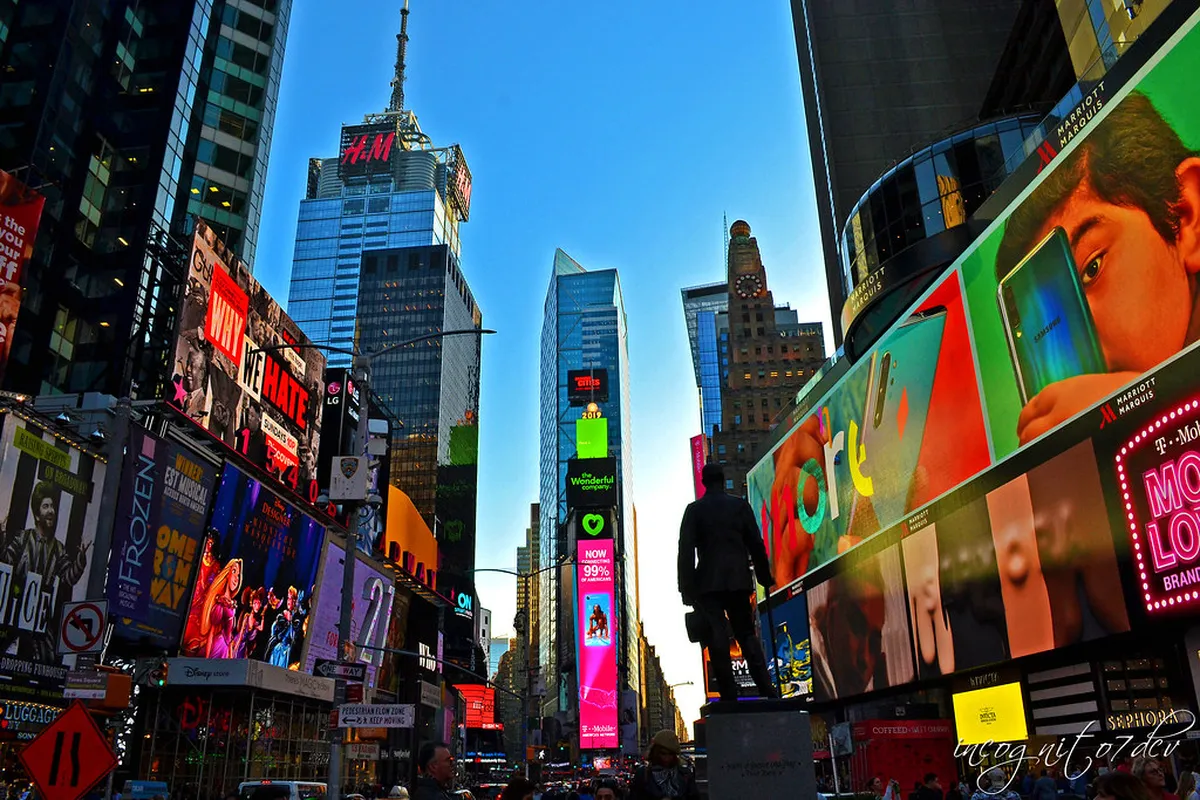
Broadway show tickets average $130-$220 for decent seats in 2026, with premium seats exceeding $350. The TKTS booth in Times Square (the one with the red glass steps at 47th and Broadway) sells same-day tickets to Broadway and Off-Broadway shows at 20-50% off face value, plus a $7 per ticket service charge. The discount varies by show — newer hits and mega-popular musicals rarely appear, but long-running shows, plays, and revivals frequently offer 40-50% off. There are also TKTS booths at Lincoln Center and in Downtown Brooklyn (at MetroTech) with shorter lines.
The Hack: Go to the TKTS booth in Downtown Brooklyn or Lincoln Center instead of Times Square — the same tickets, the same prices, but a fraction of the wait (often 10-15 minutes vs. 45-90 minutes in Times Square). The Downtown Brooklyn booth opens at 11 AM for matinees and 2 PM for evening shows. Check the TKTS app before going to see which shows are available and at what discount. For even cheaper options, most shows now offer digital lotteries with $40-$60 tickets — enter through the TodayTix app, Broadway Direct, Lucky Seat, or Telecharge. Rush tickets ($39-$69, first-come at the box office when it opens) are another option. Enter lotteries for multiple shows each day to increase your odds.
Expected Savings: $40-$100 per ticket via TKTS; $70-$170 per ticket via rush or lottery wins.
14. Free Comedy Shows and Live Music
New York is the comedy capital of the world, and most tourists do not realize that many of the city's best comedy shows are free. The Creek and the Cave (Long Island City) runs free comedy shows most nights. The PIT (People's Improv Theater) offers free improv and sketch shows. The Upright Citizens Brigade's legacy venues continue the tradition of affordable improv ($5-$12). On any given night, you can see comedians who headline Netflix specials performing free sets at small clubs to test new material.
The Hack: Follow @freeNYCcomedy on social media for nightly listings of free comedy shows across the city. For free live music, check out Sofar Sounds NYC (intimate secret-location concerts), free concerts in Central Park's SummerStage series (June-August), and the Juilliard School's free student recitals — some of the most talented young musicians in the world performing classical, jazz, and contemporary music for $0. Brooklyn's Prospect Park Bandshell also hosts free concerts throughout summer.
Expected Savings: $20-$75 per person per evening vs. paid comedy clubs and music venues.
Shopping Hacks
New York is a shopper's city, but the retail pricing game has a few exploitable patterns that most visitors miss entirely.
15. Sample Sales and Outlet Timing
Sample sales are New York's best-kept shopping secret. Major fashion brands — from designer labels to popular streetwear — hold sample sales in Manhattan warehouses and showrooms where overstock, samples, and last-season items sell at 50-80% off retail. These sales happen year-round but cluster in January, June, and September. The Outnet, 260 Sample Sale, and Clothingline host the biggest events in 2026, typically in SoHo and the Flatiron District.
The Hack: Check websites like TheChoosyBeggar.com and 260SampleSale.com for upcoming sales before your trip. Arrive on the first day of the sale for the best selection, or the last day for the deepest discounts. Bring cash — some sample sales do not accept credit cards. For outlets, skip Woodbury Common Premium Outlets on weekends (overcrowded, picked-over stock); go on a Tuesday or Wednesday when new inventory drops and crowds are thin. Compare outlet prices against online prices on your phone before buying — some "outlet" items are manufactured specifically for outlets and are not actual discounts.
Expected Savings: 50-80% off retail at sample sales; 20-40% at outlets when timed correctly.
Nightlife Hacks
NYC nightlife does not have to mean $20 cocktails and $30 cover charges — not if you know where to look and when to go.
16. Rooftop Happy Hours and Free Events
Rooftop bars are a quintessential New York experience, but at $22-$28 per cocktail plus a possible cover charge, a single evening can cost more than a nice dinner. The hack is to hit rooftop bars during their happy hours, typically 4-7 PM on weekdays, when drinks drop to $10-$15 and there is rarely a cover. Some of the best rooftop happy hours in 2026 include Westlight in Williamsburg, Mr. Purple on the Lower East Side, and The Roof at the Viceroy in Midtown. Additionally, many bars and clubs host free open-bar events (usually 1-2 hours of well drinks) as promoters try to fill early-evening slots — check promoter accounts on social media and event apps like Eventbrite and Dice for listings.
The Hack: Arrive at rooftop bars right when happy hour starts (usually 4 PM) to get a table without a wait and enjoy discounted drinks with the full sunset view. Check Fever, Eventbrite, and Dice for "free open bar" events — they are often tied to album release parties, brand launches, and promoter nights, especially in the Lower East Side, Bushwick, and Williamsburg. For free live music, search for Jazz at Lincoln Center's free Thursday evening sets, Smalls Jazz Club's late-night jam sessions, and open mic nights at Rockwood Music Hall (no cover, no drink minimum).
Expected Savings: $20-$60 per evening via happy hours; $40-$100+ per evening at free open-bar events.
Timing Hacks
When you visit New York matters almost as much as how you spend once you get there. The right timing can slash every cost category simultaneously.
17. Shoulder Season and the Tuesday-Thursday Rule
New York's peak tourist seasons are June-August and late November-December (holiday season). During these windows, hotel rates surge 30-60%, restaurant wait times double, and every attraction is packed. The shoulder seasons — January through March (excluding Presidents' Day weekend) and September through early November — offer the best value. Hotel rates drop significantly, flights from most US cities are cheapest in January-February, and the city is less crowded while still offering full programming. Weather in September-October is arguably the best of the year. Check our budget travel hacks guide for more on shoulder season strategy.
The Hack: Beyond the seasonal play, apply the Tuesday-Thursday rule to daily planning. Book restaurants on Tuesday or Wednesday when they are less busy (some offer weeknight specials). Visit popular attractions Tuesday-Thursday when lines are shortest. Shop on weekdays for the best service and stock. The only exception is the hotel pricing inversion (Hack #10) — use weekends for business-district hotels and weekdays for leisure-area hotels. If you can visit New York in late September or early October, you get perfect weather, lower prices, and manageable crowds. Avoid Thanksgiving week, Christmas-New Year, and Fashion Week (early September) when the entire city's pricing spikes. For the cheapest flights into NYC, check flexible date searches 6-8 weeks ahead of your trip.
Expected Savings: $200-$600 on a 5-day trip by visiting in shoulder season; an additional $50-$100 by scheduling activities on Tuesday-Thursday.
Putting It All Together: A Sample Budget Day in NYC
Here is what a full day in New York looks like when you stack these hacks:
- Morning: Free walk across the Brooklyn Bridge at sunrise, then coffee and a $3-$4 egg sandwich from a Chinatown bakery.
- Midday: Subway ($3.00) to the Met (pay-what-you-wish if you have a NY/NJ/CT student ID, or switch to free MoMA PS1 in Queens). Lunch: two budget slices and a drink ($5-$6).
- Afternoon: Walk the High Line (free), Citi Bike to the East Village ($25 day pass covers all rides). Happy hour $1 oysters and $10 drinks at a neighborhood bar.
- Evening: TKTS 40%-off Broadway show ($70 instead of $130, including $7 service fee). Post-show halal cart dinner ($9).
- Night: Free comedy show in the Lower East Side.
Total spent: approximately $100-$130 for a packed, world-class NYC day. That is the power of stacking hacks — you are not skipping experiences, you are just not paying the tourist premium for them.
Explore More City Travel Guides
Planning a multi-city trip or comparing destinations? These guides use the same budget-hacking approach:
- London Travel Hacks — another expensive city with free world-class museums
- Paris Travel Hacks — museum passes and bakery lunch hacks
- Tokyo Travel Hacks — budget strategies for another major metropolis
- Our airport hacks — terminal strategies for JFK, LaGuardia, and Newark
Frequently Asked Questions
What is the cheapest way to get from JFK to Manhattan in 2026?
The cheapest route is the AirTrain ($8.50) to Jamaica Station or Howard Beach Station, then the subway ($3.00 via OMNY) into Manhattan. The total cost is $11.50 per person, and the trip takes 60-75 minutes depending on your Manhattan destination. For LaGuardia, the free Q70 bus to the 7 train costs just $3.00 total — one subway fare. For Newark, the NJ Transit train to Penn Station costs $15.75 (AirTrain fee included).
Is the New York subway safe for tourists in 2026?
Yes. The New York subway carries over 3.5 million riders daily and is generally safe, particularly during daytime and evening hours. Standard urban awareness applies: stay alert, keep valuables secure, and avoid empty cars late at night. The system runs 24/7, but after midnight, stick to busier stations and ride in the conductor's car (usually the middle car, marked by a black-and-white striped sign on the platform). Most tourists ride the subway without any issues.
How much money do I need per day for a budget trip to New York?
Using the hacks in this guide, a realistic budget is $80-$150 per day excluding accommodation. That covers subway rides (capped at about $5-$6/day with OMNY's $35 weekly cap), three meals ($20-$35 using budget pizza, halal carts, and Chinatown), one paid attraction or discounted show ($30-$70), and incidentals. Add $100-$200/night for an outer-borough hotel. A 5-day NYC trip can realistically cost $900-$1,750 total with these strategies, compared to $2,800-$4,200 for a typical tourist itinerary.
When is the cheapest time to visit New York City?
January through early March is the cheapest period overall, with the lowest hotel rates and airfare. However, the weather is cold (20-40 degrees Fahrenheit). For the best balance of value and weather, visit in late September or October — shoulder season pricing with temperatures in the 55-75 degree range. Avoid Thanksgiving week, Christmas through New Year, and the peak summer months (June-August) when prices across every category spike 30-60%.
Are New York CityPASS and similar attraction passes worth buying?
Only if you genuinely want to visit at least 4-5 of the included paid attractions. The CityPASS ($146 for adults in 2026) bundles the Empire State Building, American Museum of Natural History, plus your choice of 3 from Top of the Rock, Statue of Liberty ferry, 9/11 Museum, Circle Line cruise, Intrepid Museum, and the Guggenheim — a combined value of $244, saving roughly 40%. But if you are planning to focus on free attractions (Central Park, High Line, Brooklyn Bridge, museums on pay-what-you-wish evenings, MoMA PS1), the pass wastes money. Calculate the individual ticket costs of only the attractions you actually want to visit before buying any pass.
Can I still use a MetroCard in 2026?
No. The MTA stopped selling and refilling MetroCards as of January 1, 2026. OMNY is now the only fare payment system. You can tap any contactless credit card, debit card, phone (Apple Pay, Google Pay), or smartwatch directly at the turnstile. If you prefer a physical card, OMNY cards are available at station vending machines for a $2 fee. The OMNY weekly fare cap of $35 (12 rides at $3.00 each) replaces the old 7-day unlimited MetroCard.