
Canggu Digital Nomad Guide: 16 Things You Need to Know
Plan your Canggu digital nomad journey with this 2026 guide. Covers visas, cost of living, top coworking spaces, and neighborhood comparisons for remote workers.
On this page
Canggu Digital Nomad Guide: 16 Things You Need to Know
Canggu is a coastal village on Bali's southwest coast that has grown into one of Asia's most concentrated remote-work hubs. The strip between Pererenan and Berawa now packs more coworking spaces, laptop-friendly cafes, and CrossFit gyms per kilometer than most European capitals.
This guide is built for the practical decisions you'll face in 2026 — which visa to apply for, how much rent really costs after the recent price climbs, which coworking actually has reliable air-con, and how to dodge the Canggu Shortcut at rush hour. It pairs with our broader Bali travel hacks hub for everything else on the island.
Booking the flight to Denpasar (DPS) is the first step. Use Skyscanner to compare carriers — Singapore-routed Scoot and AirAsia connections are usually cheapest from Europe and North America, while direct flights from Sydney, Melbourne, and Hong Kong land daily.
Should you be a digital nomad in Bali?
Bali earns its reputation as the digital nomad capital of Southeast Asia for measurable reasons: fiber broadband reaches most coworking spaces at 100 Mbps or better, the cost of a comfortable life sits around USD 1,500 to 2,500 per month, and the airport is a four to seven hour flight from Singapore, Sydney, Tokyo, and Mumbai. The community is large enough that you'll meet other founders, freelancers, and creators within days, not months.
The downside is real and worth weighing before you commit. Traffic on the Canggu Shortcut now routinely doubles map-estimated travel times between 11:30 and 14:00 and again from 17:00 to 19:00. Rents in Berawa and Pererenan have climbed roughly 30 to 50 percent since 2022. If you need silent deep-work conditions, hate scooters, or expect village authenticity, the pace here will frustrate you. Match your work style to the environment honestly before you book a long stay.
Where Is Canggu? (The Social, Hip Playground)
Canggu sits about 20 kilometers north of Ngurah Rai International Airport in Denpasar, on the southwest coast of Bali. The drive takes 60 minutes off-peak and 90 to 120 minutes if you arrive during evening rush. There is no defined city center — the area is a chain of beach neighborhoods (Berawa, Batu Bolong, Echo Beach, and increasingly Pererenan) connected by Jalan Raya Canggu and a tangle of paddy-field shortcuts.
The vibe skews young, fitness-obsessed, and unapologetically digital. Mornings start with surf at Old Man's, push through a CrossFit class or rice-field run, and end at a beach club watching the sun drop into the Indian Ocean. Berawa concentrates the upmarket beach clubs and gyms; Batu Bolong is dense with cafes and surf shops; Pererenan still has rice paddies between buildings. If you've been to Tulum or Lagos, the energy will feel familiar — boutiques, coconut bowls, plant-based restaurants, and a constant stream of new arrivals.
What Digital Nomads in Canggu Need to Know
The Canggu Shortcut — the narrow, partially paved road linking Berawa to Batu Bolong via the rice fields — is the single biggest daily friction point. It compresses to a single lane in places, floods after heavy rain, and is impassable for cars during peak hours. Plan scooter trips between 09:00 and 11:00 or after 20:00 if your schedule allows. Many residents avoid the Shortcut entirely and use the longer Jalan Pantai Berawa route during traffic.
A few practical rules locals enforce more strictly than visitors expect. Scooter rentals require an International Driver's Permit with a motorcycle endorsement — without one, you're uninsured if you crash, and Bali's medical bills run into the thousands. Tap water is not drinkable, but ice in commercial venues is fine. Tipping is not expected but appreciated for sit-down service. Cash is still essential for warungs, parking, and small markets even though card readers have spread.
Indonesia Visa Guide: How Long Can You Stay?
Most short-stay nomads use the Visa on Arrival (VOA), which is purchased at Denpasar airport for IDR 500,000 (about USD 35) and gives you 30 days, extendable once for another 30 days. After that, you must leave the country. Our Bali visa on arrival 2026 guide walks through the e-VOA option that lets you skip the airport queue entirely.
Anyone planning to stay three months or more should apply for the B211A single-entry visit visa before arrival. It grants 60 days on entry and can be extended twice in 60-day increments through a local agent, for a maximum total stay of 180 days. Agent-assisted extensions cost roughly USD 100 to 150 per cycle. Indonesia's much-discussed digital nomad visa (E33G) has finally launched in limited form, but the income-and-employer-letter requirements push most independent freelancers back to the B211A. Confirm current rules on the official imigrasi.go.id portal before you book — visa policy in Indonesia can change with weeks of notice.
Cost of Living in Bali: A Realistic Budget
The honest 2026 numbers are higher than the YouTube videos from 2019 suggest. A private room in a shared villa with pool access runs USD 400 to 700 per month. A standalone one-bedroom villa with a private pool is USD 900 to 1,800 depending on neighborhood and finish. Add USD 80 to 120 per month for a 125cc scooter, USD 250 to 400 for groceries if you cook, USD 50 for laundry, and USD 60 to 120 for a gym membership. Our Bali budget breakdown 2 weeks shows the line-item math for a short stay.
Eating out is where Canggu's cost has shifted most. A bowl at a local warung is still IDR 30,000 to 50,000 (USD 2 to 3.50), but a typical Berawa brunch with a smoothie bowl and coffee now lands at IDR 180,000 to 250,000 (USD 12 to 17) — Western prices in a tropical setting. A realistic comfortable monthly total is USD 1,800 to 2,500 for one person; couples save proportionally on rent. Travel medical insurance is non-negotiable given scooter-accident risk — Genki Health Insurance sells flexible monthly plans built for long-stay nomads.
Best Neighborhoods: Berawa vs. Batu Bolong vs. Pererenan
Each pocket of Canggu attracts a different personality. Berawa is the upscale-social option — beach clubs (Atlas, FINNS, La Brisa), boutique fitness studios, and the highest concentration of villas with private pools. Walkability is moderate; you'll still scooter most places, but more shops and gyms are stacked within a five-minute ride. Batu Bolong is the bustling heart, walkable along Jalan Pantai Batu Bolong with surf shops, cafes, and the most laptop-friendly density. Expect noise, scooter horns, and a constant stream of tourists in front of every cafe.
Pererenan is where most long-term residents now base themselves. Rice paddies still front many villas, the Shortcut traffic doesn't reach this far west, and prices run roughly 15 to 20 percent below Berawa for equivalent properties. The trade-off is fewer late-night options and a longer scooter ride to the better gyms. If you're choosing between Bali regions entirely, our Ubud vs Seminyak vs Canggu comparison breaks down which area suits which work style. For Canggu specifically: Pererenan for focused work, Berawa for social access, Batu Bolong if you want to be in the middle of everything and don't mind chaos.
Top Coworking Spaces in Canggu for Digital Nomads
Canggu's coworking scene matured fast. Day passes range from IDR 150,000 to 280,000 (USD 10 to 20); monthly hot-desk memberships sit at USD 150 to 250; dedicated desks run USD 250 to 400. The trade-offs that matter most in practice — air-conditioning vs open-air, ergonomic vs aesthetic, social vs silent — vary more than the price tags suggest.
- Tropical Nomad Coworking Space on Jl. Subak Canggu remains the legacy hub since the original Dojo closed. Open-air, fan-cooled, fast fiber, strong community, and an overnight membership tier for nomads working US time zones.
- Setter Coworking on Jl. Raya Semat is the upmarket air-conditioned alternative — ergonomic chairs, soundproof booths, and the most reliably quiet environment for back-to-back calls.
- B Work Bali on Jl. Nelayan combines a stylish space with a pool and rooftop garden; better for half-day sessions than for marathon focus blocks.
- Nebula Entrepreneur on Jl. Tibubeneng has the highest-spec amenities — recording studio, sauna, ice bath — at premium pricing aimed at founders and content creators.
- Outpost Canggu, MEET ME AT 06, and Puco Rooftop round out the budget-to-mid tier with day passes in the IDR 150,000 to 200,000 range.
If reliable internet is non-negotiable for your work, a coworking membership is the safest single investment you'll make in Canggu. Cafe wifi varies wildly; villa wifi often shares a residential connection that drops at peak hours. A hot-desk membership at one of the spaces above gives you a guaranteed 100 Mbps fallback whenever you need it.
The 5 Best Cafes and Coffee Shops for Working
Cafe-working is part of the Canggu rhythm but the practical signals matter — outlet density, noise level, and how welcoming the staff are to laptops past two hours. Buy something every 90 minutes, leave during the lunch rush if it's a small space, and don't take Zoom calls without headphones.
- Copenhagen Canggu on Jl. Pantai Batu Bolong — Nordic-minimalist, fast wifi (~80 Mbps), outlets at most seats, but it fills up by 09:00. Best for an early-morning email block before it gets noisy.
- Secret Spot near Old Man's — plant-based menu, quiet atmosphere, abundant outlets, and the most laptop-friendly staff in the area. The room stays calm enough for focused writing.
- ZIN Cafe next to Batu Bolong beach — open-air with a dedicated upstairs work zone, ocean breeze, plugs at every seat. Wifi can dip when the room is full but holds up fine for writing and email.
- Hungry Bird Coffee Roaster in Berawa — specialty coffee, fast wifi, popular with remote workers. Tables fill early; arrive before 09:30 to claim a plug.
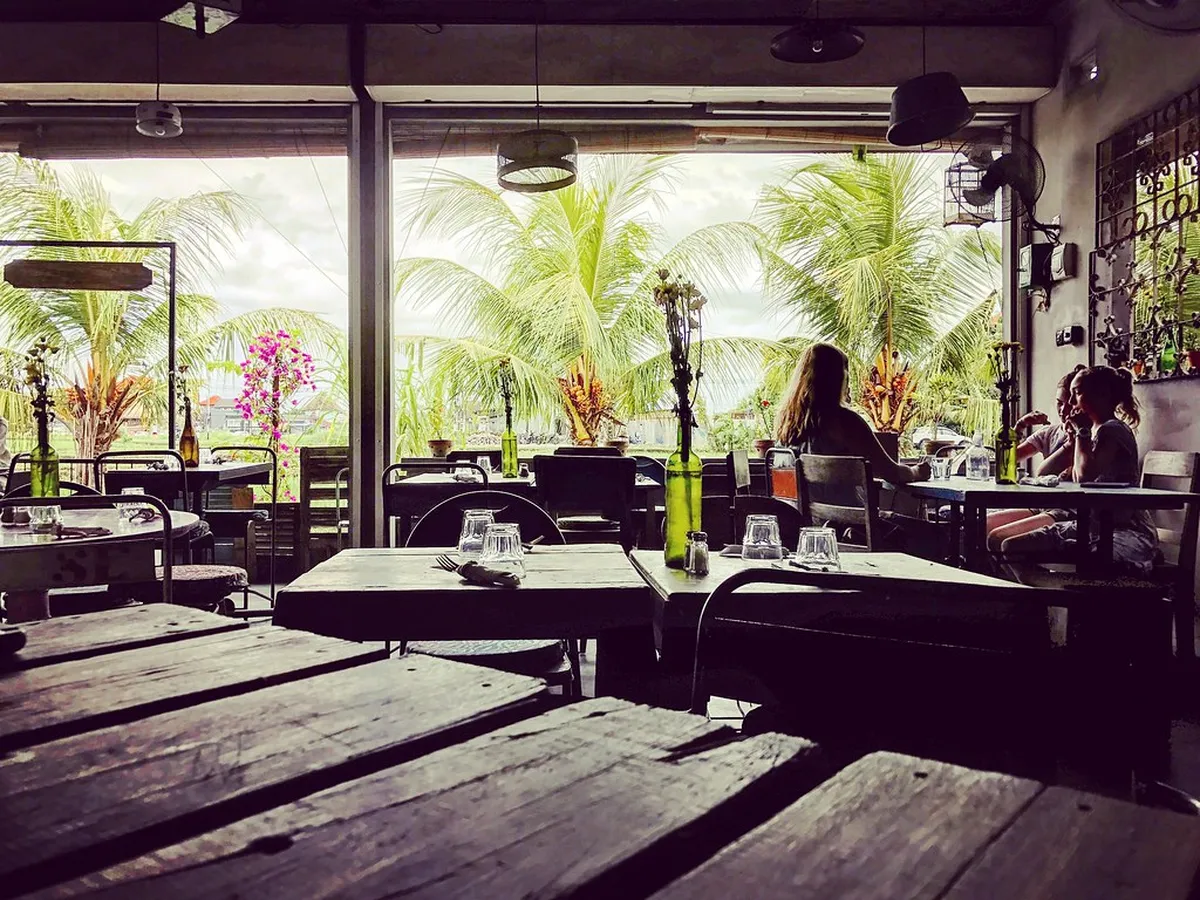
- Amolas Cafe on Jl. Kayu Tulang — rice-field views, fewer crowds than the better-known spots, fresh local ingredients. A good Pererenan alternative when Copenhagen is full.
For video calls and high-stakes uploads, none of these beat a coworking space. Tether to your phone over a Telkomsel 5G plan as a backup if a cafe wifi flakes during a meeting.
Where to Stay: Coliving and Long-Term Rentals
Coliving is the fastest way to land softly. Outsite Bali in Pererenan offers nine private rooms with desks, an air-conditioned shared workspace, a pool, and a built-in community of remote workers — pricing starts around USD 60 per night with weekly and monthly discounts. Tribal Bali in Pererenan combines coworking and coliving with strong communal meals and yoga programming. Masmara Resort positions itself at the work-and-relax end with hotel-style service and bigger rooms. SOKKOOL and Camp 308 sit at the more budget-friendly end with 24/7 facility access for residents.
For longer stays (three months or more), private villas through local Facebook groups (Canggu Community, Bali Villas Direct) and Airbnb usually beat coliving on cost. Compare options in our villas vs hotels in Bali breakdown. Inspect any villa in person before paying a deposit — listings frequently overstate wifi speed and ignore mosquito problems, and one Pererenan property's "fast internet" can be a 25 Mbps shared line. Always test the wifi during a video call, look at the bathroom drainage, and ask what happens during a power cut (Canggu has a few each month, lasting 10 to 90 minutes).
Where To Work Out In Canggu, Bali
The fitness ecosystem is one of Canggu's underrated draws. Body Factory Bali in Berawa is the photogenic premium gym with a recovery suite (sauna, ice bath, infrared cabin); single classes run IDR 250,000 with monthly memberships around IDR 2.5 million (USD 165). Wanderlust CrossFit on Jl. Pantai Berawa is the community-focused option with three to four classes per day and a steady rotation of regulars who'll greet you by name within a week.
Other options worth checking: Elite Fit in Pererenan for a quieter weights-focused session, Wrong Gym for an unconventional space with an attached cafe, SOMA Fight Club if you want to add Muay Thai or BJJ, and Samadi Bali for yoga across multiple daily classes including Mysore Ashtanga. Most studios offer drop-ins at IDR 150,000 to 250,000 — try several before committing to a monthly membership.
Killer Travel Workout Ideas: How to Stay Fit While Traveling
Skip the gym membership for a week and the island still has you covered. A simple no-equipment beach circuit on Echo Beach at 06:30 — 4 rounds of 10 push-ups, 15 squats, 10 lunges per leg, 30-second plank, and a 100-meter sprint on hard sand — beats most hotel gym sessions and uses the cool morning hours before the heat builds. The black sand absorbs impact better than concrete and the ocean is right there for a recovery dip.
Surfing is the de facto cross-training of Canggu. An hour at Old Man's or Batu Bolong will work your shoulders, lats, and core harder than most upper-body sessions. Rent a board for IDR 50,000 to 75,000 per hour or join a beginner lesson for IDR 350,000 to 500,000. Add a daily 30-minute walk or jog through the rice paddies — the loop from Pererenan north toward Seseh is mostly flat, mostly shaded, and a genuine antidote to scooter-and-laptop posture problems.
Useful Services: SIM Cards, Scooters, and Groceries
Connectivity matters most. Telkomsel and XL Axiata sell tourist SIMs at the airport with 25 to 50 GB of data for IDR 100,000 to 250,000 (USD 7 to 17). One catch trips up nearly every long-stay nomad: if you stay in Indonesia more than 60 days using a non-Indonesian phone, you must register your IMEI at customs (Bea Cukai) on arrival, or your handset will be blocked from local networks. The eSIM route via Airalo skips the IMEI issue entirely but at a higher per-GB cost. Our Bali SIM card vs eSIM 2026 walks through which option fits which travel pattern.
Scooter rentals run IDR 1.2 to 1.8 million per month (USD 80 to 120). Don't pay for a year up front and don't hand over your passport — a passport copy is the legal standard. Our Bali scooter rental tips covers the insurance and damage-deposit pitfalls. For groceries, Pepito Market Canggu is the central one-stop for imported goods, fresh produce, and a pharmacy next door. Frestiv and Canggu Station fill the same gap on the western side. Gojek and Grab apps handle ride-hailing, food delivery, groceries, and pharmacy runs — install both and link a card before you arrive.
Things to Do in Canggu for Digital Nomads
The most-used escape from the laptop is sunset. Old Man's, The Lawn, La Brisa, and Atlas Beach Club each have their own crowd; The Lawn keeps the social-but-not-clubby balance most remote workers prefer. Beyond drinks, Canggu has a steady weekly cadence of community events worth bookmarking: Tropical Nomad and Outpost both run free networking nights, beach cleanups happen on most Sundays through Sungai Watch and the local communities, and the Love Anchor weekend market is a low-effort weekend activity for buying local crafts.
For day trips, the Canggu-to-Tanah Lot ride takes 45 minutes and is best at sunset. Ubud's rice terraces and the Tegalalang swings are 90 minutes inland. Tukad Cepung waterfall sits a similar distance north and rewards an early start. Surf trips to Uluwatu's clearer water are a long but worthwhile half-day mission with friends. Building a few non-laptop rituals into the week is the difference between three months that fly by and a stay that blurs into one long Notion document.
How To Practice Mindfulness If You Just Can't Meditate
Sitting on a cushion isn't the only path. The 06:00 to 07:00 window before the heat and traffic build is one of the calmest in the tropics — walking the rice-field paths from Pererenan toward Seseh, with no phone in your pocket, does the same nervous-system reset as a 20-minute formal session. Surfing functions the same way for many residents; the focus required to read a wave silences the work brain in ways meditation apps usually can't.
Other low-effort paths into presence: a sound bath at Pyramids of Chi or The Yoga Barn (40 minutes by scooter to Ubud, but worth the trip), one of Samadi's Mysore Ashtanga sessions where the routine itself becomes the practice, or a 30-minute beach swim before breakfast. Pick whichever feels least like homework. Consistency matters more than the specific method, and the island's environment carries a lot of the weight if you let it.
Canggu vs. Ubud vs. Uluwatu: Choosing Your Base
The three major Bali nomad bases each suit a different work-life balance. Canggu wins on social density and infrastructure — coworking, gyms, restaurants, networking events — and loses on traffic and noise. Ubud trades the beach for jungle and a stronger wellness-and-culture core; quieter, cheaper, with better deep-work conditions and a smaller but more committed nomad community. Our Ubud essentials guide covers what daily life looks like there.
Uluwatu is the third option and the quietest of the three. It rewards surfers and people who want a coastal-cliff aesthetic with fewer distractions, but coworking infrastructure thins out and you'll drive 45 to 60 minutes for serious gym options. The honest answer for most first-time nomads: spend two to three weeks in each before signing a six-month lease anywhere. Bali is small enough that a scouting tour costs little extra time and saves a lot of regret. If you'll only pick one, Canggu still has the highest concentration of remote-work infrastructure and the easiest learning curve.
Final Thoughts on the Canggu Digital Nomad Lifestyle
Canggu in 2026 is not the sleepy surf village it was five years ago, and pretending otherwise sets up disappointment. Rents have risen, traffic has worsened, and the gentrification debate is real — long-term Balinese residents have been priced out of neighborhoods their families farmed for generations. Being an ethical nomad here means more than picking the right coworking space. Eat at warungs as well as smoothie bowl cafes. Tip generously when service is good. Learn enough Bahasa Indonesia to order your coffee. Avoid back-to-back tourist visa runs that signal you're working without proper paperwork. Volunteer with Sungai Watch or a local cleanup once a month.
The reward for showing up thoughtfully is one of the better remote-work setups on the planet — fast internet, a deep talent pool, real community, and a coastline that resets your nervous system every evening. Plan the visa, budget for 2026 prices not 2019 prices, pick the neighborhood that matches your work pattern, and treat the island and its people the way you'd want guests to treat your home. The rest of the lifestyle takes care of itself.
Frequently Asked Questions
Is Canggu good for digital nomads?
Yes, it is one of the world's top hubs for remote workers due to its infrastructure and community. You will find many coworking spaces and cafes designed for productivity. The social scene makes it very easy to meet other professionals and entrepreneurs.
How much does it cost to live in Canggu as a nomad?
A monthly budget of $1,500 to $2,500 is realistic for a comfortable lifestyle. This covers a nice villa, eating out, and renting a scooter. You can save money by eating at local warungs and choosing modest accommodation options.
Is the internet fast enough for remote work in Bali?
Most coworking spaces and modern villas offer speeds between 50 Mbps and 100 Mbps. This is sufficient for video calls and uploading large files for work. It is always wise to have a local SIM card as a backup for important tasks.
Which area of Canggu is best for living?
Berawa is great for families and beach club lovers, while Batu Bolong is the central social hub. Pererenan offers a quieter atmosphere with more traditional charm and less traffic. Choose based on your preference for social energy versus peaceful surroundings.
Canggu continues to be a premier destination for digital nomads seeking a high quality of life. The combination of modern amenities and traditional Balinese culture creates a unique environment for growth.
By following this guide, you can successfully navigate the logistics of moving to this vibrant coastal town. Embrace the community and the lifestyle to make the most of your remote working journey.
The island offers endless opportunities for those willing to explore and contribute positively to its future. Start your adventure today and discover why so many professionals call this place their home.