
15 Common Bali First Time Visitor Mistakes to Avoid
After six trips to Indonesia over the last decade, I have seen every rookie error. My first visit was a chaotic mess of missed boats and sunburns; I once spent four hours in a taxi to travel twenty kilometers. This guide highlights the most frequent bali first time visitor mistakes so you avoid my past blunders. Updated May 2026 for current visa rules, transport changes, and post-monsoon road conditions.
Planning your first time in Bali can feel overwhelming because the island is a sprawling province of 4.3 million people, not a small resort town. The list below is numbered to match the H1 promise — read it once before you book, then again after you land. For the broader cluster, see our Bali travel hacks hub.
1. Underestimating Bali's Size and Traffic Times
Bali is 5,780 km² — corner-to-corner takes six hours on a good day. Bali Airport (DPS) to Ubud is 35 km but 90–150 minutes; Seminyak to Canggu is 8 km but 30–45 minutes at peak; Canggu to Uluwatu is two hours each way. Peak congestion runs 08:00–10:00 and 16:30–19:30, plus a Friday-night surge along Sunset Road.
Plan two bases per week, not five. Move hotels at most every three nights. Leave the south before 07:00 if you're heading to Ubud or Munduk — the difference between 06:30 and 09:00 departure is often two extra hours.
| Route | Distance | Off-peak time | Peak time |
|---|---|---|---|
| DPS Airport → Seminyak | 10 km | 25 min | 60 min |
| DPS Airport → Ubud | 35 km | 75 min | 150 min |
| Seminyak → Canggu | 8 km | 20 min | 45 min |
| Canggu → Uluwatu | 30 km | 60 min | 120 min |
| Ubud → Amed | 75 km | 120 min | 180 min |
| Sanur → Padangbai (Gili port) | 55 km | 75 min | 110 min |
2. Drinking Tap Water and Risking "Bali Belly"
Never drink the tap water, including the water you brush with on day one. Bali's pipes carry pathogens your gut has no defenses against — a rinsed toothbrush can trigger 36 hours of misery. Skip ice at roadside warungs that don't use "es batu kristal" (factory cubes with a hole through the middle); cocktail bars in Seminyak, Canggu, and Ubud almost universally do.
Bring a 0.2-micron filter bottle (LifeStraw, Grayl) so you can refill from any villa tap and skip 20,000 IDR shop bottles. Probiotics started a week before arrival shorten recovery if you do get hit.
3. Choosing the Wrong Base Area for Your Vibe
Picking a base on Instagram aesthetics alone is the most expensive mistake on this list — you can't undo a 6-night booking once you arrive. Kuta is loud and dated. Seminyak is polished and restaurant-heavy. Canggu is surf, cafés, and a 06:00 construction soundtrack. Ubud is jungle and yoga, 90 minutes from any beach. Nusa Dua is gated resorts with calm swimmable water. Uluwatu is dramatic cliffs and world-class surf with limited dining outside hotels.
Match your base to who you actually are, not who you wish you were on holiday:
- Digital nomad / surfer / café-hopper: Canggu (Berawa or Pererenan for less noise).
- First-time couple wanting beach + restaurants: Seminyak.
- Yoga, jungle, culture, slow mornings: Ubud (Penestanan or Nyuh Kuning beats central).
- Luxury family with young kids: Nusa Dua or Sanur (calm reef-protected water).
- Surf + cliff sunsets, willing to drive: Uluwatu / Bingin.
- Avoid for first trip: Kuta (unless transit) and central Legian.
If you're still torn between the three flagship areas, our Ubud vs Seminyak vs Canggu comparison goes into noise levels, walkability scores, and price ranges by neighborhood.
4. Over-Scheduling and Rushing Your Itinerary
The classic 10-day "Ubud + Uluwatu + Nusa Penida + Gili" itinerary leaves you exhausted. Each region needs three nights minimum. Cut your draft itinerary by 30% before you book. A realistic 10-day split: 3 nights Ubud, 3 nights Canggu or Seminyak, 2 nights Uluwatu, 2 nights Nusa Lembongan or Amed. Skip the Gilis on a first trip — they deserve their own week.
5. Traveling Without Comprehensive Medical Insurance
A scooter slide on wet Canggu asphalt can land a 40 million IDR (≈$2,500) bill at BIMC Hospital before overnight admission. International-standard hospitals require upfront card swipes that frequently exceed home credit limits. SafetyWing, World Nomads, and IMG Global cover scooter accidents only if you hold the correct license category — read the fine print or your claim is void. Carry digital and printed policy copies, the 24-hour claims hotline, and a Bahasa translation of your blood type and allergies. Our Bali safety guide has a translatable medical card you can screenshot.
6. Renting a Scooter Without a Proper License
Police checkpoints in Canggu, Ubud, and Sanur stop foreign riders daily; the standard 'fine' is 250,000–500,000 IDR cash on the spot without an International Driving Permit endorsed for motorcycles. Apply for the IDP before you fly — your home automobile association issues it in person, not from Bali. Wear an SNI-certified helmet (the sticker matters) and never ride after a Bintang. First-timers should take a private lesson in Canggu before joining real traffic — 500,000 IDR for two hours is cheaper than any insurance excess.
7. Disrespecting Local Customs and Temple Dress Codes
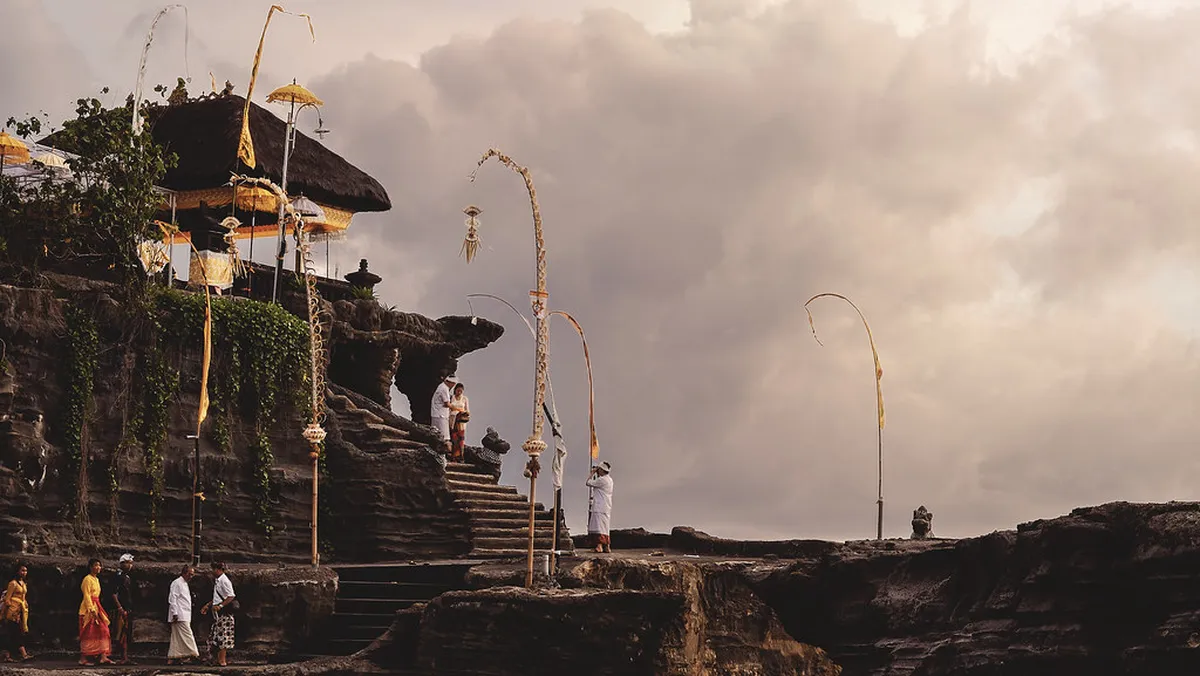
Both knees and shoulders must be covered at every Hindu temple, including Tanah Lot and Uluwatu. Sarong and sash rentals at the entrance are 10,000–25,000 IDR. Menstruating women are traditionally asked not to enter inner sanctums — an honor-system rule signposted in English at major sites.
Everyday etiquette nobody tells you: do not step on or over canang sari (the palm-leaf offerings on every doorstep), use your right hand for money, and never touch a Balinese person's head, even a child's. During Nyepi (March 19 in 2026) the entire island shuts down for 24 hours of silence — no lights, no traffic, no flights — and tourists must stay on property.
8. Carrying Valuables Around Bali's Macaques
The long-tailed macaques at Ubud Monkey Forest, Uluwatu, and Pura Luhur Lempuyang are professional thieves — sunglasses (especially aviators), loose phones, hats, and water bottles all go. Lock zips with carabiners or tuck phones under a buttoned shirt. If a monkey grabs something, don't chase; Uluwatu staff barter the item back with fruit. Avoid eye contact with adult males, never bare teeth in a smile (a threat display), and never feed them. Bites carry rabies risk — get to BIMC or Siloam within 24 hours for post-exposure prophylaxis if skin breaks.
9. Not Bartering or Agreeing on Prices Upfront
At Ubud Art Market, Sukawati, and roadside stalls, first prices are typically 3–5x the floor. Counter at 30% of the opening, smile, walk slowly toward the exit. Most sellers call you back at 40–50%. Mornings before 10:00 are best — the first sale of the day is auspicious and prices soften. Bartering does not apply at supermarkets (Coco, Pepito), in cafés, or for app rides. Never haggle at a warung over a 25,000 IDR meal — different setting, frankly disrespectful.
10. Chasing Instagram Spots Instead of Authentic Experiences
The Gates of Heaven at Pura Lempuyang means a two-to-three-hour queue for a photo where the "reflection" is a mirror under a staff photographer's lens. Kelingking Beach on Nusa Penida is a 6:00 ferry, a brutal staircase, and 200 phones in your frame. Replacements that deliver: Banyumala Twin Waterfalls in Munduk, Sidemen's working rice terraces, snorkeling at Jemeluk Bay in Amed, and Pura Lempuyang's seven-temple climb above the gate (almost nobody continues past the photo).
11. Neglecting Sunscreen and Mosquito Protection
The equatorial UV index hits 12 by 11:00 and pale skin burns through cloud cover in 25 minutes. Pack reef-safe SPF 50 from home — local pharmacies sell it at 4x European prices. Reapply every two hours when swimming.
Mosquitoes carry dengue, which has had documented outbreaks in Canggu and Ubud every wet season since 2022. Use 30% DEET or picaridin from sunset onward, especially in jungle villas next to standing rice-field water. A dengue vaccine (Qdenga) is available in some Western countries — ask your travel clinic before departure.
12. Planning Island Trips for Your Final Day
Booking a Nusa Penida or Gili day trip the day before your flight home is the classic ruined-honeymoon scenario. Fast boats cancel for rough seas without refunds — especially November–March — and even in dry season 5–10% of crossings run hours late. Return to mainland Bali at least 24 hours before departure, and sleep in Sanur or south Bali the night before to dodge morning airport traffic.
13. Not Carrying Cash for Small Local Vendors
Warungs, temple entries, parking attendants, scooter rentals, and most market stalls are cash-only. Carry 200,000–500,000 IDR in small notes (10k, 20k, 50k) for a typical day. Use ATMs only at branch locations during banking hours — standalone outdoor ATMs in Kuta and Canggu have a documented history of card-skimming. BNI, BCA, and Mandiri inside actual bank lobbies are the safest, with daily withdrawal limits of 1.25–3.5 million IDR depending on your card.
14. Believing Scams About "Closed" Attractions
The classic scam: a friendly local stops you 200 m from a temple entrance and says it's closed for a ceremony, then offers a "shortcut" that turns out to be a commission-paying shop. Pura Besakih, Tirta Empul, and the Tegallalang rice terraces are top targets. Walk past, smile, and verify at the official ticket booth — real closures are signposted in English and confirmed on @balitourism. The same playbook runs at Uluwatu's clifftop walks where a "guide" insists you need a paid escort. You do not.
15. Supporting Unethical Animal Attractions
Skip elephant rides at Bali Zoo and Mason Elephant Park, the Kopi Luwak roadside tours in Gianyar (civets caged in 1 m² wire pens), and any "swim with dolphins" pool. Decision rule: if you can touch, hold, ride, or pose cuddling the animal, it's exploitation. If the animal can leave when it wants, it's a sanctuary. Ethical alternatives: Bali Wildlife Rescue Centre near Tabanan (rescue and release, no public petting), Friends of the National Parks Foundation on Nusa Penida, and wild dolphin watching from a respectful distance off Lovina.
The Bali Belly First-Aid Kit (Stocked at Any Apotek)
If you do get hit, every Apotek (pharmacy — green cross sign, found on every main road) stocks the same five items over the counter for under 80,000 IDR total. None require a prescription, all have English-readable boxes, and pharmacists in tourist areas speak basic English.
- Norit (activated charcoal): 15,000 IDR for a strip of 10. Two tablets at first symptoms binds toxins; black stools the next day are normal.
- Diapet or Entrostop: 18,000–25,000 IDR. Herbal anti-diarrheal made from guava leaf — gentler than Imodium and the local first-line treatment.
- Oralit (oral rehydration salts): 5,000 IDR per sachet. Mix with 200 ml of bottled water; drink one sachet per loose movement to prevent the dehydration that actually puts people in hospital.
- Pocari Sweat or Mizone: 8,000 IDR per bottle from any Indomaret. Electrolyte drink for when you can keep fluids down.
- Tolak Angin: 4,000 IDR per sachet. Indonesian herbal tonic that helps the post-illness nausea — locals swear by it.
Escalate to a clinic if symptoms last more than 48 hours, you see blood, or fever exceeds 38.5°C — that pattern points to bacterial dysentery and you'll need ciprofloxacin. BIMC, Siloam Denpasar, and Kasih Ibu all do walk-in stool tests for around 350,000 IDR with results in two hours.
Rainy Season Logistics (November–March)
Wet season is not a deal-breaker — rates drop 30%, the rice fields are emerald, and most rain falls in 2-hour afternoon bursts you can wait out under a warung roof. But the logistics shift, and almost no first-time guide flags this:
- Book Nusa Penida and Gili crossings for 07:00 departures only — afternoon swells cancel boats most days in January and February.
- Avoid scooter rentals if you've never ridden in heavy rain; the painted road lines turn into ice and hospital admissions for foreign riders triple in this window.
- Pack a real rain shell, not a poncho. A 50,000 IDR plastic poncho from Indomaret survives one storm.
- Watch for landslides on the Munduk and Bedugul roads after consecutive heavy days — Google Maps does not show closures in real time.
- Mosquito-borne dengue peaks January–March; double-down on repellent and choose villas with screens, not just nets.
Navigating the Bali Transport Mafia
Local village groups have negotiated 'no-pickup' zones with Gojek and Grab in Canggu, Ubud center, Uluwatu, and Tanah Lot. Drop-offs are unrestricted. For pickups in these zones: walk 200–400 m to a main road and re-order, use the local taxi stand at the published rate (often 2x app price but honest), or hire a private driver for the day. Apps sometimes show fake driver locations in restricted zones — if your driver hasn't moved for 5 minutes, cancel and walk.
Compare your three transport options before each leg:
| Mode | Cost / day | Best for | Avoid for |
|---|---|---|---|
| Scooter rental | 70,000–120,000 IDR | Confident riders, single-region exploration | First trip, wet season, anyone with luggage |
| Gojek / Grab | 15,000–80,000 IDR per ride | South Bali point-to-point, late-night, single passenger | Pickups in restricted zones, multi-stop tours |
| Private driver | 650,000–900,000 IDR (10 hours) | Day tours, families, north or east trips, photo stops | Solo budget travelers, single short rides |
| Blue Bird taxi | Meter, ~9,000 IDR / km | Late-night Sanur or Seminyak when apps fail | Long-distance, Ubud, Canggu |
For deeper detail on routes, costs, and how to vet a driver before paying upfront, see our Bali transportation guide.
Is Bali Worth Visiting in 2026?
Yes, with a caveat. Tourism is back above pre-2020 levels, Canggu traffic is genuinely worse, and a 150,000 IDR tourist levy applies on arrival from 2024 onward. But the parts most people fly for — the Hindu ceremonial calendar, Sidemen's rice terraces, the cliffs of Uluwatu, family warungs in any kampung — remain largely unchanged. The island rewards travelers who slow down and avoid overrun zones.
Travel during the May or September shoulder months for the best weather-to-crowd ratio. Apply for the Bali visa on arrival 2026 online before your flight, and prepay the tourism levy at lovebali.baliprov.go.id the night before landing.
Frequently Asked Questions
Is it safe to drink tap water in Bali?
No, you should never drink tap water in Bali as it can cause severe stomach illness. Always use bottled or filtered water for drinking and brushing your teeth. Most reputable cafes use ice made from purified water, but be cautious at smaller street stalls.
Do I need a license to ride a scooter in Bali?
Yes, you legally need a valid motorcycle license from your home country and an International Driving Permit. Riding without these can result in fines or void your travel insurance. The traffic is very dense, so only rent a scooter if you are an experienced rider.
What is the best area for first-time visitors in Bali?
Ubud is ideal for culture and nature, while Seminyak offers the best dining and shopping. Canggu is perfect for surfers and younger travelers seeking a social scene. Families often prefer the calm waters and organized resorts of Nusa Dua or Sanur.
Avoiding these bali first time visitor mistakes will transform your trip from a stressful ordeal into a life-changing adventure. The island has a way of rewarding those who show respect for its culture and patience with its infrastructure. Remember to slow down, breathe in the frangipani-scented air, and accept that things rarely run perfectly on 'island time'.
Whether you are trekking through rice terraces or lounging at a beach club, Bali offers something for every traveler. By planning for traffic, respecting local customs, and staying healthy, you can focus on what really matters. Pack your sarong, download your offline maps, and get ready to experience one of the most beautiful places on Earth.