
15 Barcelona Travel Hacks: Save Money Like a Local in 2026
15 Barcelona travel hacks to save money like a local in 2026. Insider tips on T-Casual cards, menú del día, free Gaudí routes, Bunkers del Carmel, and more.
On this page
Barcelona is one of those cities where tourists routinely spend double what they need to. The infrastructure for budget travel is excellent — cheap public transit, world-class free attractions, and a food culture that actively rewards knowing how to order. The problem is that most visitors follow the same overpriced playbook: taxi from the airport, overpriced paella on La Rambla, full-price Sagrada Família tickets bought at the door.
These 15 hacks are what residents and repeat visitors actually do. Each one includes the specific tactic, real 2026 prices in euros, and an estimated savings figure. Used together, they can easily save you €400-€700 ($430-$755) on a week-long Barcelona trip — without cutting any of the experiences that make this city extraordinary.
Daily Budget Comparison: Tourist vs. Hack-User in 2026
| Expense | Typical Tourist | Using These Hacks | Savings |
|---|---|---|---|
| Airport Transfer (each way) | €42 taxi | €1.30 (RENFE + T-Casual) | €40.70 |
| Daily Transport | €14.50 (5 single rides × €2.90) | €3.90 (3 T-Casual rides × €1.30) | €10.60 |
| Lunch | €25-€40 (à la carte) | €12-€18 (menú del día) | €13-€22 |
| Dinner for Two | €60-€80 (table service) | €20-€30 (tapas at the bar) | €30-€50 |
| Sagrada Família | €36 (with tower) | €26 (basic — interior is the spectacle) | €10 |
| Accommodation (per night) | €130-€180 (Gothic Quarter) | €80-€120 (Gràcia / Sant Antoni) | €50-€60 |
| Evening Drinks | €20-€30 (bars) | €6-€8 (supermarket wine + vermouth bars) | €14-€22 |
| Daily Total | €140-€200 | €45-€75 | €65-€125 |
Over five days, that adds up to €325-€625 saved per person — and you eat better, see more, and experience the city like someone who actually lives here.
Transportation Hacks
1. The T-Casual Card Hack
Single-ride metro tickets in Barcelona cost €2.90 each in 2026 ($3.13). Tourists buy them one at a time at the machine, paying full price for every trip. Locals buy the T-Casual card — a 10-ride pass valid on metro, bus, tram, and FGC trains within Zone 1 — for €13.00 ($14.03). That drops your per-ride cost to €1.30, a 55% savings on every journey. The card is non-transferable (one person only), but at 10 rides for a few days of sightseeing, most visitors use exactly one card per trip.
The Hack: Buy a T-Casual card at any metro station vending machine the moment you arrive. If you are staying 4+ days or taking the metro frequently, buy two. The machines accept cards and cash, and have English-language options. Only consider the Hola BCN tourist pass (€18.70 for 48 hours, €27.30 for 72 hours) if you are genuinely taking 5+ rides per day — the T-Casual is cheaper for most visitors who walk between clustered attractions.
Expected Savings: €16-€24 per person over a typical 5-day visit vs. single tickets.
2. Airport Bus vs. Train vs. Taxi
The taxi from El Prat Airport to central Barcelona runs a flat rate of about €42 ($45) in 2026. The Aerobus express shuttle costs €7.75 one-way ($8.36) or €13.30 return and takes 35 minutes to Plaça Catalunya. But the real hack is the RENFE R2 Nord commuter train from Terminal 2 — it costs just €2.90 (or one ride on your T-Casual card, making it effectively €1.30) and takes about 25 minutes to Passeig de Gràcia station, right in the heart of Eixample. From Terminal 1, a free shuttle bus connects to Terminal 2's train station in under 10 minutes.
The Hack: Take the RENFE train from Terminal 2. If you land at Terminal 1, follow signs to the free inter-terminal shuttle, then catch the train. Use one ride from your T-Casual card. The train runs every 30 minutes from about 05:40 to 23:40. For late-night arrivals outside train hours, the N17 night bus runs to Plaça Catalunya for €2.90.
Expected Savings: €35-€40 per person each way vs. taxi, or €70-€80 round trip. For a couple, that is €140-€160 saved on airport transfers alone.
3. The Walking City Hack
Barcelona is one of Europe's most walkable cities, and most visitors do not realize just how compact the tourist core is. From the Gothic Quarter to Sagrada Família is a 30-minute walk through Eixample. From Barceloneta beach to Park Güell is about 50 minutes. La Rambla to Montjuïc is 20 minutes. The grid layout of Eixample makes navigation almost impossible to mess up, and the walk itself — past Modernista facades, hidden plaças, and neighborhood markets — is half the experience.
The Hack: Plan your daily itinerary in geographic clusters. Hit the Gothic Quarter, El Born, and Barceloneta in one day (all within 15 minutes of each other on foot). Do Eixample and Sagrada Família another day. Save the metro for longer hops to Park Güell, Montjuïc, or trips back to your accommodation at night. Most visitors can cut their metro usage to 2-3 rides per day instead of 5-6.
Expected Savings: €8-€16 per day in transit costs, plus you discover neighborhoods and street scenes you would miss underground.
4. Bicing Bike Share — The Local's Secret
Barcelona's Bicing system is technically for residents, but if you are staying for a week or more, the system is worth knowing about as context for why the city is so bike-friendly. For shorter visits, the real hack is the private bike-share services like Donkey Republic, available through an app with bikes docked across the city. A 24-hour rental runs about €9-€12 ($10-$13) — cheaper than 4 metro rides at single-ticket prices and infinitely more enjoyable along the beachfront passeig or through Ciutadella Park. Many accommodations in Gràcia and Eixample also offer free or cheap bike loans.
The Hack: Rent a bike for one full day and use it to cover the longer-distance sightseeing — Barceloneta to the W Hotel beach, up through the Olympic Port, and along to the Forum area. Barcelona's bike lane network is extensive and mostly separated from traffic. Avoid riding on La Rambla or in the narrow Gothic Quarter streets.
Expected Savings: €5-€10 per day vs. metro rides for the same distances, plus you cover more ground.
Food and Drink Hacks
5. The Menú del Día Lunch Hack
This is the single biggest money-saving hack in Barcelona, and most tourists walk right past it. The menú del día is a set lunch offered by nearly every non-touristy restaurant in the city, typically Monday through Friday from 13:00 to 16:00. For €12-€18 ($13-$19), you get a first course, second course, dessert or coffee, bread, and a drink (often including wine or beer). The food is the same quality the kitchen serves at dinner — when the same dishes would cost €30-€45 ordered individually from the evening menu.
The Hack: Make lunch your main meal. Walk one or two blocks away from any major tourist street (off La Rambla, away from Passeig de Gràcia, behind the waterfront) and look for handwritten "menú del día" signs or chalkboards outside restaurants. The best ones are where you see local workers eating. Neighborhoods like Poble Sec, Sant Antoni, and Gràcia have excellent options starting at €12-€14. Eat a lighter, cheaper dinner — tapas at a local bar, bocadillos from a bakery, or groceries from your apartment kitchen.
Expected Savings: €12-€22 per person per day vs. ordering à la carte for both meals at restaurants.
6. La Boqueria — Tourist Trap vs. Real Deals
La Boqueria market on La Rambla is iconic but heavily touristed. The fruit cups at the entrance stalls cost €3-€5 — double what you would pay at any neighborhood market. The sit-down counters inside charge restaurant prices with cafeteria ambiance. That said, La Boqueria still has genuine deals if you know where to look: the butchers, fishmongers, and produce stalls deeper inside the market sell at normal market prices, and the prepared food counters at the back (away from the La Rambla entrance) serve excellent portions at fair prices.
The Hack: Skip the fruit cup stalls at the front entirely. Walk to the back of the market for the best counter-service deals. Better yet, visit the neighborhood markets instead — Mercat de Sant Antoni (newly renovated and excellent), Mercat de Santa Caterina in El Born, or Mercat de l'Abaceria in Gràcia. Same quality, half the crowds, honest prices. Buy your picnic supplies at any of these markets for a fraction of restaurant costs.
Expected Savings: €5-€10 per market visit by avoiding the tourist-premium stalls, or €15-€20 by shopping at neighborhood markets for a full picnic lunch instead of eating out.
7. Vermouth Hour — The Free Snack Hack
Barcelona has a deeply embedded vermouth culture (la hora del vermut) that peaks on weekend mornings and early afternoons, roughly 12:00-14:00. Order a vermut (vermouth on tap, usually €2.50-€3.50 / $2.70-$3.78) at a traditional bar and it almost always comes with a free tapa — olives, chips, a small plate of anchovies, or conservas. This is not a gimmick; it is a genuine local tradition. In neighborhoods like Poble Sec, Sant Antoni, and Gràcia, vermouth bars compete on the quality of their free accompaniments.
The Hack: Do a mini vermut crawl before lunch. Hit 2-3 vermouth bars, spend €3 each on a vermut, collect your free tapas at each stop, and you have effectively had a full appetizer course for under €10 total. Combine this with a menú del día lunch immediately after and your total food spend for the day's main meals is under €28.
Expected Savings: €8-€12 vs. ordering appetizers and drinks at a sit-down restaurant.
8. Tapas Ordering Strategy
Tourists in Barcelona tend to order tapas the way they order appetizers at home — three or four per person, at €8-€14 each ($8.63-$15.11), and suddenly dinner costs €50. Locals order differently. They eat at the bar (barra), not at a table — prices are often 10-15% lower at the bar in traditional establishments. They order one or two tapas at a time, assessing portions before ordering more. They know that raciones (full portions) serve 2-3 people and are better value than individual tapas for groups.
The Hack: Sit at the bar. Order patatas bravas (€4-€7, enough for two), pan con tomate (€2-€4), and one protein tapa to start. Wait, then order more if needed. Two people can eat well for €22-€28 this way. Avoid any restaurant that has photos on the menu — this is the universal sign of a tourist trap in Barcelona. Also, pintxos bars (Basque-style skewered tapas) in El Born let you grab individual bites for €2-€3 each, giving you total control over your spending.
Expected Savings: €15-€25 per dinner for two vs. ordering blindly at a table in a tourist-area restaurant.
9. The Supermarket Wine Hack
Spain produces some of the best wine in the world, and Barcelona supermarkets sell it at absurdly low prices. A perfectly drinkable bottle of Rioja, Priorat, or Penedès wine costs €3-€7 at any Mercadona, Bon Preu, or Caprabo. The same wine — or something objectively worse — costs €18-€30 on a restaurant wine list. Cava (Catalan sparkling wine, made the same way as Champagne) starts at €3.50 a bottle in supermarkets. A beer at a terrace bar runs €2.50-€4.00 ($2.70-$4.32) — but a six-pack from the supermarket is under €5.
The Hack: Buy a bottle of cava and some olives from Mercadona on your first evening. Total cost: under €7. Have pre-dinner drinks at your apartment or on Barceloneta beach before heading out for a late tapas dinner. You will spend a third of what you would on two rounds of drinks at a restaurant. For red wine, anything from the Penedès or Montsant region in the €4-€7 range is reliably good.
Expected Savings: €10-€20 per evening vs. buying all your wine at restaurants and bars.
Accommodation Hacks
10. Best Barrios by Budget — 2026 Prices
Where you stay in Barcelona determines your baseline spending for the entire trip. Here is the honest 2026 breakdown by neighborhood, based on real booking data:
- Gràcia (best overall value): A real residential neighborhood with excellent restaurants, vermouth bars, and a village atmosphere. 15-minute walk or quick metro to central attractions. Mid-range hotels and apartments run €70-€110/night ($76-$119), roughly 25-35% cheaper than the Gothic Quarter for similar quality. This is where long-term expats and digital nomads stay for a reason.
- Sant Antoni / Eixample Esquerre (best location-to-price ratio): Central to everything, walkable to Sagrada Família and Passeig de Gràcia. The left side of Eixample near Sant Antoni offers hotels at €80-€120/night ($86-$130) with an increasingly hip food scene. The right side (Eixample Dret) near Passeig de Gràcia runs €120-€180/night.
- Poble Sec (emerging budget pick): Tucked below Montjuïc with some of Barcelona's best tapas bars (Carrer de Blai). Apartments and budget hotels from €60-€100/night ($65-$108). Less touristy, excellent menú del día options, and a quick walk to Montjuïc's free attractions.
- Gothic Quarter (expensive for what you get): Atmospheric but noisy, tourist-heavy, and accommodation quality is inconsistent. Hotels start at €110-€180/night ($119-$194) for mid-range. The charming medieval streets also mean tiny rooms, poor natural light, and noise until 3 AM. You are paying a premium for the address, not the experience.
- Barceloneta (beach access, but know the trade-offs): Great if beach access is your priority. Accommodation is mid-range at €90-€140/night but restaurants in the area are heavily tourist-oriented and overpriced. Plan to eat in Poble Sec or El Born instead.
The Hack: Stay in Gràcia, Poble Sec, or the Sant Antoni side of Eixample. You will save 20-35% on accommodation, eat better for less at local restaurants, and still be within 15-20 minutes of every major attraction. For longer stays (5+ nights), apartment rentals in these neighborhoods offer kitchens and washing machines at prices comparable to budget hotels in the Gothic Quarter. Hostel dorm beds run €25-€40/night ($27-$43) city-wide, with the best deals in El Raval and Poble Sec.
Expected Savings: €20-€50 per night vs. equivalent accommodation in the Gothic Quarter or waterfront areas.
11. Booking Timing for Barcelona
Barcelona has a clear pricing calendar that most visitors ignore. Peak season (June through August, plus Easter week and Mobile World Congress in late February) sees hotel rates spike 40-80% above average. The absolute sweet spots are mid-January to mid-February, November, and early December — when the weather is still mild (12-16°C / 54-61°F, comfortable for walking), the crowds thin dramatically, and accommodation prices bottom out. Shoulder season (April-May and September-October) offers the best weather-to-price ratio.
The Hack: Book accommodation 6-8 weeks ahead for shoulder season, 2-3 months for peak. For the best deals, check apartment rental platforms (not just hotels) and filter for weekly discounts — many Barcelona apartments offer 15-25% off for stays of 7+ nights. If your dates are flexible, shifting your trip by even one week outside a major event can save hundreds. Check our hotel hacks guide for more booking timing strategies that work globally.
Expected Savings: €100-€400 ($108-$432) per week by choosing the right dates and booking window.
Attractions and Sightseeing Hacks
12. Sagrada Família — 2026 Prices and Best Timing
The Sagrada Família sells out days and sometimes weeks in advance, especially for morning slots. Walk-up tickets are almost never available, and when they are, you will wait 1-2 hours in line. Here are the exact 2026 ticket prices:
- Basic admission: €26 ($28.06) — adults / €24 students under 30 / €21 seniors 65+ / Free for children under 11
- With tower access: €36 ($38.85) — adults / €34 students / €28 seniors
- With guided tour: €30 ($32.38) — adults / €28 students / €23 seniors
- Tower + guided tour: €40 ($43.17) — adults
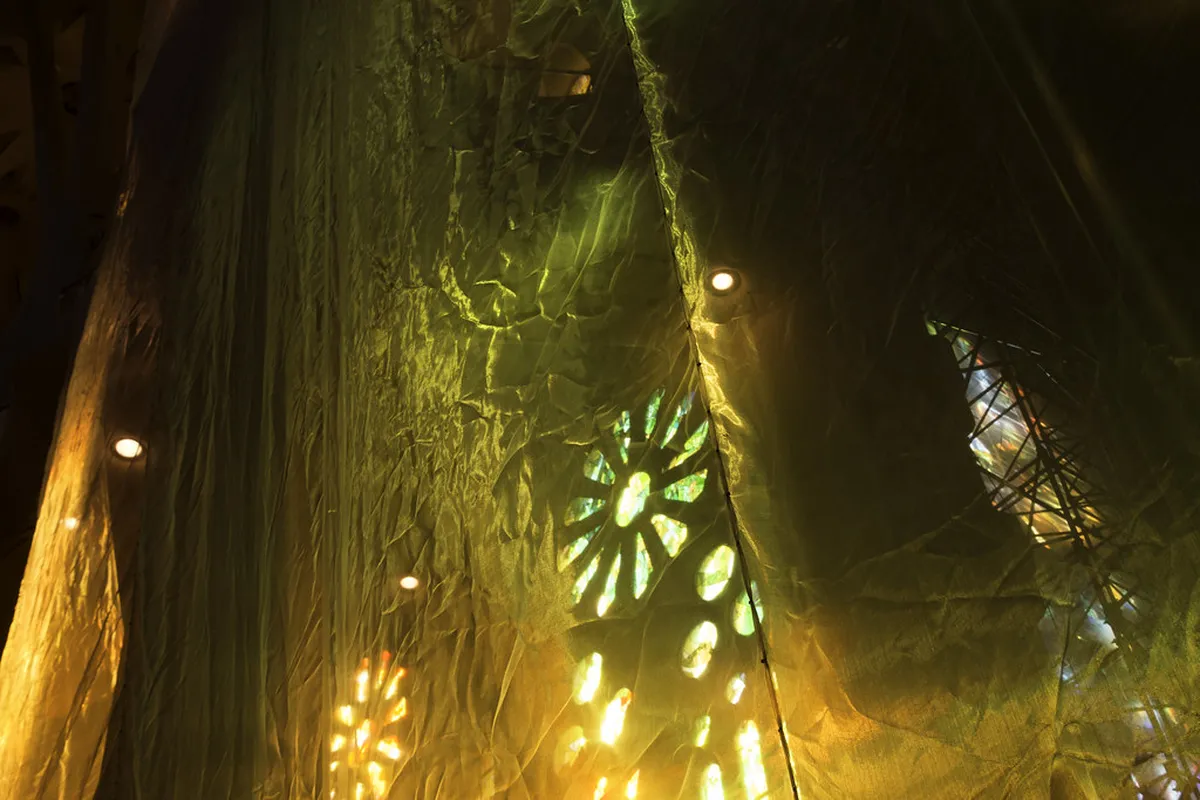
The Hack: Book online at least 2 weeks ahead. Choose a slot between 15:00-16:00 for the best interior light — the afternoon sun hits the warm-toned stained glass windows on the western Passion facade, flooding the nave with reds and oranges. Morning slots (09:00-10:00) give you the cool blue-green light from the eastern Nativity facade. Avoid 10:00-14:00, which is the most crowded window. Skip the tower visit if budget is tight — the interior is the real spectacle and the tower views, while nice, are not dramatically better than what you get free from Bunkers del Carmel. Students under 30 save €2-€6 per ticket with valid ID.
Expected Savings: €10-€14 per person by skipping the tower add-on, plus you avoid the stress and wasted time of trying to get last-minute tickets.
13. The Free Gaudí Exteriors Walking Route
You do not need to enter every Gaudí building to appreciate his work. The exteriors are the spectacle, and they are completely free to admire. A self-guided walking route through Eixample hits the greatest concentration of Modernista architecture in the world — and most visitors never realize they can experience 80% of Gaudí's genius without buying a single ticket.
The Hack: Start at Casa Batlló on Passeig de Gràcia (the facade is the main event — interior tickets are €35 / $37.79). Walk 100 meters to Casa Milà/La Pedrera (another stunning exterior, interior tickets €25 / $26.99). Continue down Passeig de Gràcia past the Manzana de la Discordia block (three rival Modernista buildings side by side). Cut through to Sagrada Família (the exterior is overwhelming even without entering). This route takes 60-90 minutes and covers 2.5 km. Bring the free Barcelona Modernisme Route map (available at the tourist office on Plaça Catalunya) for 100+ additional Modernista buildings. If you must enter one building, make it Palau Güell near La Rambla — it is the cheapest Gaudí interior (€12 / $12.95) and the least crowded.
Expected Savings: €60-€95 per person by admiring the exteriors instead of buying tickets to Casa Batlló (€35), La Pedrera (€25), and other interiors.
14. Montjuïc Free Attractions and Bunkers del Carmel
Montjuïc hill is Barcelona's most underrated free destination. The entire hillside is public parkland with gardens, viewpoints, and several free attractions. The Jardí Botànic terrace, the Olympic Stadium (free to enter and walk around), the Magic Fountain light show (free, runs Thursday-Saturday evenings in summer), and the mirador viewpoints along the hillside paths all cost nothing. The Fundació Joan Miró and MNAC (Museu Nacional d'Art de Catalunya) are paid but worth it — and MNAC's rooftop terrace is free to access for panoramic city views.
But the best free viewpoint in all of Barcelona is not on Montjuïc — it is the Bunkers del Carmel (officially the Turó de la Rovira) in the Carmel neighborhood. This is a hilltop with ruins of Spanish Civil War anti-aircraft bunkers that offers a full 360-degree panoramic view of the city, the sea, and the mountains. No tickets, no crowds (compared to Park Güell), no opening hours. Locals come here for sunset with a bottle of cava from the supermarket.
The Hack: Spend a half day on Montjuïc (take the metro to Espanya station, walk up through the gardens). Save Bunkers del Carmel for sunset — take the metro to El Carmel station and walk 15 minutes uphill. Bring supermarket cava and snacks. This combination gives you a full day of sightseeing and one of the best sunset experiences in Europe for the cost of two metro rides and a €4 bottle of sparkling wine.
Expected Savings: €20-€40 per person vs. paid viewpoint attractions and rooftop bar sunset drinks.
15. Park Güell — 2026 Prices and the Free Zone Strategy
Park Güell's ticket prices jumped significantly in 2026. The Monumental Zone (where the famous mosaic bench and dragon stairway are) now costs €18 ($19.43) for adults — up from €10 just a year ago. Discounted tickets are €13.50 ($14.57) for children aged 7-12, seniors 65+, and companions of visitors with disabilities. Children under 6 enter free. The park is open from 9:30 AM to 6:00 PM for ticketed visitors.
But here is what most visitors miss: the Monumental Zone is only a small fraction of the park. The much larger free zone includes forest paths, elevated viewpoints, and the park's quieter upper areas — and it actually has better panoramic city views than the paid section.
The Hack: Visit Park Güell's free zone first thing in the morning — enter from the Carmel side entrance (Carretera del Carmel) rather than the main entrance for fewer crowds and immediate access to the elevated viewpoints. If you want to see the Monumental Zone, book the earliest slot (opening time) online to avoid cruise-ship tour groups that arrive from 10:30 onward and to guarantee availability. For museums, schedule your paid visits on free Sundays — the first Sunday of every month and every Sunday after 15:00 at major institutions including the Picasso Museum (normally €12), MNAC (€12), and MUHBA (€7).
Expected Savings: €18-€40 per person by timing museum visits for free days and exploring Park Güell's free zone instead of (or before) the paid Monumental Zone.
Nightlife Hacks
Barcelona's nightlife starts late — genuinely late. Locals rarely go out for dinner before 21:30, arrive at bars around midnight, and do not show up at clubs until 02:00-03:00. This schedule is itself a money-saving hack if you understand it.
The pre-game culture: Spaniards gather at someone's apartment or on the beach for drinks before going out. A bottle of supermarket gin (€8-€10 / $8.63-$10.79), a bottle of tonic, and some snacks costs a group of four under €15 total — replacing two rounds of €8-€10 cocktails each at a bar. This is not being cheap; it is standard local practice.
Cover charge avoidance: Many Barcelona clubs charge €15-€20 entry on Friday and Saturday nights but are free or €5 before a certain time (usually 01:00-01:30). Guest lists — available through promoters on Instagram, at hostels, or on apps like Xceed — regularly waive cover charges entirely. Beach bars (chiringuitos) and waterfront terraces never charge cover and often have DJs on weekend nights.
Late dining saves on entertainment: Eating dinner at 22:00 (normal local time) and lingering over wine until midnight means your dinner itself becomes the first part of your night out. When you finally hit a bar at 00:30, you need fewer drinks before moving to a club or heading home. The combination of late dinner + pre-game + guest list entry can easily cut a night out from €60-€80 to €25-€35 per person.
Expected Savings: €25-€45 per night out vs. the typical tourist approach of early dinner + full-price bar drinks + paid club entry.
Safety and Scam Avoidance
Barcelona has a well-documented pickpocket problem, and it overwhelmingly targets tourists in specific locations. This is not about being scared — it is about not losing €200-€500 to a preventable theft that ruins your day.
La Rambla: The highest-risk street in the city. Pickpockets work in teams — one distracts (asks for directions, offers a "free" bracelet, performs street tricks) while another lifts your wallet or phone. Walk on La Rambla if you want, but keep your phone in a front pocket and your bag zipped and in front of you. Better yet, walk the parallel streets (Carrer dels Tallers or Carrer de Ferran) which are more interesting and far less targeted.
Metro: The L3 (green line) between Liceu, Drassanes, and Barceloneta stations is the second most common theft zone. Crowds compress at doors and on escalators — that is when pockets get picked. Keep valuables in front pockets or inside a cross-body bag. Do not put your phone in your back pocket, ever.
Beach: Never leave belongings unattended on Barceloneta beach. Thefts happen in seconds while you are swimming. Use a waterproof phone pouch worn around your neck, bring minimal valuables, and if you are in a group, take turns watching bags. Some travelers use a portable safe that clips to a beach chair or locks around a fixed object.
The Hack: Carry a decoy wallet with €10-€15 and expired cards in an accessible pocket. Keep your real wallet, passport, and primary phone deep in a cross-body bag or money belt. If someone grabs the decoy, you have lost almost nothing. This sounds paranoid, but long-term Barcelona residents do exactly this on crowded transit. Also, file a police report immediately if anything is stolen — you need it for travel insurance claims, and the Mossos d'Esquadra have a dedicated tourist-crime office near Plaça Catalunya.
Shopping Hacks
Outlet shopping: La Roca Village, 40 minutes northeast of Barcelona by direct bus (€15 / $16.19 round trip from Passeig de Gràcia), has 100+ brand outlets with 30-60% discounts on retail. If you are planning to buy designer goods or quality leather items in Barcelona anyway, the bus fare pays for itself on a single purchase. Go on a weekday to avoid crowds. The regular shopping streets in central Barcelona — Passeig de Gràcia, Portal de l'Àngel — are full-price retail and rarely offer deals tourists cannot find at home.
Vintage stores in El Raval: Barcelona's best budget shopping is in the vintage and second-hand stores clustered around Carrer de la Riera Baixa and Carrer dels Tallers in El Raval. Stores like Flamingos Vintage Kilo (you pay by weight — roughly €20/kg for curated vintage clothing), Holala! Plaza, and Humana sell quality second-hand items at a fraction of retail. If you are into fashion, an afternoon in El Raval's vintage corridor is more interesting than any mall, and you will find unique pieces for €5-€20 that cost ten times more at "vintage boutiques" in other European capitals.
Expected Savings: €30-€100+ per shopping trip vs. buying similar items at full-price retail in the city center.
Putting It All Together: A Sample Budget Day in 2026
Here is what a full day in Barcelona looks like when you stack these hacks, with every price verified for 2026:
- Morning: Free Gaudí walking route through Eixample — €0
- Late morning: Vermouth and free tapas at two bars in Poble Sec — €6 ($6.48)
- Lunch: Menú del día at a local restaurant in Sant Antoni — €14 ($15.11)
- Afternoon: Montjuïc free gardens and Olympic Stadium — €0
- Sunset: Bunkers del Carmel with supermarket cava — €5 ($5.40)
- Dinner: Tapas at the bar in Gràcia (patatas bravas + pan con tomate + two proteins) — €14 ($15.11)
- Transport: 3 metro rides on T-Casual — €3.90 ($4.21)
- Daily total: ~€43 (~$46)
That is a full day of world-class sightseeing, excellent food, and a sunset that rivals anything you would pay €20 to see from a rooftop bar — for about $46. Compare that to the typical tourist spend of €140-€200 per day and the math is clear. Over a five-day trip, you are looking at roughly €215 vs. €700+ — a difference of nearly $525 that stays in your pocket. For more strategies on traveling on a budget, keeping your flights cheap, and navigating airports like a pro, explore our full hack library.
Explore More City Travel Guides
Planning a multi-city trip or comparing destinations? These guides use the same budget-hacking approach:
- Paris Travel Hacks — another European capital with free museum days
- London Travel Hacks — free world-class museums and transit savings
- Prague Travel Hacks — Europe's best-value capital at $45-65/day
- Our packing hacks — fitting a European trip into a carry-on
Frequently Asked Questions
What is the cheapest way to get from Barcelona Airport to the city center in 2026?
The RENFE R2 Nord commuter train from Terminal 2 is the cheapest option at €2.90 per ride, or €1.30 if you use a T-Casual card. From Terminal 1, take the free inter-terminal shuttle bus to Terminal 2 first. The journey to Passeig de Gràcia takes about 25 minutes. The Aerobus express costs €7.75 one-way (€13.30 return), while a taxi runs about €42. For a couple, taking the train saves €80+ round trip compared to taxis.
Is the T-Casual card worth it for tourists visiting Barcelona in 2026?
Yes. The T-Casual card costs €13.00 for 10 rides on all Barcelona public transit within Zone 1, bringing the per-ride cost down to €1.30 — compared to €2.90 for a single ticket. If you plan to take more than 5 metro or bus rides during your visit, the T-Casual pays for itself. It is available at metro station vending machines and valid for metro, bus, tram, and FGC trains. Note: the T-Casual does not cover airport routes — you will need a separate airport ticket (€2.90) or the Hola BCN card for that.
How much does it cost to visit Sagrada Família and Park Güell in 2026?
Sagrada Família basic admission is €26 per adult (€24 for students under 30, €21 for seniors 65+, free for children under 11). Adding a tower visit costs €36. Park Güell's Monumental Zone is €18 per adult (€13.50 for children 7-12 and seniors). Together that is €44 per person — but you can save €18 by skipping Park Güell's paid zone and exploring its free areas instead, which actually have better panoramic views.
What is the menú del día and where can I find it in Barcelona?
The menú del día is a set lunch offered by most non-touristy Barcelona restaurants, typically Monday through Friday from 13:00 to 16:00. For €12-€18 ($13-$19), you get a first course, second course, dessert or coffee, bread, and a drink including wine or beer. That is 40-60% cheaper than ordering the same dishes à la carte at dinner. Find them by walking a block or two away from major tourist streets and looking for handwritten signs. The best neighborhoods for menú del día are Poble Sec, Sant Antoni, Gràcia, and the left side of Eixample.
What are the best free things to do in Barcelona?
Barcelona offers outstanding free experiences: the Gaudí exteriors walking route through Eixample (saving €60+ vs. entering each building), the Bunkers del Carmel 360-degree viewpoint, Montjuïc gardens and Olympic Stadium, Barceloneta beach, Park Güell's free zone (enter from the Carmel side), the Gothic Quarter labyrinth of medieval streets, and free museum Sundays (first Sunday of the month and every Sunday after 15:00 at many institutions including the Picasso Museum and MNAC). The Magic Fountain on Montjuïc runs free light shows on Thursday through Saturday evenings in summer.
How many days do you need in Barcelona on a budget in 2026?
Five days is the sweet spot for a budget visit. This gives you time to cluster sightseeing by neighborhood (one day for Gothic Quarter and El Born, one for Eixample and Sagrada Família, one for Montjuïc, one for Gràcia and Park Güell, one for the beach and a day trip). More importantly, five days lets you take advantage of weekday menú del día lunches at €12-€18 each, time a free museum Sunday, and avoid rushing between attractions in expensive taxis. A 5-day trip using the hacks in this guide can cost as little as €215-€375 per person ($232-$405) excluding flights and accommodation.